
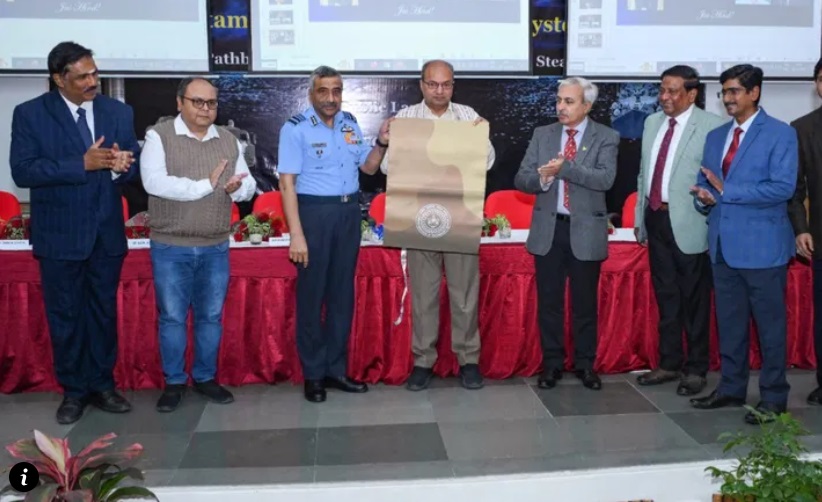
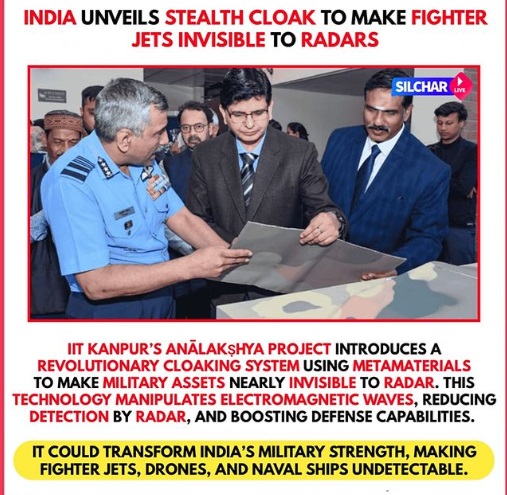
The Indian Institute of Technology Kanpur (IIT-K) has come up with a new stealth technology called Anālakṣhya. This technology, which is a kind of metamaterial surface cloaking system (MSCS), aims to make India’s defense stronger by helping tanks and fighter jets avoid enemy radar. This news shows that India’s schools and the defense industry are working together better, which is a positive example of how military technology can help.
Importance in Defense
The Anālakṣhya MSCS will be crucial for the Defense Research and Development Organization’s (DRDO) plans for advanced medium combat aircraft (AMCA). IIT-K’s new technology, which is meant to avoid air defense radars, will be very helpful for this homegrown stealth fighter project.
Strong Testing and Development
The Anlakhya system underwent extensive testing in both labs and the real world from 2019 to 2024. The system demonstrates versatility and reliability in various operational scenarios. The Indian military is now trying to get this system, which shows how important it is for national security.
Local Sourcing of Materials
A large 90% of the materials used in the Anālakṣhya MSCS come from India. This success means that India doesn’t have to rely as much on foreign supplies and helps the government’s Make in India campaign. IIT-K said in their announcement, “The system absorbs radar waves very well over a wide range, offering strong protection against radar-guided missiles and Synthetic Aperture Radar (SAR).”
Production and Use
IIT-K has licensed the Anālakṣhya MSCS tech to Meta Tattva Systems Pvt Ltd for mass production. This step is vital for ensuring timely manufacturing and use in important defense tasks.
How Stealth Tech Works
Stealth systems use two main methods to avoid radar detection:
1. Surface Design
Combat systems with sharp, angled designs disrupt radar waves, making them much harder to detect.
2. Absorptive Surface Material
The Anālakṣhya MSCS, instead of using metals that reflect radar signals, uses a textile-based, broad-spectrum microwave absorber, thereby helping to reduce radar returns. This helps soak up a lot of SAR (Synthetic Aperture Radar) waves, which makes the radar less visible. “By using these methods, the system boosts stealth capabilities while being adjustable for different combat platforms,” the announcement added.

Benefits for National Defense
The Anālakṣhya system offers various advantages:
- Better Stealth: High radar wave absorption.
- Operational Flexibility: Works well in many settings.
- Strategic Advantage: Important for the AMCA and other local combat technologies.
- Cost-Effective: High local sourcing lowers overall expenses.
A Move Towards Self-Sufficiency
The Anālakṣhya development is a big step forward for India’s goal of improving its defense technologies. It also shows a clear shift from breakthroughs in isolated labs to capabilities that are ready for use in the field. The fact that IIT-K, DRDO, and industry work closely together is another sign that the ecosystem is growing up, because it can move research into production more quickly. So, the program not only helps people become more self-sufficient, but it also boosts India’s confidence in its ability to provide scalable, next-generation solutions.
Future Uses
- Civil Aviation: Lower radar visibility for passenger and cargo planes.
- Maritime Security: Better stealth for naval ships.
- Surveillance Tools: Improved stealth for drones and reconnaissance gear.
References
- The Indian Institute of Technology Kanpur has released an official statement.
- The Defense Research and Development Organization (DRDO) has released updates.
- Meta Tattva Systems Pvt. Ltd. has released production reports.
- Leading defense publications provide expert analyses.
About the Author