India Defense Exports Hit $4.1bn Record
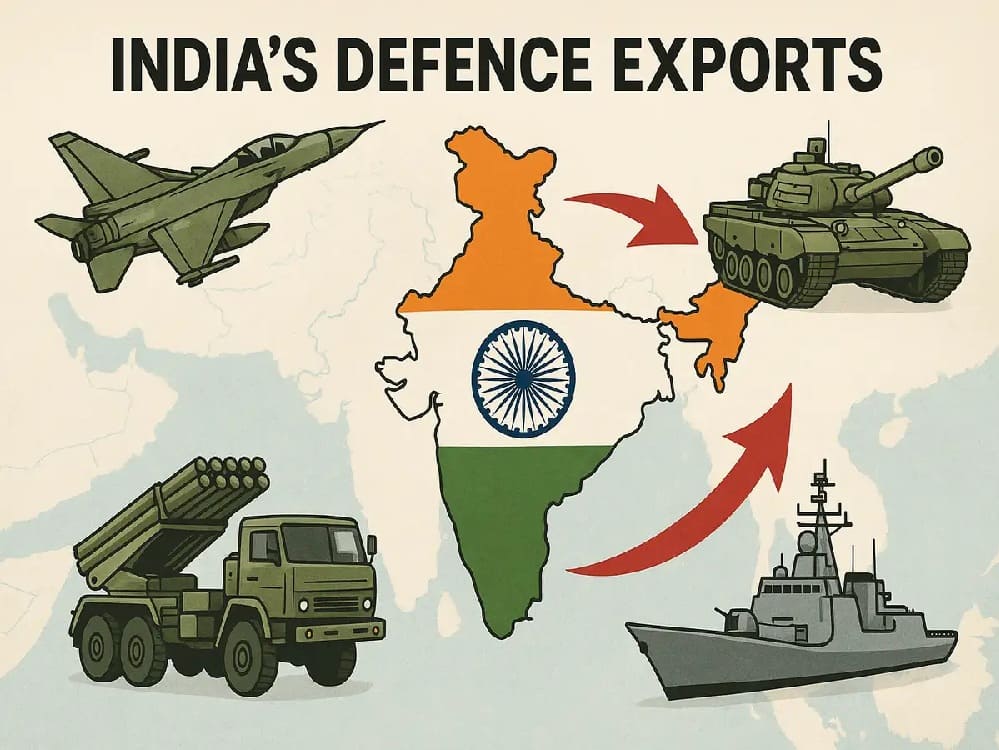
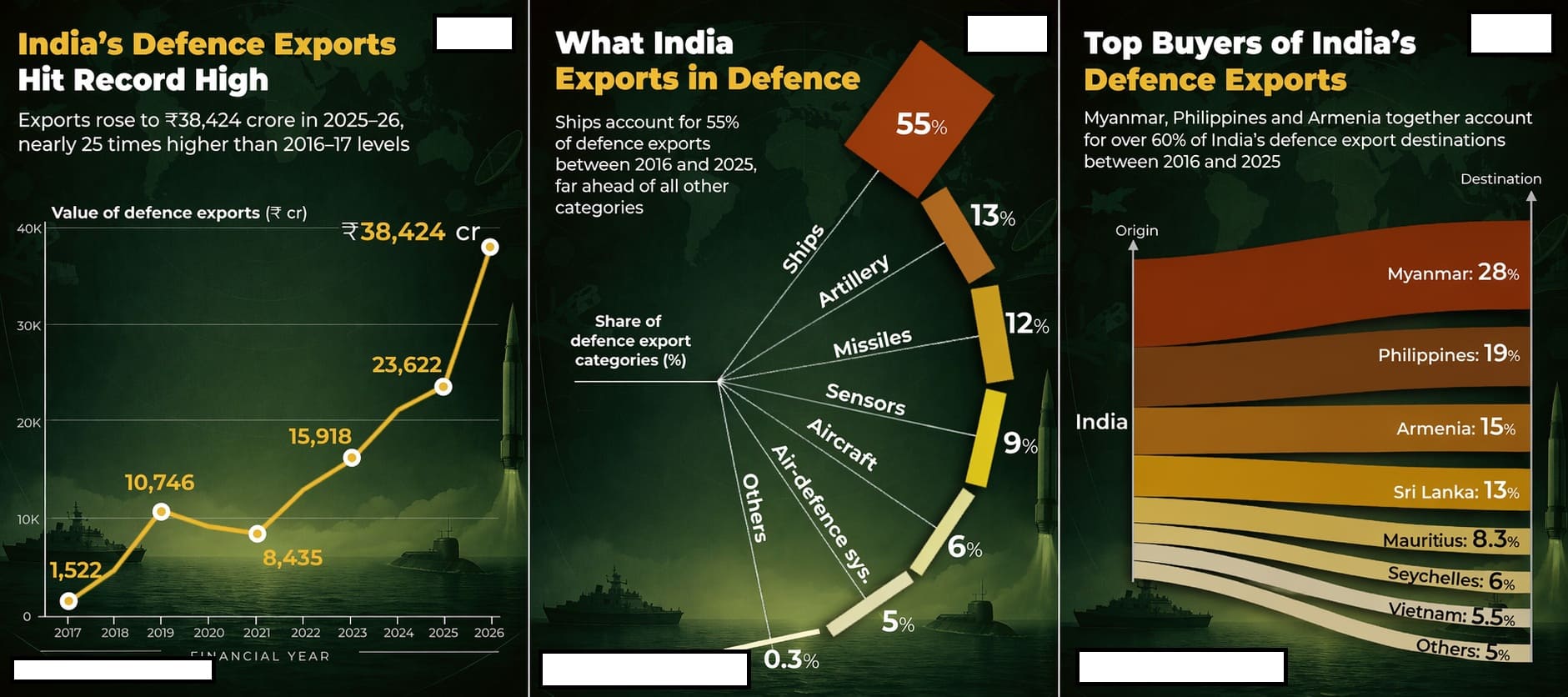
India’s defense exports hit a record high in FY2025-26, which gives New Delhi a stronger position in the global arms market. The Ministry of Defense said that exports reached ₹38,424 crore, or about $4.1 billion, in the fiscal year that ended in March 2026. That was a 62.66% increase from the previous year’s number of ₹23,622 crore.
India’s Export Momentum
India’s defense exports are no longer a small part of New Delhi’s defense policy. They are now part of a larger national plan to make India a major center for military manufacturing. Rajnath Singh, the Minister of Defense, said that the numbers indicate that people around the world are becoming more confident in India’s own defense capabilities. Furthermore, the numbers indicate that foreign buyers now see Indian systems as more mature, dependable, and ready for export. This growth is also a result of years of policy support. India has encouraged local production through Aatmanirbhar Bharat, making it easier to export goods and getting more businesses involved. So, the rise in exports is not an accident. It is the result of a long campaign in the business world.
Public Firms Lead, Private Sector Rises
State-owned defense companies heavily link with India’s defense exports. Defense Public Sector Undertakings contributed 54.84% of exports in FY2025-26. However, private firms still delivered a major 45.16% share. That balance matters. Public firms provide scale, legacy platforms, and government-backed credibility. Meanwhile, private companies add speed, electronics expertise, subsystems, and niche manufacturing capacity. As a result, India’s export ecosystem now looks broader than before. It includes missiles, artillery systems, radar platforms, electronic components, and military subsystems. India’s equipment reportedly reaches more than 80 countries, giving New Delhi a wider defense diplomacy footprint.
India’s Key Defense Exports
More and more of India’s defense exports are equipment that other countries’ militaries can use without having to buy full combat platforms. This includes sensors, communications systems, ammunition, artillery-related goods, and electronic hardware. But India’s most obvious export goals are systems like missiles, air defense systems, rocket artillery, and battlefield radars. These products give buyers a lot of power for a low price, which is especially useful in places that want to avoid buying from Western, Russian, or Chinese suppliers. Indian weapons might be a viable choice for countries with tight budgets because they work well and don’t cost much in terms of politics or money. So, New Delhi can focus on markets in Latin America, Africa, Asia, and the Middle East.
Exports Rise, Imports Remain
India is still one of the biggest arms importers in the world, even with the record. According to SIPRI’s most recent data on arms transfers, India was the second-largest buyer of major arms from 2021 to 2025, after Ukraine. During that time, India made up 8.2% of all arms imports around the world, according to SIPRI. This scenario makes for a strategic conflict. India wants to sell more weapons to other countries, but it still buys many expensive systems from them. These include advanced sensors, combat aircraft, engines, submarines, and air defense systems. But this gap is normal for a defense company that is growing. Countries don’t usually go from relying on imports to being leaders in exports overnight. They build capacity slowly, not all at once.
Why Defense Watchers Care
India’s defense exports are important because they show how New Delhi wants to plan for the future. Exports make money, but they also give you more power. Every sale of military equipment can lead to training links, maintenance contracts, and long-term security partnerships. Furthermore, being successful in exports helps Indian companies make better products and produce more of them. When you order more, the cost per unit goes down. They can also make India’s own military supply chains stronger. There are still problems to solve. India needs to show that it can provide adequate after-sales support, deliver on time, and keep its quality high. People who buy things will pay attention to how well Indian systems work under stress.
The Bigger Strategic Picture
India’s rise in exports shows ambition, not a full change. The country is getting stronger, but it still needs better engines, semiconductors, high-end avionics, and more integration of its systems. Still, the path is clear. India wants to go from being a buyer to a builder and then to an exporter. If things keep going at this rate, India’s defense exports could become a major part of New Delhi’s military diplomacy. One record year won’t be the most important test. Instead, it will be whether India can keep growing, deliver complicated systems on time, and compete in tough global markets.
References
- https://www.pib.gov.in/PressReleasePage.aspx?PRID=2248124&lang=1®=3
- https://www.sipri.org/sites/default/files/2026-03/fs_2603_at_2025.pdf
- https://www.ibef.org/government-schemes/self-reliant-india-aatm-nirbhar-bharat-abhiyan
- https://economictimes.indiatimes.com/news/defence/india-emerges-as-worlds-second-largest-arms-importer-sipri/articleshow/129342498.cms?from=mdr
About the Author