
Indian Army Apache Shipment’s UK Detour Raises Questions
What happened?
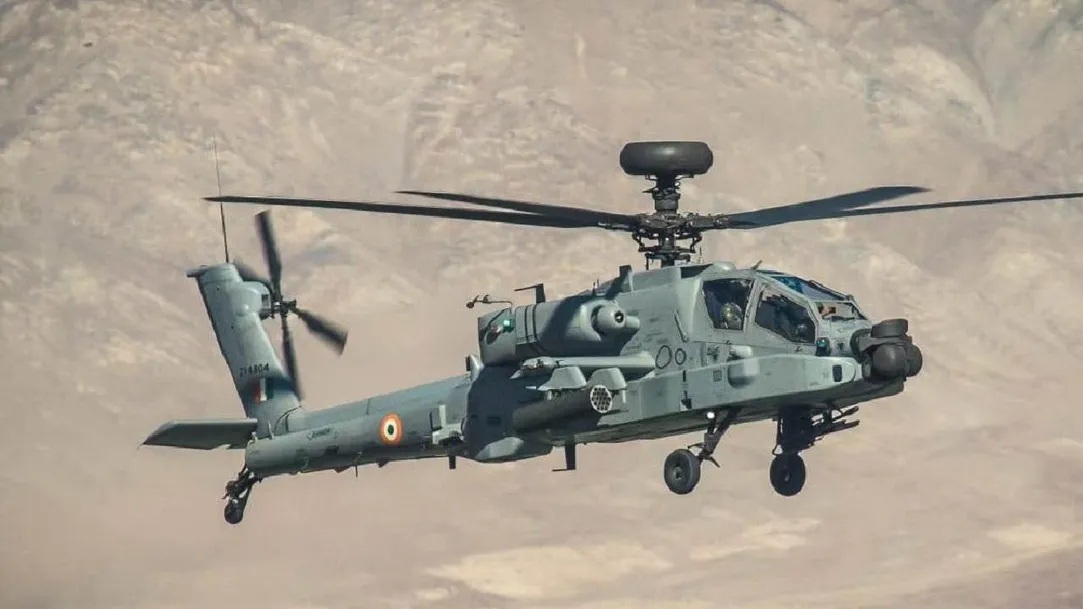
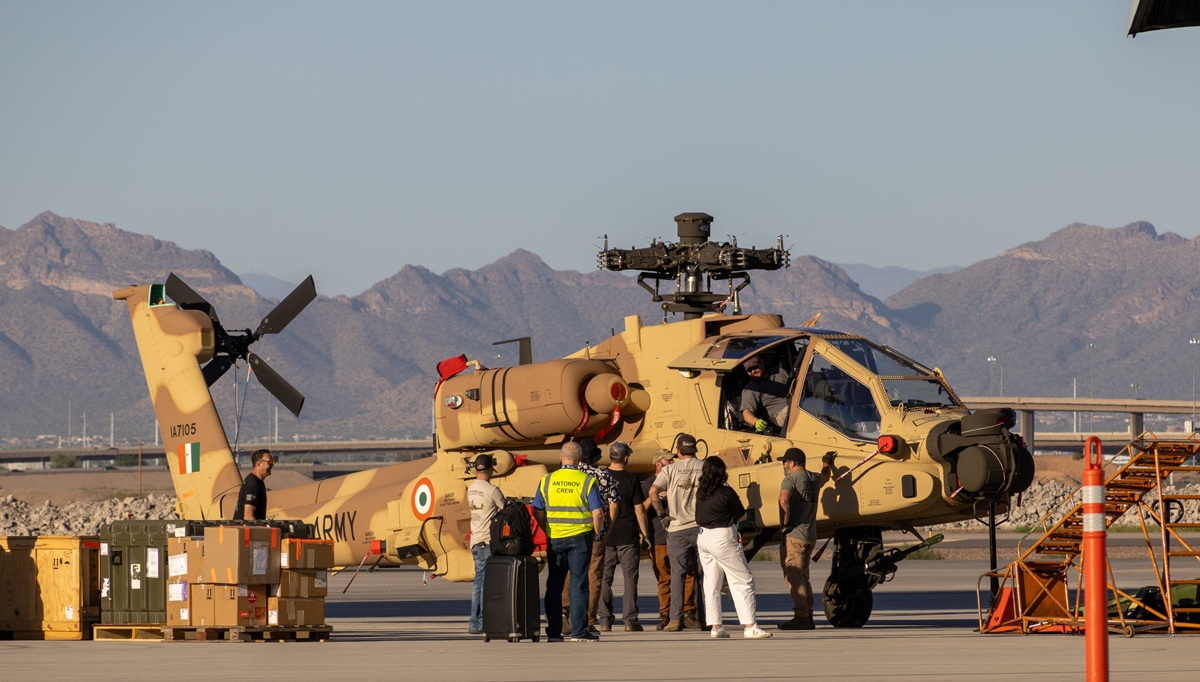
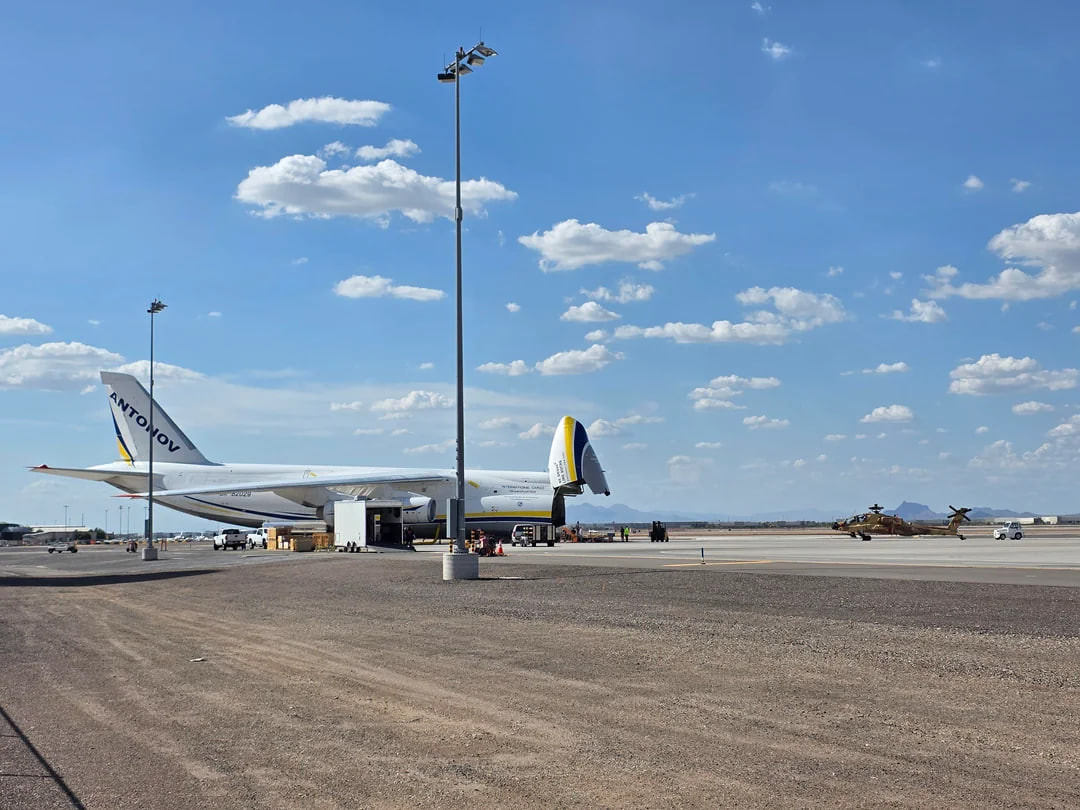
An unusual logistics twist has delayed the delivery of the AH-64E Apache helicopters to the Indian Army. Three freshly completed helicopters rode an Antonov An-124 from Phoenix–Mesa Gateway Airport (IWA) on 30 October, paused eight days at East Midlands Airport (EMA), then returned to Arizona on 8–9 November. The Indian Army AH-64E Apache delivery delay adds friction to an otherwise routine transfer, and it invites scrutiny of regulatory, technical, and contractual risk.
The confirmed timeline
- 30 Oct: An An-124 (UR-82008) arrived at IWA after a Leipzig leg.
- 1–9 Nov: The aircraft waited at EMA, the UK’s busiest pure-cargo hub.
- 8–9 Nov: The An-124 flew back to IWA; ground crews offloaded three AH-64Es, including one noted as IA-7105.
This sequence fits public spotter imagery and typical heavy-lift patterns. It also aligns with the second batch in India’s six-aircraft Army order, following three airframes inducted in July 2025.
A contract under the microscope
New Delhi’s $796 million deal for six AH-64E helicopters expanded Apache capability from the IAF to the Army. Therefore, any pause in the delivery of AH-64E Apaches to the Indian Army impacts training throughput, weapons certification, and squadron timing at Pathankot and Jodhpur. Moreover, sequencing matters: simulators, spares, and crews must converge with airframes to avoid idle capacity.
Possible reasons for the U-turn
No authority has offered an official explanation. However, several plausible, non-exclusive factors exist:
1) Export compliance or paperwork harmonisation
Arms shipments rely on multi-layered licences, end-use assurances, and customs declarations. A single mismatch—serials, packing lists, or consignee details—can halt movement. Consequently, the fastest remedy is often to return cargo to the origin integrator for rework.
2) Airworthiness or configuration re-check
Heavy cargo flights magnify small technical doubts. If a vibration trace, structural restraint, or load certification looked marginal, crews would prefer a controlled return. In that case, Boeing’s Mesa team can inspect quickly and re-crate.
3) Scheduling and airport slot pressures
EMA is a high-tempo cargo node. If a follow-on leg faced crew duty, diplomatic clearance, or slot conflicts, holding and then turning back can be cheaper than protracted ground time overseas.
4) Supply-chain aftershocks
Titanium and speciality alloys have seen price and availability swings since 2022. These frames are complete, yet downstream kits—EW boxes, pylons, or documentation packs—could still lag. Therefore, a short reset may avoid longer downtime in India.
Operational impact for the IAAC
The delay in delivering the Indian Army AH-64E Apache is inconvenient, not catastrophic. Training pipelines can flex. However, every week matters when squadrons are building tactics around mast-mounted sensors, M-TADS/PNVS, and mixed Hellfire/rocket loads. Furthermore, Apaches are central to the high-altitude and desert concepts of operation, where loitering, sensors, and precision fires save time for ground manoeuvres.
Logistics lessons from the detour
Use redundancy by design
Dual routings and multiple airlift providers reduce single-point failure. That costs more up front, but it protects the schedule.
Front-load documentation
Align export licences, acceptance test records, and serial-number manifests before the first crate moves. It sounds dull; it saves weeks.
Treat spotters as an early-warning system
Aviation enthusiasts often surface anomalies early. While they are not official sources, they can flag friction before it hits programming dashboards.
What to watch next
First, look for a rapid re-dispatch once any paperwork or configuration issues close. Second, watch induction ceremonies or training notices from the Army Aviation Training School at Nashik; those often telegraph delivery cadence. Finally, track spare-parts and weapons-rack flows, which tend to move just ahead of airframes.
Where this leaves India’s attack-helicopter roadmap
India’s joint Apache footprint—Air Force plus Army—creates commonality in training and sustainment. Therefore, even with a brief Indian Army AH-64E Apache delivery pause, the long-term curve still trends up: better availability, richer tactics, and tighter integration with ground forces. In short, the U-turn is a hiccup, not a handbrake.
References
- https://www.boeing.com/defense/ah-64-apache/
- https://www.dsca.mil/ (search: India + Apache notifications)
- https://www.eastmidlandsairport.com/cargo/
- https://www.antonov-airlines.com/fleet/an-124-100
About the Author