India Advances with High-Altitude Pseudo-Satellite Vehicle HAPS
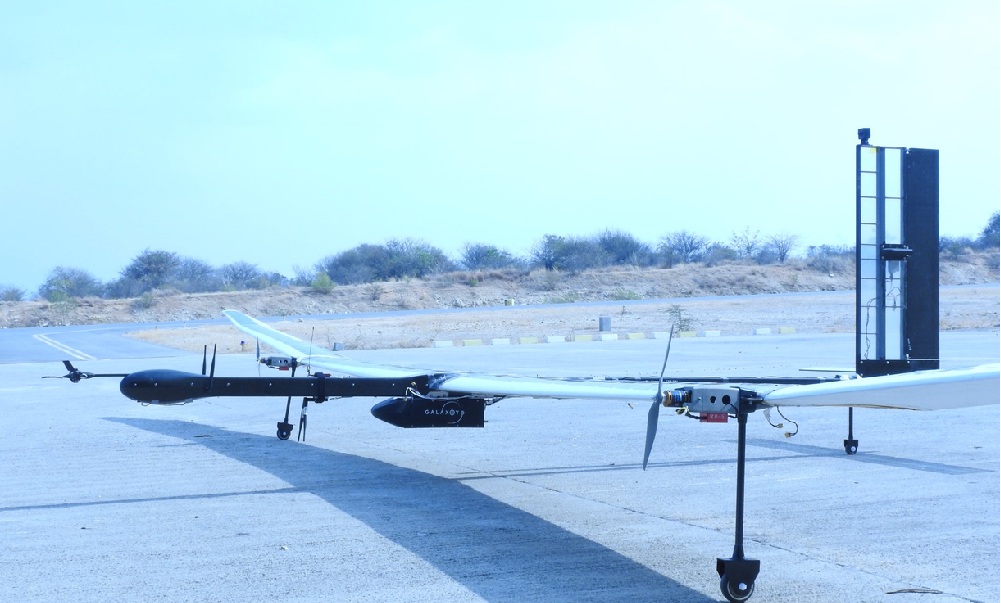
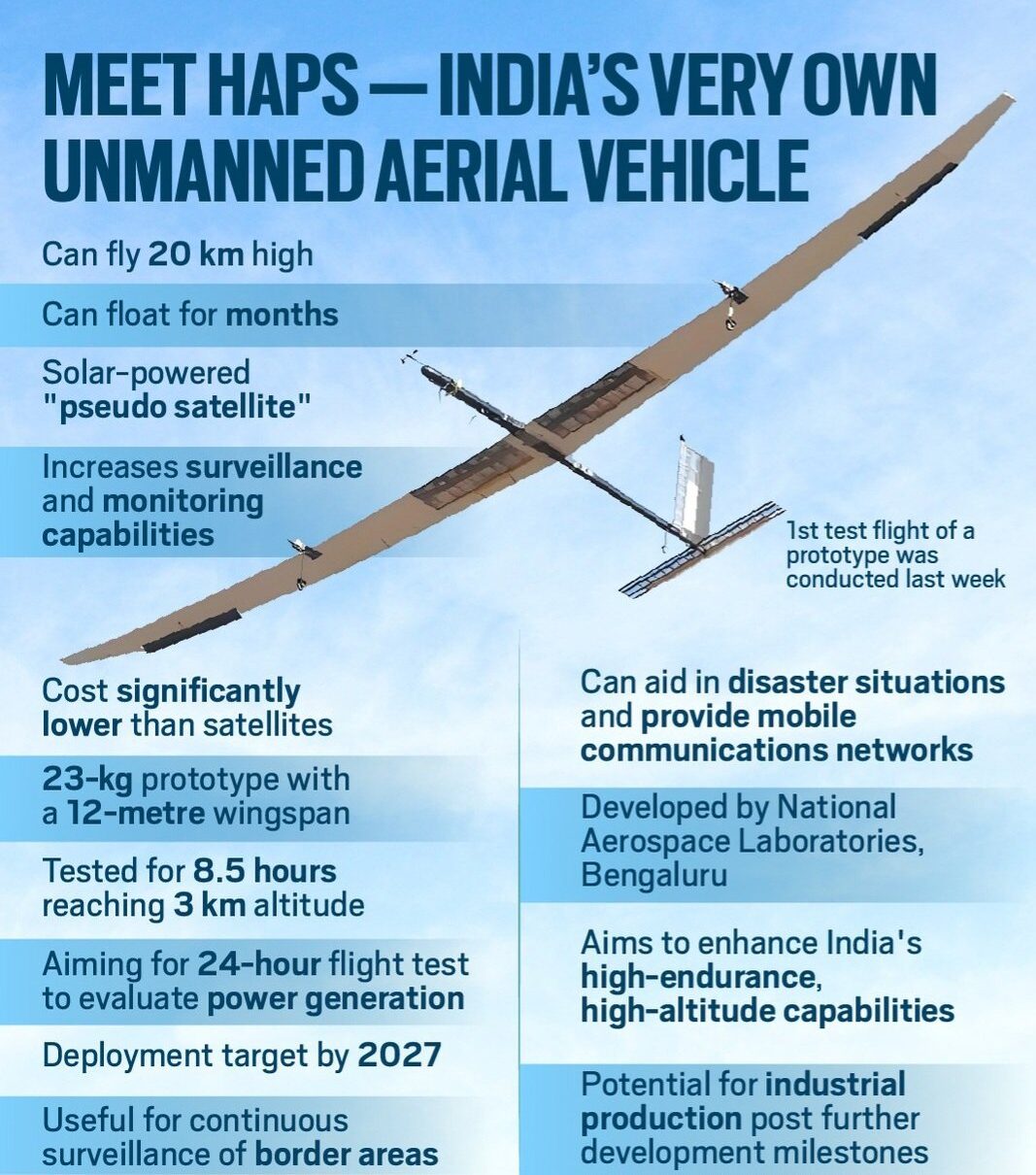
India tests the high-altitude pseudo-satellite vehicle HAPS, marking a significant milestone in aviation technology. The National Aerospace Laboratories’ (NAL) successful test flight in Bengaluru ushers in a new era of surveillance and monitoring capabilities. In contrast to traditional UAVs, HAPS can fly for extended periods of time at altitudes of roughly 20 km while using only solar power.
Why India Wants HAPS
The idea of high-altitude pseudo-satellite (HAPS) vehicles isn’t new, but India wants to use them to fill in the gaps in how traditional UAVs and satellites work. Most UAVs are powered by batteries and can’t stay in the air for long. They usually fly close to the ground.
On the other hand, while satellites can cover a vast area, they are unable to continuously monitor specific areas. India is testing the high-altitude pseudo-satellite vehicle HAPS to fill these gaps. It has long endurance and can see things from high up, making it useful for military, environmental, and disaster management operations.
HAPS: Persistent Surveillance Edge
HAPS excels in its ability to remain over target areas for extended periods, ensuring constant monitoring. It can cover up to 400 square kilometers with detailed 5-meter resolution imaging while flying at a high altitude. HAPS can get up to 15 cm resolution over smaller areas, which makes it great for security and defense purposes. India’s testing of the high-altitude pseudo-satellite vehicle HAPS demonstrates its commitment to enhancing its surveillance capabilities without relying on costly geostationary satellites.
HAPS Tech Feats & Challenges
Solving numerous technical issues is necessary to create a solar-powered vehicle capable of sustained flight for months. The current HAPS prototype from India was able to fly for more than eight hours, and it hopes to fly for 24 hours soon. The long-term goal is to have a fully working HAPS that can run for up to 90 days without stopping. India is testing the high-altitude pseudo-satellite vehicle HAPS with new solar power generation, energy storage, and lightweight materials.
The technology makes the ambitious goal possible. There are many problems with the design. HAPS must stay lightweight and stable while harvesting enough sunlight to run systems and recharge dense batteries overnight. It operates in the stratosphere, where thin air and harsh temperature swings demand new materials and smarter engineering.
Why Stratospheric Ops Matter
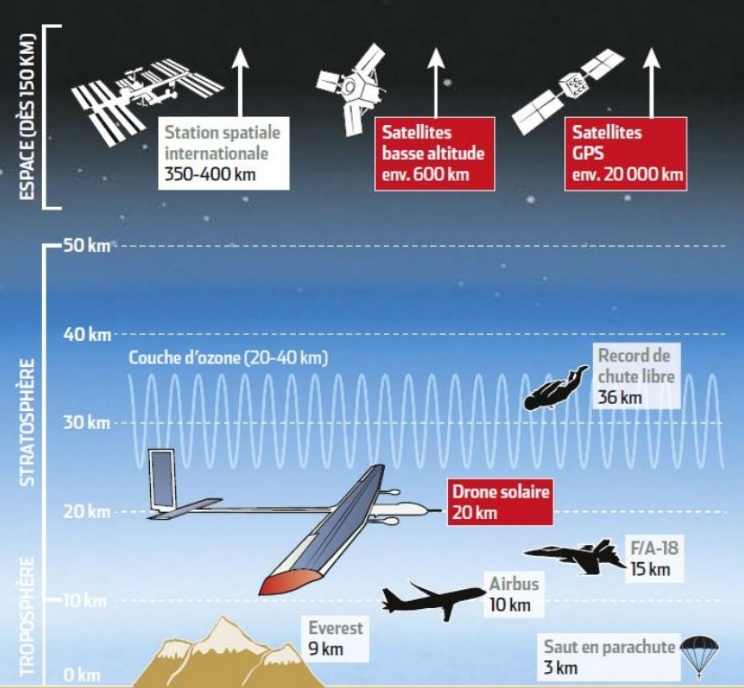
HAPS vehicles fly at altitudes of 17 to 23 km, which makes it easy for them to avoid normal air traffic and bad weather. This height lets surveillance go on without interruption, making it a stable place for long-term observation and monitoring. Low wind speeds in the stratosphere help these light, slow-moving vehicles stay where they are. From these heights, HAPS can see things from a different angle, which lets them monitor large areas and gather intelligence in real time. Testing high-altitude pseudo-satellites at these heights gives India a clear strategic advantage in reconnaissance and observation.
India in the Global HAPS Race
The HAPS technology sector is still growing around the world. Airbus is a leader in this field with the Zephyr, which flew for 67 days in 2022. But no country has fully mastered HAPS yet, which gives India a chance to become a major player in this new field. India is testing the high-altitude pseudo-satellite vehicle HAPS not only to improve its technology but also to become a leader in this cutting-edge aerospace field.
Beyond Defense: Disasters & Environment
Although defense and surveillance are still the main uses for HAPS technology, it has many civilian uses as well. These fake satellites can give live aerial images in case of a disaster, which can help emergency teams figure out how bad the damage is and plan rescue efforts. HAPS could also aid in environmental monitoring by monitoring forest fires, deforestation, and climate changes. India’s dedication to advancing HAPS technology embodies a comprehensive vision that encompasses various sectors and meets a range of national requirements.
Engineering Limits of Today’s Tech
India’s entry into HAPS brings with it engineering problems, especially when it comes to storing energy and making things light. Current battery technology needs a lot more energy density than normal. India’s HAPS project is using the newest battery cells, which can store up to 500 watt-hours of energy per kilogram.
Tesla’s car batteries, on the other hand, work at about 240 watt-hours/kg. This shows how advanced HAPS technology is. India is collaborating with industry leaders to achieve this ambitious goal by testing the high-altitude pseudo-satellite vehicle, or HAPS, at the forefront of current technology.
India’s Strategic Tech Leap
As part of a larger plan to become self-sufficient in important technologies, India tests the high-altitude pseudo-satellite vehicle HAPS. India focuses on developing its own aerospace industry, which gives it an edge over other countries by allowing it to control intellectual property and get early adoption. India builds its skills and opens up new business, innovation, and international collaboration opportunities in the emerging tech industry by improving HAPS technology.
Future of HAPS: New Global Standard
India’s HAPS journey is still in its early stages, but things are looking promising so far. Keeping a car in the air for up to 90 days is in line with the standards set by the best programs around the world. Testing HAPS in tropical areas makes it more realistic because the winds and jet streams can be intense. India can use these tests to build platforms that can handle more extreme weather and seasons that are less stable. When India tests a high-altitude pseudo-satellite, it also makes it harder to prove that it works. That method makes it easier to run the same tests in different places, which can help HAPS move forward more quickly around the world.
Conclusion: India’s HAPS Vision
India’s goal of developing HAPS technology is a big step forward for innovation in the aerospace industry. HAPS technology has a lot of potential, from improving military surveillance to helping with disaster relief and protecting the environment. India is a leader in a field that is always changing by working on improvements to solar-powered, long-lasting UAVs. India is testing the high-altitude pseudo-satellite vehicle HAPS. This helps keep the country safe and moves high-altitude aviation technology forward around the world.
References
- Deccan Herald report on NAL’s solar “pseudo-satellite” test flight and endurance goals.
- Times of India coverage of NAL’s HAP/HAPS prototype test campaign and intended border-surveillance role.
- Airbus (AALTO) official Zephyr HAPS overview (stratospheric ops, endurance concept).
- ITU backgrounder defining HAPS and its operating altitude band (20–50 km) in Radio Regulations context.
About the Author