I Don't Trust Pakistan: US Senator Lindsey Graham
The war in Iran has cost almost $29 billion, turning a regional conflict into a big test of American readiness, diplomacy, and alliance management. The revised figure was disclosed by the Pentagon in congressional budget hearings when US Senator Lindsey Graham asked about Pakistan’s role as a mediator between Washington and Tehran.
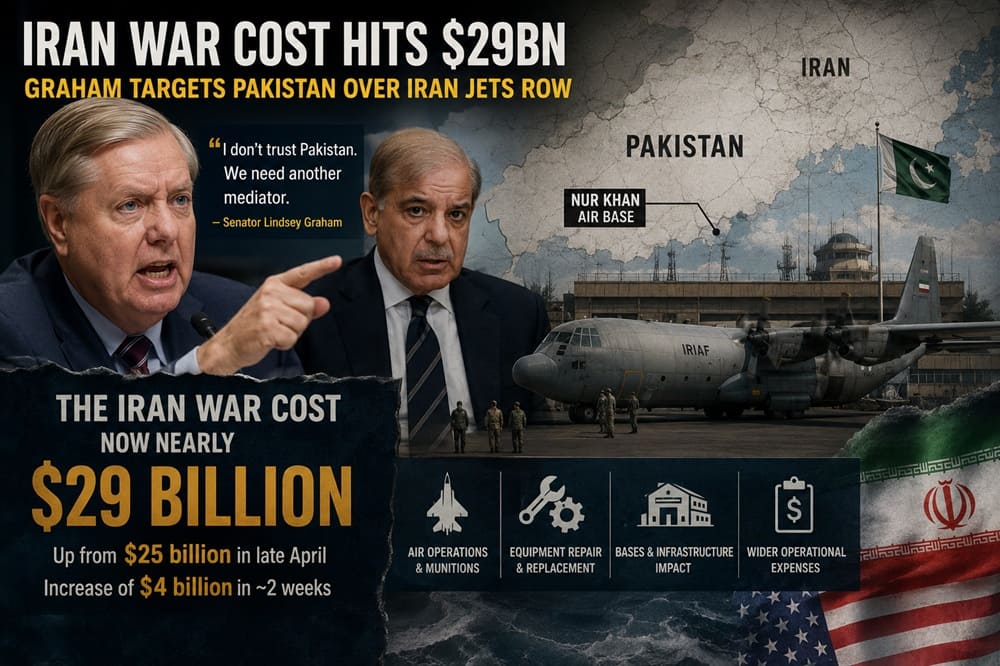
Graham criticized the reports that Iranian aircraft had moved to Pakistani airfields, including Nur Khan Air Base near Rawalpindi. Unnamed US officials think the aircraft transfers may have helped to shield Iranian aviation assets from American strikes, according to CBS News. Pakistan rejected the claims as speculation, and Afghanistan’s Taliban government has denied receiving any Iranian military aircraft.
Graham Questions Pakistan’s Neutrality
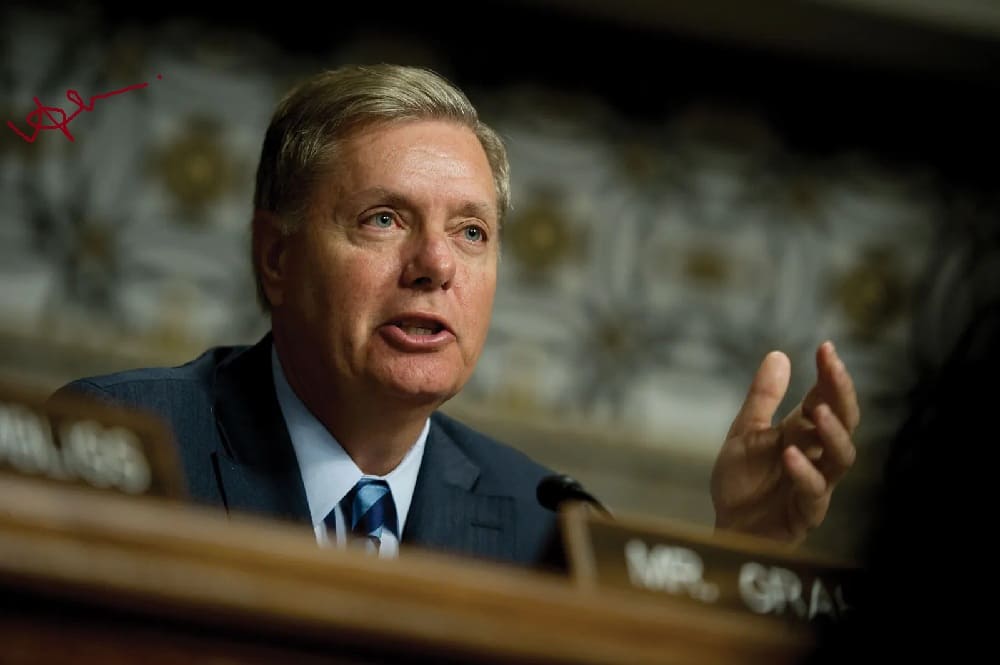
Graham pressed Defence Secretary Pete Hegseth and Joint Chiefs Chairman Gen. Dan Caine on the reports during a Senate Appropriations defence hearing. He said he did not trust Pakistan and said Washington should consider another mediator if the aircraft claims proved true.
The senator’s message was blunt. He thinks any Pakistani participation in guarding Iranian military assets would weaken Islamabad’s assertion of neutrality. He directly tied the accusation to the stalled US-Iran diplomacy.
But Hegseth did not answer questions about intelligence issues. He cited the sensitivities of ongoing negotiations and declined to confirm operational details. Graham said the reported aircraft movements might explain why the talks had failed to gain momentum, but he was not satisfied with the answer. ABC News also reported Graham’s criticism during the hearing.
Iran Jets at Nur Khan: What’s Alleged
The main accusation is about Iranian planes parked at Pakistan Air Force Base Nur Khan. The base is located strategically close to Rawalpindi because of its military infrastructure and proximity to Islamabad.
Iran transferred several aircraft to Pakistan shortly after President Donald Trump announced a ceasefire with Tehran in early April, CBS News reported. One of the aircraft was described as being an Iranian Air Force RC-130, a reconnaissance and intelligence-gathering version of the Lockheed C-130 Hercules.
Pakistan has dismissed claims that it has a secret foreign military fleet. “Nur Khan is in a heavily populated area, so if there were any major covert deployment, it would be difficult to hide,” a Pakistani official said. Pakistan’s foreign ministry, meanwhile, acknowledged the presence of Iranian aircraft but denied any link to military operations.
Why Iran War Cost Matters
The cost of the Iran war is significant because it highlights how quickly a modern air and missile campaign can drain resources. The estimate had grown to nearly $29 billion as of May 12, 2026, up from $25 billion in late April, Pentagon officials said. The increase is due to equipment repair and replacement and higher operating expenses, acting Pentagon comptroller Jules Hurst told Reuters.
The $4 billion increase in about two weeks gives lawmakers a clearer picture of the war’s financial momentum. It also poses questions about munitions stocks, aircraft maintenance, regional base security, and long-term readiness.
This is more than a matter of money for defence planners. High-intensity operations eat interceptors, precision weapons, spare parts, tanker hours, and maintenance capacity. So even a limited conflict can create pressure across the broader US force structure.
Pentagon Budget Pressure
The Pentagon’s update came as Hegseth, Gen. Caine, and Hurst defended the administration’s proposed $1.5 trillion defence budget for fiscal year 2027. That request would be a large increase from 2026 levels, though Congress will decide the final package, CBS News reported.
The hearing placed the cost of the Iran war within a larger debate about military spending. Lawmakers questioned whether the Pentagon provided sufficient detail on damaged aircraft, use of munitions, repairs, and replacement timelines.
That $29 billion figure does not include full military construction costs for damaged facilities, since future US posture in the region remains unclear, Breaking Defense reported. That detail is important because base repair, hardening, and relocation could add more costs later.
Pakistan’s Strategic Risk
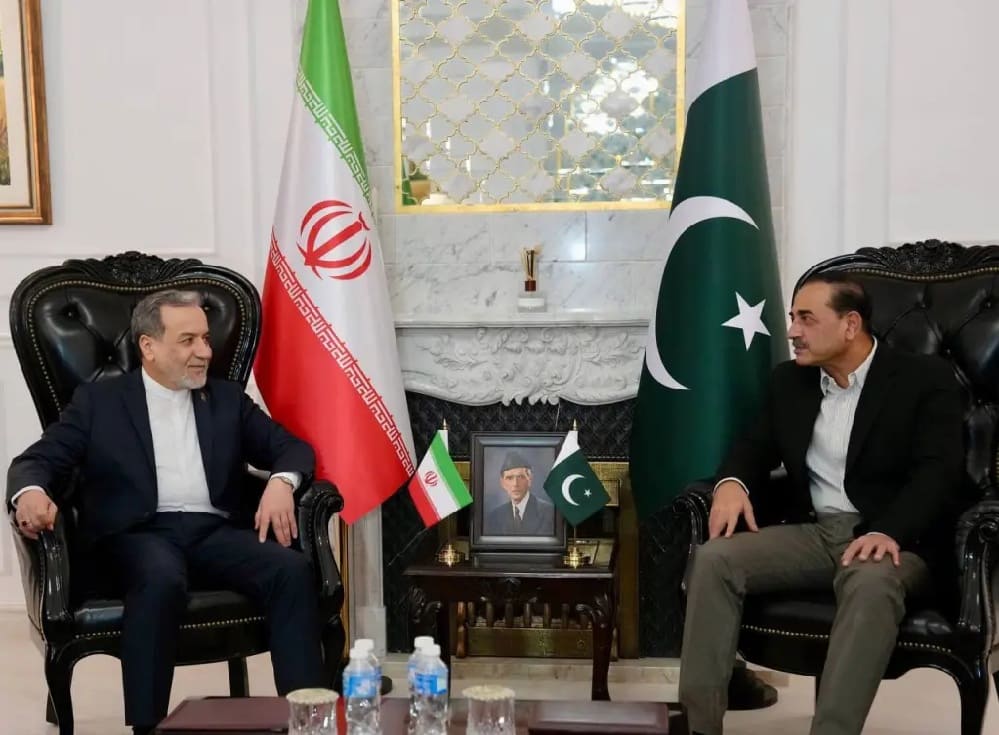
Pakistan now faces a tricky diplomatic problem. It wants to become a useful conduit between Washington and Tehran. But the Iranian aircraft allegations hurt that position, especially with US lawmakers already skeptical of Islamabad.
If Washington backs the claims, Pakistan’s role as a mediator could face more scrutiny. Graham has already demanded an inquiry. In practical terms the outcome could have implications for intelligence trust, defence dialogue and the access Pakistan has to high-level diplomatic channels.
However, the case is still in dispute. Much of the public record is based on anonymous US officials, denials from Pakistan, and little official confirmation. Analysts must differentiate between known facts and politically charged accusations.
What to examine next
Three issues should concern defence observers. First, they should look for the Pentagon or Congress to provide more detail on Iranian aircraft movements. Second, they should ask if the Iran war cost is increasing again as repair and replacement estimates mature. Third, they should wonder if congressional pressure will undermine Pakistan’s mediating role.
The broader lesson is obvious. Today’s conflicts condemn more than the battlefield. It also tests diplomacy, budgets, alliances, and military stockpiles. Now the aircraft allegation and the $29 billion price tag fuel the same debate: Whom can Washington trust, and how long can it afford this war?
Cost, Credibility and Regional Power
The toll of the war in Iran has become more than a Pentagon accounting figure. Today it informs congressional oversight, U.S. regional policy, and Pakistan’s diplomatic stature. Graham’s comments turned the aircraft controversy into a broader political test for Islamabad.
At the same time, the new cost estimate by the Pentagon revealed the financial costs of continued operations against Iran. The development means the next phase of this crisis will depend not only on missiles, aircraft, and bases, but also on trust, transparency, and tough budget choices.
References
- https://www.cbsnews.com/news/pakistan-iran-military-aircraft-on-its-airfields-us-mediator-role/
- https://abcnews.com/Politics/republican-sen-graham-questions-pakistans-role-iran-negotiations/story?id=132892070
- https://www.reuters.com/world/middle-east/us-war-iran-has-cost-29-billion-pentagon-says-2026-05-12/
- https://breakingdefense.com/2026/05/price-tag-for-iran-war-ticks-up-to-29b-not-including-base-damage/
About the Author