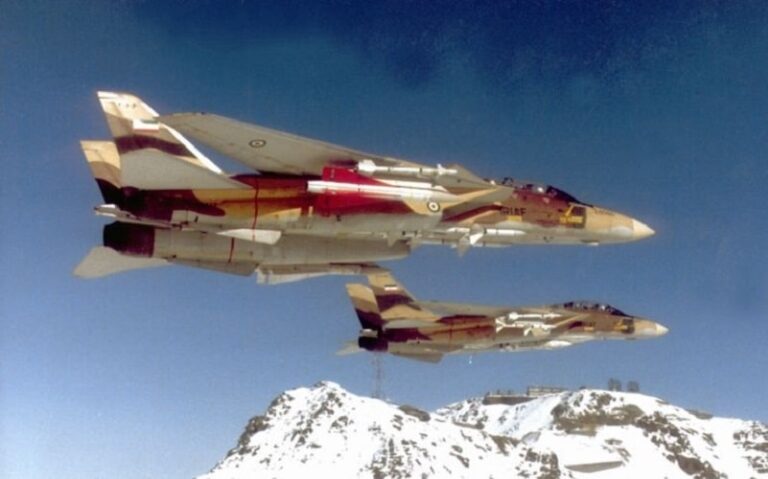

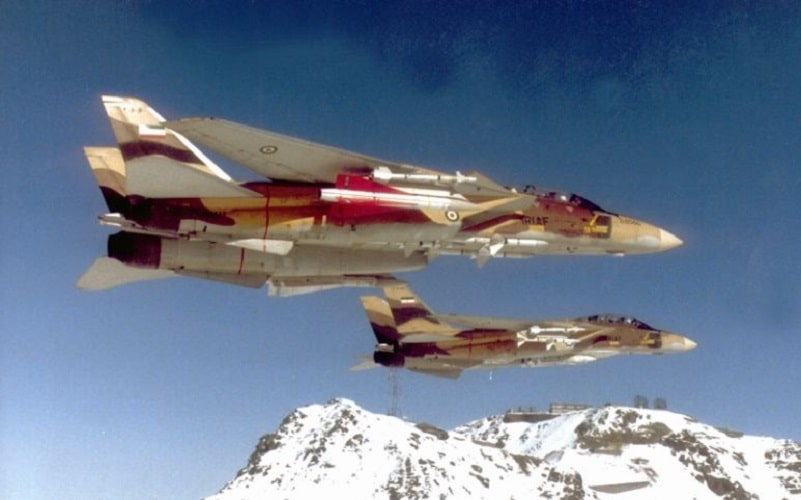
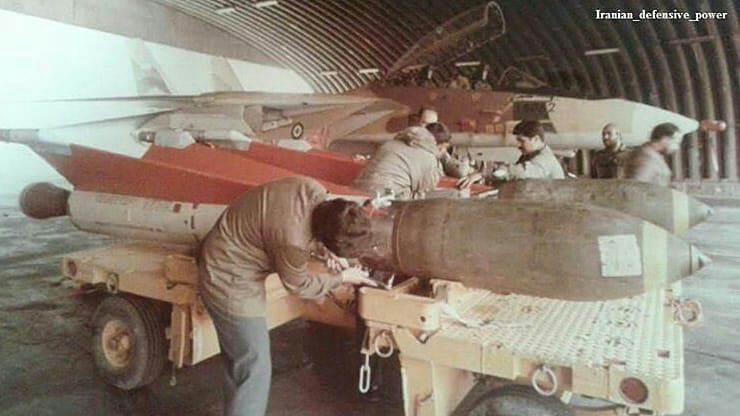
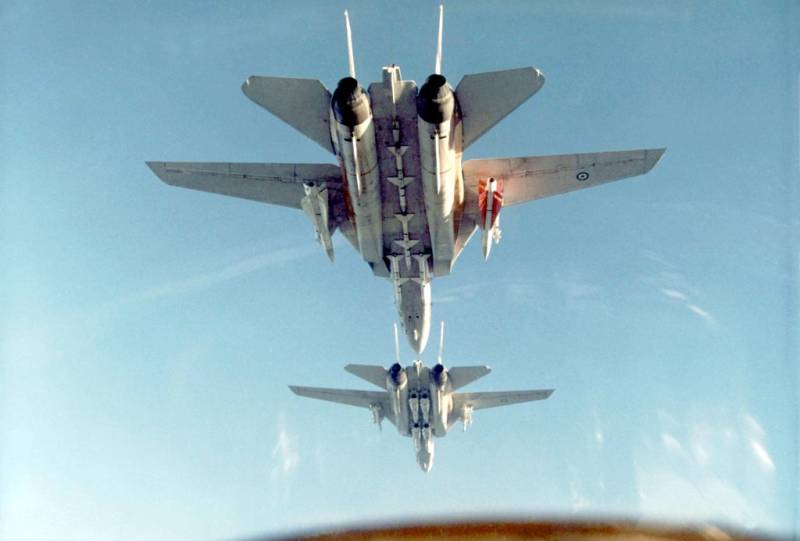
F-14 Tomcat carrying MIM 23 HAWK
The Iran-Iraq War (1980–1988) was one of the longest conventional wars of the 20th century. The war was characterized by brutal fighting and a high death toll. During this war, the Iranian Air Force used the Grumman F-14 Tomcat, which was one of the most advanced fighter jets of its time. Iran got these jets as part of its military ties with the US before the Islamic Revolution in 1979.
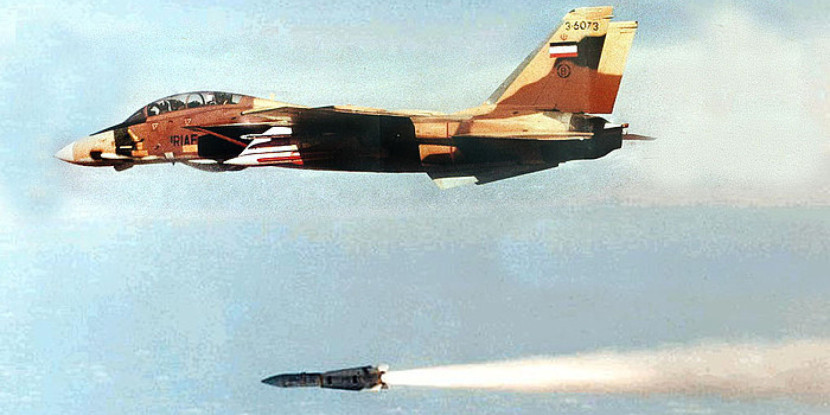
The F-14 was a powerful plane that could keep the airspace clear, but Iran’s access to spare parts and weapons, especially the AIM-54 Phoenix missiles, became more and more limited after the revolution because of sanctions and embargoes. Iranian engineers had to come up with creative solutions because there weren’t enough important air-to-air missiles. They used Raytheon HAWK surface-to-air missiles (SAMs) instead of the Tomcat’s intended weapons.
F-14 Tomcat and Iran’s Air Power
The F-14 Tomcat changed the way aerial combat was fought by using its advanced radar and powerful air-to-air missiles to attack enemy planes from a long way away. In the 1970s, Iran bought 79 F-14s, as well as a lot of AIM-54 Phoenix long-range air-to-air missiles and AIM-7 Sparrow and AIM-9 Sidewinder short-range missiles. After the Shah fell and the Islamic Republic took over, Iran could no longer get spare parts or new missiles from the United States.
These restrictions made the F-14 fleet much less effective. Even though it was difficult, the Islamic Republic of Iran Air Force (IRIAF) was able to keep a lot of F-14s flying. Before the revolution, American instructors trained Iranian pilots, and they were some of the best in the region. Their F-14s were crucial for keeping control of Iranian airspace. But as the war with Iraq went on, Iran’s stockpile of AIM-54 Phoenix missiles got smaller. This left Iran with a big problem: how to keep their powerful F-14s combat-ready without their main weapon.
Air-to-Air Missile Shortage
The AIM-54 Phoenix was the F-14’s main weapon. The long-range design enabled Tomcat pilots to intercept enemy planes before they could detect them. The Soviet Union supplied these missiles, which effectively destroyed Iraq’s MiG-21s, MiG-23s, and Su-22 bombers. But by the middle of the 1980s, Iran had used up most of its stockpile of Phoenix missiles.
Iranian engineers had to come up with creative ways to keep the F-14s working as air defense systems because they couldn’t get new missiles. The lack of other air-to-air missile systems, such as the AIM-7 Sparrow and AIM-9 Sidewinder, made the problem worse. Iranian engineers were desperate for a way out, so they turned to the Raytheon MIM-23 HAWK surface-to-air missile (SAM), which they had a lot of.
The HAWK Missile Solution
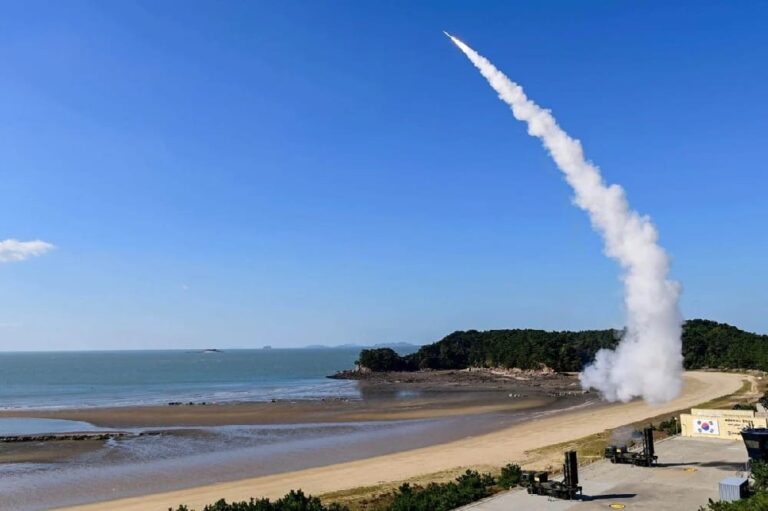
The HAWK missile was first made to be a medium-range, all-weather surface-to-air missile (SAM) that could shoot down planes or missiles that were coming in. It could go about 25 miles (40 km) at most and was guided by radar systems on the ground. But it wasn’t made for fighter jets like the F-14. Even so, Iranian engineers started working on turning the HAWK missiles into air-to-air missiles. This effort needed to get past many technical problems.
The HAWK missile was bigger and heavier than the F-14’s usual air-to-air missiles, and its guidance systems had to be changed so that they could work with the Tomcat’s radar. It’s unclear how the engineers made the HAWK compatible with the F-14, but they likely altered the missile’s launch and guidance systems. This change let the Tomcats shoot HAWK missiles at Iraqi planes, but the system was far from perfect.
Combat Effectiveness and Kill Data
Iran was able to protect its skies for a short time by using HAWK missiles on the F-14. These modified missiles weren’t as effective as the AIM-54 Phoenix. Still, they were able to win some battles. Iranian pilots used HAWKs, which are surface-to-air missile systems, to bring down several Iraqi planes. Historians and analysts still disagree on the exact number of deaths. Even so, the F-14s with HAWKs did win a few fights in the later years of the war. One of the most intriguing things that happened was when an Iranian F-14 shot a HAWK (a type of surface-to-air missile) at an Iraqi MiG-25 Foxbat.
The missile hit the MiG-25, which is a rare and impressive feat. The MiG-25 was one of the fastest planes in the world, flying at speeds of Mach 3. These wins were rare, but they showed that Iran can be creative when things get tough. The IRIAF kept its F-14s in the air and dangerous, even though they were in short supply. Iranian F-14s shot down about 160 enemy planes during the war. Their success made them one of the best air defense tools during the war. AIM-54, AIM-7, and AIM-9 missiles were responsible for most of the kills. The HAWK missiles did help the F-14 stay in combat longer, though. They let Iran keep control of the air even though they didn’t have a lot of money, which was important for preserving their defensive capabilities during the Iran-Iraq War despite facing significant resource constraints.
Challenges and Limitations
Even though HAWK missiles were a new idea, they had many problems when used as air-to-air weapons. The HAWK was never meant to be used in high-speed aerial combat, and its size and weight made it harder to move than other air-to-air missiles. The radar guidance system also wasn’t designed to work well in the fast-paced world of dogfighting, which made it less reliable in battle.
There were also problems with the electronics of the missile working with the F-14’s radar and fire control systems, which resulted in difficulties in targeting and launching missiles effectively during combat. Because of these problems, HAWK missiles were only used in a few battles. The IRIAF still relied on the few remaining Phoenix, Sparrow, and Sidewinder missiles for most of their air combat missions.
Conclusion
The Iran-Iraq War forced Iran’s military to be creative when things were dire. Iran modified Raytheon HAWK missiles to integrate them with its F-14 Tomcats. Even though there were serious supply shortages, this strange change kept the IRIAF defending its skies. The HAWK missiles weren’t meant to be used in air-to-air combat. Still, they gave Iran a temporary way to keep flying and fighting.
The IRIAF (Islamic Republic of Iran Air Force) was able to keep some air superiority during the war thanks to their use of HAWK missiles. It’s still not clear how many people HAWK-equipped F-14s killed. But the adaptation showed how determined Iranian engineers and pilots were. When resources ran out, their creativity kept Iran’s defenses going. This story about the change is still a symbol of strength during wartime. This accomplishment shows how determined the IRIAF is to keep going despite huge obstacles.
References
- Cooper, Tom. The Iran-Iraq War in the Air, 1980–1988. Atglen, PA: Schiffer Military History, 2002.
- Ward, Steven R. Immortal: A Military History of Iran and Its Armed Forces. Washington, D.C.: Georgetown University Press, 2009.
- Speak, Mike. The Great Book of Modern Warplanes. New York: MBI Publishing, 2000.
- https://theaviationist.com/2026/01/19/a-look-at-the-awg-9-radar-system/
About the Author