
Greyshark AUV 2026—Hormuz Mine Scan Edge
The Greyshark AUV has arrived in the undersea warfare debate at just the right time. Navies now grapple with naval mines, cable sabotage, seabed mapping, and clandestine underwater traffic. So a platform that can stay submerged for weeks without a support ship is more than a technical novelty. It gives commanders persistent undersea awareness, whereas the alternative of crewed vessels is expensive and exposed.
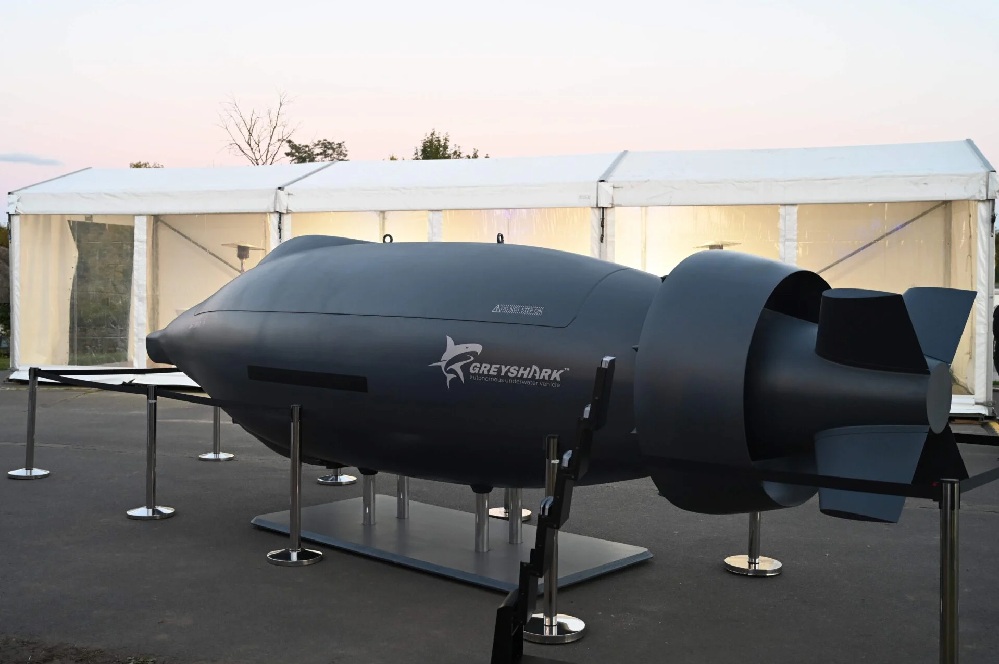
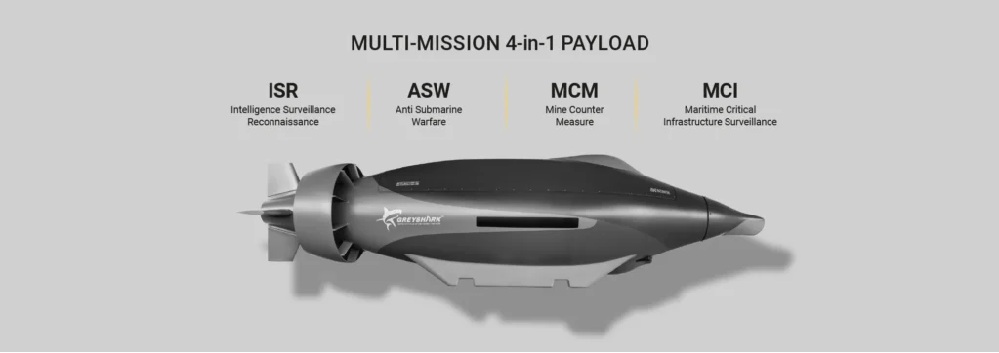
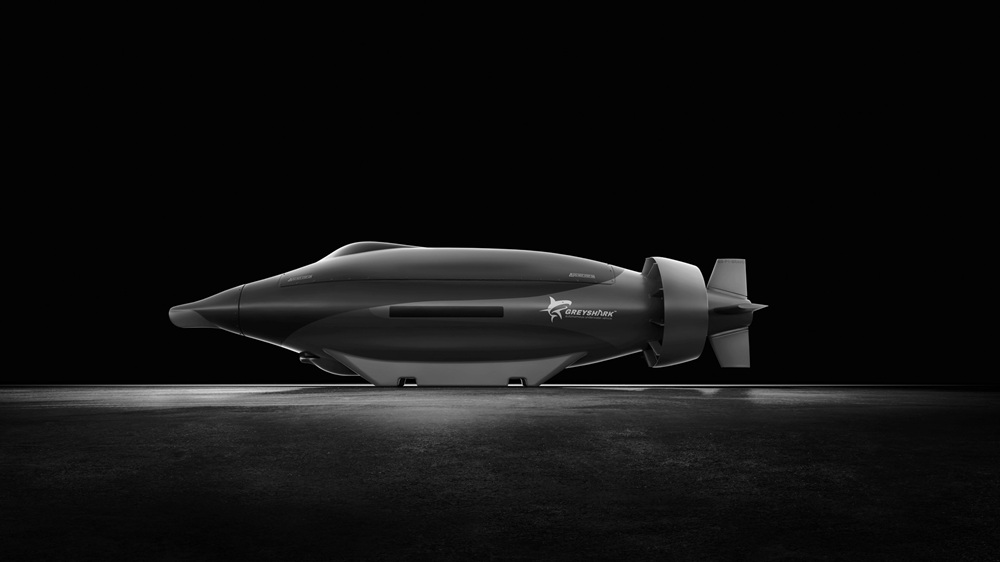
Designed by Euroatlas, based in Bremen, Greyshark is a long-range autonomous underwater vehicle for surveillance, reconnaissance, critical infrastructure protection and mine countermeasures. The endurance listed by Euroatlas is up to 16 weeks, with a range of 1,100+ nautical miles at 10 knots and 10,700 nautical miles at 4 knots. It also features a service speed of up to 10 knots and a maximum speed of more than 12 knots.
Hydrogen Endurance Advantage
The Greyshark AUV is powered by a hydrogen fuel cell, so it has a different operating model from short-endurance underwater drones. It can patrol for extended periods of time without having to rely on a nearby mothership and can bring back data after covering large areas of ocean. That means navies can deploy fewer ships with crews for dangerous or repetitive missions.
This endurance is critical because maritime threats are rarely on schedule. Mines might move or settle or be hidden until traffic resumes. Similarly, subsea pipelines and cables need constant monitoring, with inspections occurring frequently. Greyshark therefore supports a move away from episodic search towards persistent patrols.
17-Sensor Seabed Mapping
Greyshark is equipped with 17 high-resolution sensors and is capable of generating seabed imagery at 1.6 inches per pixel, according to media reports. That level of detail is important for mine warfare because small things can mean the difference between a route being open or closed.
Greyshark also integrates acoustic sensors, LiDAR, pressure sensors and side-mounted detection systems into a fused onboard intelligence network. Sensor fusion enhances the mission picture because each type of sensor perceives the underwater environment differently.
Hormuz: The Key Test
The Greyshark AUV is really useful in the Strait of Hormuz. This waterway is important because it connects the Gulf to the rest of the world, and mines in the water can make people nervous even if a ship does not hit one. In April 2026 people in the region were worried about clearing mines near the Strait of Hormuz. They said it was difficult to know where the mines were, which made it difficult for ships to pass through safely.
There was a report by Interesting Engineering that said people from Euroatlas think the Greyshark AUV could be used to find mines that Iran put in the water in April 2026. Verineia Codrean, who is responsible for strategy and special projects at Euroatlas, said that one person with six Greyshark vehicles could make a map of the Strait of Hormuz in less than 24 hours. We do not know if this claim is true yet. It shows what the Greyshark AUV is excellent at: it is fast, it can work alone, and it helps keep sailors safe. The Greyshark AUV is about speed, autonomy and less risk to sailors, which is what it promises to do.
Safer Mine Countermeasures
Current countermeasures are still really slow and dangerous because the threat punishes us when we are not sure. We use many things to help with the task, like minehunters with people on them, divers, helicopters and machines that we control from far away. We also need other ships to protect them and people to bring food and supplies, and we must be cautious about the risks.
A machine that can work underwater for a time can go ahead and look around, make a map of the seabed, mark things that look suspicious and make the area that the teams with people have to search a lot smaller. So the Greyshark machine is the one to use for a system that has many layers to find and remove mines. It can make the search easier, give the people in charge information and help them speed up decisions about which routes are safe. Then the special teams that clear mines can focus on the ones we’re sure are there.
Swarm Undersea Networks
Euroatlas thinks the Greyshark has an ability to work together with other Greysharks. These vehicles can work together and share jobs. Send secret messages to each other using special underwater sounds, satellites and radios. This ability is critical because one Greyshark can only look at an area, but many Greysharks can look at a much bigger area.
For example, a group of Greysharks can break up a job into smaller parts and change what they are doing as they receive new information. These Greysharks can also talk to ships, submarines, towers on the coast and other computer systems. That makes the Greyshark useful for more than finding mines.
Narco-Subs to Seabed Security
The Greyshark AUV can also help stop smugglers. They use narco-submarines to move cocaine from South America to North America and Europe. These submarines are difficult to spot because they are low to the water, take stealthy routes and travel when it’s difficult to see. The Greyshark AUV can search an area and figure out where it might be. A bigger market for AUVs is protecting things like pipelines, offshore energy systems and fibre-optic cables.
These things are important for countries to work properly. A quiet AUV, like the Greyshark, can watch over them for a time without needing a person on board. This way countries can keep an eye on their assets without having to send a ship to stay nearby. The Greyshark AUV and other underwater drones can teach us how to protect these assets from damage or jamming.
What to Track Next
The Sea trials for Greyshark are going to show how much of what Greyshark says it can do actually works. In August 2026, the company will test how long Greyshark can operate, how well it can navigate autonomously, and how well its sensors function in real life. People who care about Defense should pay attention to how Greyshark handles hydrogen fuel, locates targets underwater and processes information quickly.
People should also watch what NATO countries are doing when it comes to buying things. Europe is concerned about seabed resources and gaps in underwater monitoring. Hence, NATO’s interest in Greyshark is strategically sound. However, potential buyers will ask difficult questions. They will emphasise sustainment, cyber protection, and integration with current mine warfare forces.
AUVs Reshape Mine Warfare
The Greyshark AUV gives us a look at what’s to come in fighting. It combines hydrogen fuel cells for endurance navigation on its own, integrates data from various sensors, and collaborates with other vehicles like a team. This project is all about a vehicle that helps monitor the seas for a period of time.
If Euroatlas is correct, the Greyshark AUV could make mining operations safer and faster. It could help ships to navigate dangerous waters more safely. Furthermore, Greyshark could improve naval mine warfare and underwater surveillance. As a result, it could become a formidable weapon in the fight against modern underwater threats.
References
- https://euroatlas.com/product/advanced-underwater-autonomy/
- https://interestingengineering.com/military/uncrewed-hydrogen-submarine-patrol-oceans
- https://www.nato.int/en/about-us/organization/nato-member-countries
- https://defensenewstoday.info/zumwalt-class-ddg-1000-costly-innovation-hard-lessons/
About the Author