

GÖKBAĞI Military 5G: Türkiye’s Sovereign LEO Core
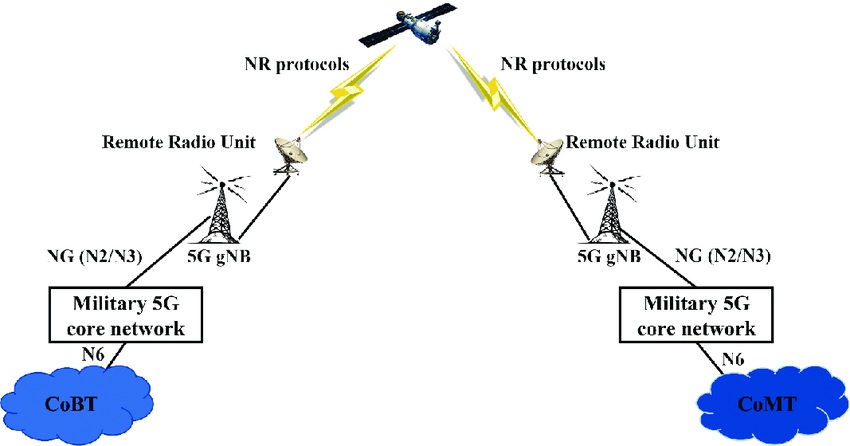
The ASELSAN-led GÖKBAĞI military 5G project has advanced Türkiye’s capabilities beyond traditional satellite communications with a sovereign network concept. A military 5G and 6G core connects to a satellite layer in low earth orbit. So Ankara wants battlefield connectivity that can withstand the strain of infrastructure failure, electronic warfare pressure and political dependence on foreign suppliers. ASELSAN: GÖKBAĞI Near-Orbit Satellites and Military 5G/6G Communication Systems. Its goal is to provide secure, high-volume, continuous communications from anywhere in the world, including in areas where terrestrial networks are unavailable or compromised.
Sovereign Military 5G Control
GÖKBAĞ (2004): Military 5G’s core value should be in national control. A layer of foreign-owned communications can become a strategic liability in a crisis. Licensing, political pressure, export controls, sanctions, cyber risk, or capacity denial may limit access. So Turkey wants a network that the Turkish armed forces can control from space, to the tactical edge. This does not make GÖKBAĞI only a satellite phone service. Instead, ASELSAN is combining satellite coverage with a military 5G/6G network architecture. This approach could support high-bandwidth data, command links, battlefield sensors, unmanned systems, and units operating beyond normal terrestrial coverage. The orbital layer also offers network reach. LEO satellites are orbiting the earth at a closer distance than geostationary satellites, which can reduce latency. However, LEO systems also require many satellites, precise handovers, reliable ground control and strong spectrum management.
GÖKBAĞI Contract Timeline
GÖKBAĞ I was unveiled to the public on 1 February 2026 at Türkiye’s 5th Global Strategies in Defense and Aviation Industry Conference. The contract was signed later at the exhibition SAHA 2026. Thereafter, the contract opening meeting was held in the Macunköy Technology Base of ASELSAN. The July 7 disclosure provided more granularity on the capability picture. No new award was announced. Rather, it showed the way a project already underway was going. ASELSAN will be the prime contractor according to the available data. It is responsible for the space segment, the ground segment, the advanced satellite control centres and the military 5G layer, they say. And that broad remit matters because integration is often what makes a battlefield network work in service and not.
GÖKBAĞI Core Capabilities
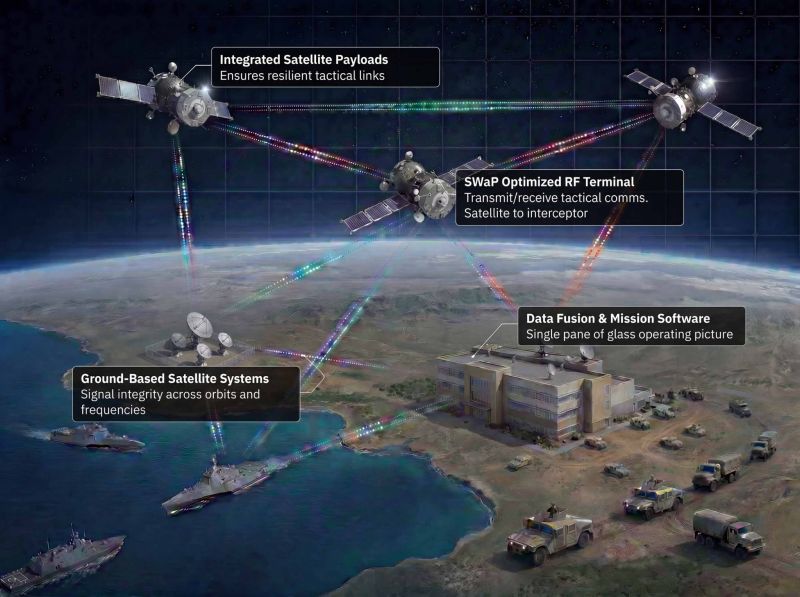
ASELSAN points out four main features of the GÖKBAĞI military 5G: encryption, large data capacity, seamless connectivity on the move and strong electronic warfare resilience. Each requirement is derived from a known operational problem. First, encrypted links protect command traffic and sensor data. Second, high capacity allows units to move imagery, targeting information, and situational updates. Third, mobile connectivity allows for mobile formations, not static headquarters. Finally, EW resilience recognises that future conflicts will begin in the electromagnetic spectrum. Furthermore, the project aims to connect all units of the Turkish Armed Forces to a single secure tactical network. Allied and partner units operating with Türkiye theoretically also could use that network. That ability is crucial for coalition missions, cross-border operations and joint task groups.
Impact on Turkish Forces
The commissioning of GÖKBAĞI could revolutionise Türkiye’s ability to connect ships, aircraft, drones, ground units and command centres. A sovereign LEO network would reduce dependence on fragile fixed infrastructure. It could also help units operating in deserts, mountains, seas, disaster areas and border regions where commercial networks are patchy. Meanwhile, 5G/6G military integration could be more than just voice traffic. It could offer live video, logistics updates, sensor feeds, blue-force tracking and drone control data. GÖKBAĞI military 5G is thus a piece of Turkey’s larger move toward networked warfare. But the programme must undergo rigorous engineering testing. LEO constellations require access to launch, satellite refresh cycles, ground stations, cybersecurity, anti-jam capability, and orbital management. ‘This project would improve military communications, even though Türkiye has developed significant space capabilities.
Türkiye’s Military Space Growth
The project is taking place in a fast-growing Turkish space industry. TÜBİTAK already owns observation satellites GÖKTÜRK-1, GÖKTÜRK-2 and İMECE in low orbit. Turkey’s first national communications satellite, TÜRKSAT-6A, launched in July 2024. It says it was commissioned by TÜBİTAK on 21 April 2025. Private and state-connected players are contributing to the overall picture. The Connecta network is run by Turkey’s first private LEO operator, Plan-S, which plans to grow to 200 satellites. ASELSAN is also developing its LUNA space-based internet-of-things line; LUNA-2 was launched via SpaceX on 30 March 2024. Baykar’s Fergani Space arm is also working on a constellation with over 100 satellites in five years. Anadolu Agency Ankara: The planned Ulugh Beg Global Positioning System links to GÖKBAĞI, Turkey, have not disclosed how these projects will integrate with GÖKBAĞI.
Strategic Bottom Line
GÖKBAĞI military 5G signals Turkey’s desire to dominate the communications layer on which modern forces are increasingly dependent. The rationale is straightforward: if the network is owned by someone else, then troops can’t behave like a network. However, GÖKBAĞI is still a contract and capability brief, not an operational constellation. ASELSAN has not disclosed the size of the planned constellation, orbital architecture, budget, launch schedule or fielding date. So key watchpoints are specs, satellite count, ground infrastructure, EW protection and first operational user trials. The message is clear: Turkey wants a sovereign military communications backbone in orbit. GÖKBAĞI provides that ambition with a prime contractor, a military 5G/6G architecture, and a strategic purpose. “The timeline for execution is what makes it a real capability on the battlefield.
References
- https://defensenewstoday.info/aerospace/
- https://www.aa.com.tr/en/turkiye/turkish-communications-satellite-turksat-6a-completes-1st-year-in-space/3625486
- https://www.researchgate.net/publication/403672934_5G_to_6G_Transition_in_Military_Communications_-_Architectures_Integration_and_Operational_Impact
- https://defensenewstoday.info/cyber-security-and-ai/
- https://www.aselsan.com/en/newsletter/newsletter-no-21
- https://uzay.tubitak.gov.tr/en/satellite-platforms/communication-satellite-platforms/
About the Author