

Ghost Murmur: CIA Heartbeat Sensor Claim Examined
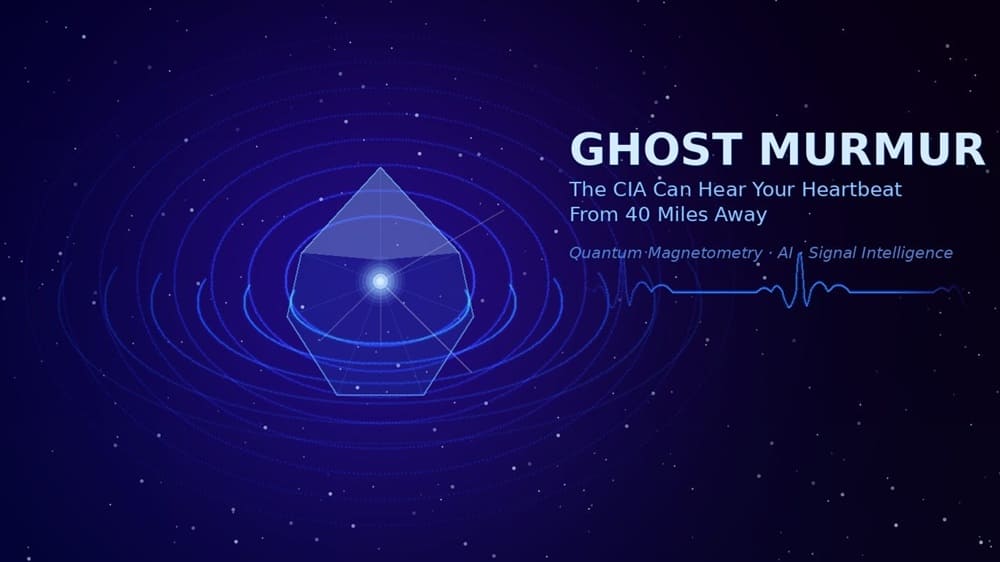
The reported use of Ghost Murmur technology to rescue a downed F-15E crew member has turned a combat search-and-rescue mission into a major debate over quantum sensing, battlefield surveillance, and information warfare. The claim is not credible. A classified system reportedly detected the electromagnetic signature of a concealed airman’s heartbeat at long range. However, analysts must tell this story carefully, because leading scientists say the claim of detecting a heartbeat alone from “40 miles” defies known physics.
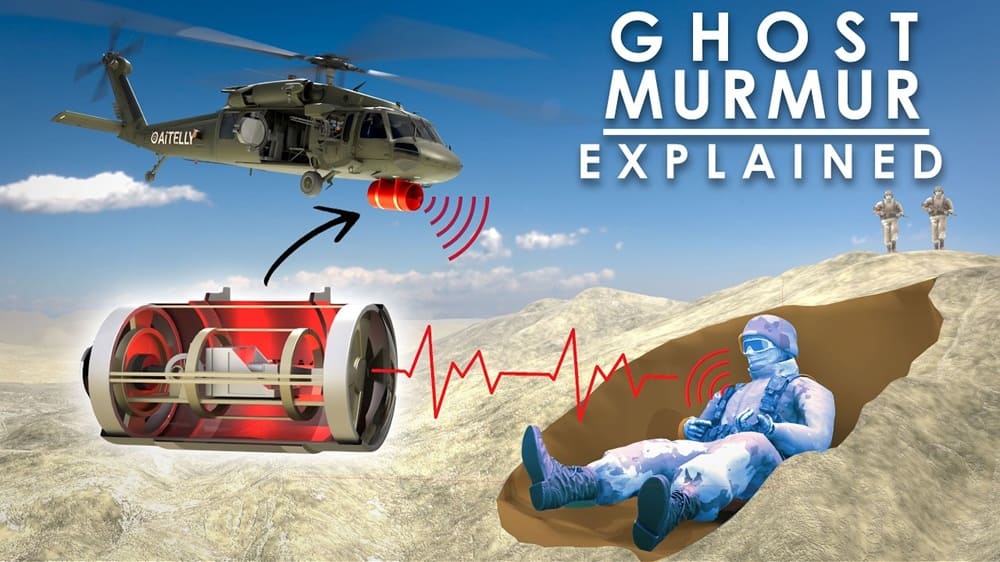
Ghost Murmur Explained
The rescue itself appears to have been real. Public defense reporting states that Iranian forces shot down the F-15E Strike Eagle, call sign DUDE 44, over Iran on 3 April 2026. Both crew members ejected, and U.S. personnel recovered them during a major operation under hostile conditions. The mission involved hundreds of personnel, dozens of aircraft, and multiple close calls, according to Air & Space Forces Magazine.
That’s important because combat rescue today isn’t just about guts and helicopters. It demands electronic warfare, airborne command links, intelligence fusion, deception, precision navigation, and rapid decision-making. For more context on the wider campaign environment, see Defense News Today’s analysis of Operation Epic Fury vs. Operation Midnight Hammer.
Heartbeat Tracking Breakthrough
Scientific American looked at public accounts that described Ghost Murmur as a CIA device that used “long-range quantum magnetometry” and artificial intelligence to pick out a human heartbeat from background electromagnetic noise. The concept is based on a real scientific discipline: magnetocardiography, which measures the weak magnetic fields created by the heart. The proposed mechanism involves the nitrogen-vacancy centres in synthetic diamonds. Such defects at the atomic scale can be used as very sensitive quantum sensors.
Recently diamond magnetometers have been demonstrated to be capable of contactless measurements of human cardiac magnetic signals. However, that research still required near-field sensing, controlled environments, averaging over hundreds or thousands of heartbeats, and heavy noise suppression. So the core technology is real, but the claim of battlefield dominance is still in dispute. Ghost Murmur technology, as reported in the media, would be a significant advance from laboratory or clinical sensing to airborne long-range detection.

Scientists Remain Sceptical
The main problem is the decay of the signal. The magnetic field of a human heart, even close to your chest, is fragile. In clinical magnetocardiography, specialists quoted by Scientific American say the sensors usually need to be only a few centimetres from the body. Over greater distances, the signal falls off rapidly and is lost in background noise.
That sound matters. A system mounted on a helicopter would have to contend with the Earth’s magnetic field, aircraft electronics, radar emissions, solar effects, radios, engines, and other biological signals. AI can help filter out noise, but it can’t bring back a signal that is essentially below the physics limit. Analysts should thus consider the “40 miles by heartbeat alone” story as an unconfirmed claim, not a proven capability.
Possible Real Explanation
A more plausible explanation is sensor fusion. Reports said the downed airman was carrying active rescue beacons. U.S. forces probably used signals intelligence, beacon data, infrared search, terrain analysis, airborne ISR, and human-led search planning. Air & Space Forces Magazine reported that the rescue beacons worked. According to official U.S. reporting, personnel recovered both crew members in under 48 hours.
Ghost Murmur may have been one classified layer inside a broader recovery architecture in this interpretation. It might have provided better cueing, confidence, or localization. But it probably did not work like a science-fiction scanner that simply “heard” one heartbeat through mountains from 40 miles away.
The New CSAR Era
The mission still has an important trend. The fight for combat search and rescue is becoming a battle of data. A survivor has to avoid enemy patrols, drones, thermal sensors, radio direction-finding, and local militias. Meanwhile, rescuers are required to develop a location picture without giving away the survivor through excessive use of the radio.
This is where passive sensing is useful. A passive system is not a transmitter like a radar. It listens. It compares, filters, and fuses data. Even a limited quantum sensor could be useful if it acts within a wider ecosystem of kill chains and rescue chains.
That same logic applies to electronic warfare and ISR. Modern air operations increasingly rely on airborne relays, spectrum control, radar suppression, and AI-supported data processing. Defense News Today has covered this wider EW trend in its analysis of the MC-55A Peregrine.
Caution on Energy Claims
The original story discussed microwave and infrasonic effects as well. Here we must be careful. The Frey effect (or microwave auditory effect) is a real phenomenon. Pulsed radiofrequency energy can produce perceived sounds within the head. Meanwhile, peer-reviewed discussion of weaponizing the effect remains skeptical, pointing out practical limits, large equipment, and safety concerns.
Defense readers shouldn’t assume that every battlefield rumour proves a weapon is being used. Directed-energy systems encompass various technologies, from dazzlers and high-power microwave concepts to counter-drone systems. Analysts, however, will require strong evidence before they accept claims of mass incapacitation, internal trauma, or silent battlefield defeat.
Strategic Verdict
Even if the strongest claim is exaggerated, the Ghost Murmur story remains significant. It shows how future rescue operations could integrate quantum sensors, AI filtering, passive surveillance, deception, and legacy combat rescue platforms. It also shows how officials can fold classified technology into strategic messaging.
Ghost Murmur technology should be described, for now, as a reported and disputed capability. Diamond quantum sensing is a real science. The rescue operation was genuine. However, the claim that U.S. troops heard a single human heartbeat from 40 miles away remains scientifically unproven in the publicly available evidence.
This is an important distinction. Defense analysis should welcome emerging technology but not turn classified hints into confirmed performance data. The likelier lesson is plain: warfare in the future will favour those forces that can fuse weak signals, keep survivors hidden from enemy SIGINT, and move recovery teams faster than hostile forces can close the net.
References
- https://pmc.ncbi.nlm.nih.gov/articles/PMC8733248/
- https://www.defensenews.com/news/your-military/2026/04/03/us-fighter-jet-shot-down-over-iran/
- https://www.scientificamerican.com/article/what-is-the-quantum-ghost-murmur-purportedly-used-in-iran-scientists/
- https://www.airandspaceforces.com/dude-44-rescue-massive-operation-iran-save-downed-airmen/
- https://arxiv.org/html/2601.18843v1
- https://pmc.ncbi.nlm.nih.gov/articles/PMC11435997/
- https://www.airandspaceforces.com/dude-44-rescue-massive-operation-iran-save-downed-airmen/
- https://www.nottingham.ac.uk/ifam/research/themes/diamond-quantum-sensing.aspx
About the Author