Germany Europe’s Strongest Conventional Army
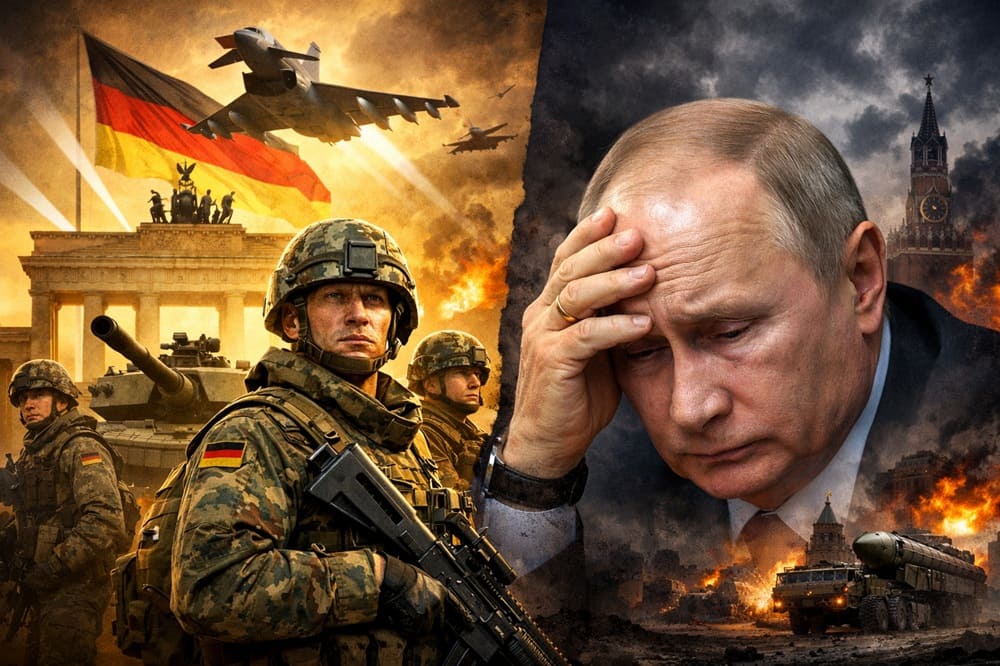
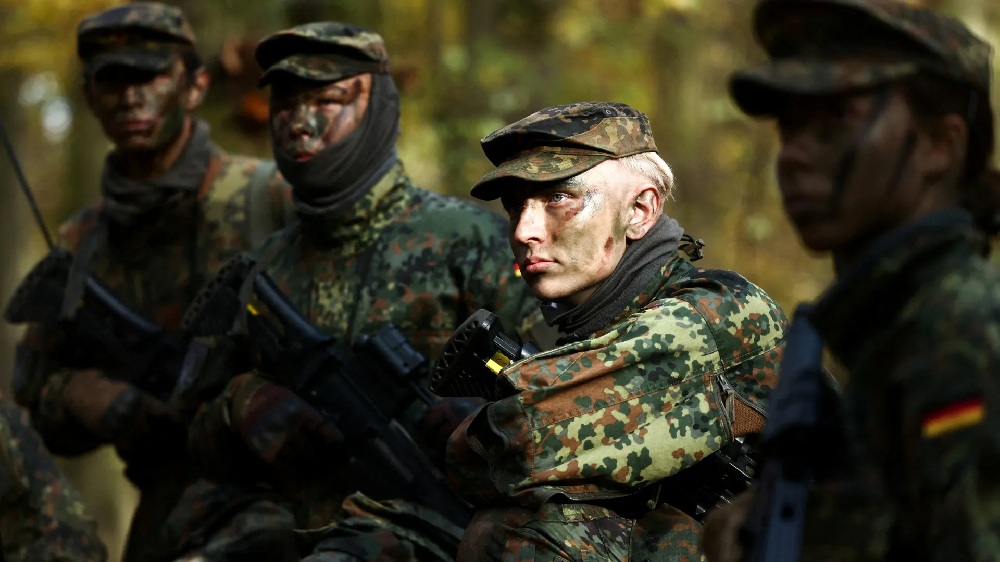
Germany is rebuilding military power at speed. In January 2026, 18-year-old men began receiving a compulsory questionnaire to record fitness for service, enabled by a new military service law passed in December 2025. Service stays voluntary for now. However, the law keeps a clear “backstop”: Berlin can reintroduce mandatory service if volunteer numbers fall short. Chancellor Friedrich Merz has linked that policy to a headline goal: fielding Europe’s strongest conventional army. The pledge is significant, as it indicates a more assertive European stance within NATO.
Russia’s 2029 Threat Timeline
Berlin’s threat picture has hardened since Russia’s full-scale invasion of Ukraine in 2022. Moreover, analysts describe “2029” as a reference year for a possible Russian move against NATO, which pushes planners to fund capabilities that take years to generate. Russia’s messaging has also sharpened. Moscow’s ambassador in Berlin, Sergey Nechayev, has claimed Germany is preparing for a broader confrontation. That rhetoric raises the perceived cost of delay.
From Post-War Restraint to Frontline Deterrence
After 1945, many European states preferred a militarily limited Germany. Memories of Nazi aggression shaped politics, and NATO’s US shield reduced the need for German strength. However, Russia’s war in Ukraine has changed the equation. European leaders now rely on Germany’s funding, industrial base, and scale to bolster NATO’s eastern edge. Moreover, Germany sits at Europe’s logistical center, with rail and road links that can shift troops and supplies quickly. Therefore, a stronger Bundeswehr no longer unsettles neighbors in the same way. Rather, it has evolved into a useful weapon against the Russian threat.
How Germany Is Europe’s Only Stopper
Germany combines Europe’s largest economy with central geography, heavy industry, and NATO infrastructure. Therefore, it can finance stocks, field brigades, and move forces east fast. Berlin can also maintain a long-term war economy and coordinate procurement among allies. Still, Poland, France, and others matter; Germany leads, not fights alone today.
Defining “Strongest” in Capability Terms
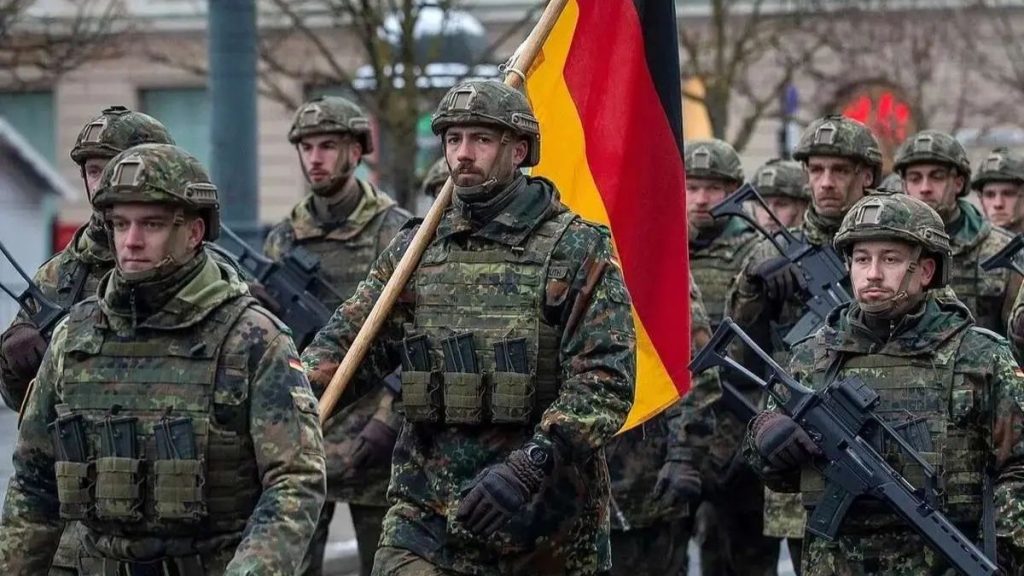
When Merz says “strongest,” he is not describing a parade-ground metric. He is describing a force that can fight in depth. In practice, that means brigades that can move fast and then hold ground under missile and drone pressure. It also means layered air and missile defenses, secure command networks, and stocks that last longer than a few intense days. Moreover, Germany will have to rebuild the less visible enablers: logistics, repair, medical evacuation, and trained reservists who can reinforce units on short notice. If Berlin aligns those pieces, it gets closer to Europe’s strongest conventional army in a way that matters to NATO planners, not just voters.
Volunteer Service, Conscription Backstop
Germany has chosen a dual-track model. Reuters reports that lawmakers can keep service voluntary, yet still activate conscription later via a separate Bundestag vote, potentially using random selection if slots are limited. The recruitment pitch targets young economists. Reporting cites voluntary 23-month contracts with strong pay and benefits: about €2,600 per month, plus free housing and medical care, leaving many recruits with roughly €2,300 net after deductions.
Consequently, the Bundeswehr competes with civilian wages rather than relying on appeals to duty alone. The law also rebuilds visibility over the eligible cohort. Both individuals at 18 receive a request to state their willingness to serve, although only men must respond under current constitutional rules. In addition, all men born after 1 January 2008 will undergo medical evaluation as capacity allows. Germany’s NATO manpower targets are explicit: 260,000 active soldiers and at least 200,000 reservists by 2035.
Funding Matters, Delivery Decides
Al Jazeera reports Germany plans to spend €108 billion on defense outlays in 2026 (about 2.5% of GDP), compared with €48 billion in 2021, and it cites a goal of 3.5% of GDP by 2030. Still, budgets do not equal combat power. Germany must convert funds into deployable brigades, stocked depots, functioning air defenses, and reliable sustainment. Moreover, force growth hits “boring” constraints first: barracks space, instructors, ranges, and medical capacity. Le Monde notes that Germany dismantled much of its conscription infrastructure after 2011, which limits how fast it can scale processing and training.
US Trust Erodes, Nuclear Debate Grows
Russia explains the threat. However, the timing also reflects a collapsing belief that Washington will always backstop Europe. In polling cited by Al Jazeera, majorities of Germans doubted the US would keep guaranteeing Europe’s security through NATO, and skepticism increased across 2025. That shift has fueled a nuclear discussion that would have sounded fringe a decade ago. Defense News reported in June 2025 that 64% of Germans supported a European nuclear umbrella independent of the United States, while they still opposed Germany building its own bomb.
Culture, Legitimacy, and Propaganda
German military policy carries historical weight, so legitimacy matters. Analysts in the reporting warn that pro-Kremlin narratives will likely use conscription sensitivity as a wedge, framing it as “sending kids to die.” Therefore, Berlin must communicate in operational terms, not slogans, and it must show how service protects recruits and reinforces deterrence.
Conclusion
Germany’s drive to build Europe’s strongest conventional army signals a tougher, more realistic security posture. Russia’s war in Ukraine has pushed Berlin to treat readiness, reserves, and industrial output as immediate priorities. Meanwhile, fading confidence in Washington has strengthened calls for a more European-led deterrent, including renewed nuclear umbrella discussions.
However, spending alone will not create credible power. Germany must turn funding into trained manpower, deeper ammunition stocks, resilient air defenses, and brigades that can deploy quickly and sustain pressure. If Berlin delivers on timelines, it will become the core of Europe’s conventional balance for the next decade.
References
- https://www.aljazeera.com/news/2026/1/19/why-is-germany-trying-to-build-europes-strongest-conventional-army
- https://www.reuters.com/business/aerospace-defense/german-parliament-backs-controversial-military-service-law-amid-russian-threat-2025-12-05/
- https://www.defensenews.com/global/europe/2025/06/23/most-germans-want-europe-to-have-its-own-nuclear-umbrella-poll-finds/
- https://www.lemonde.fr/en/international/article/2025/12/06/germany-introduces-voluntary-military-service_6748204_4.html
About the Author