
Failed Russian Avangard Hypersonic Missile Test Near Yasny
Failure for Russia’s hypersonic flagship
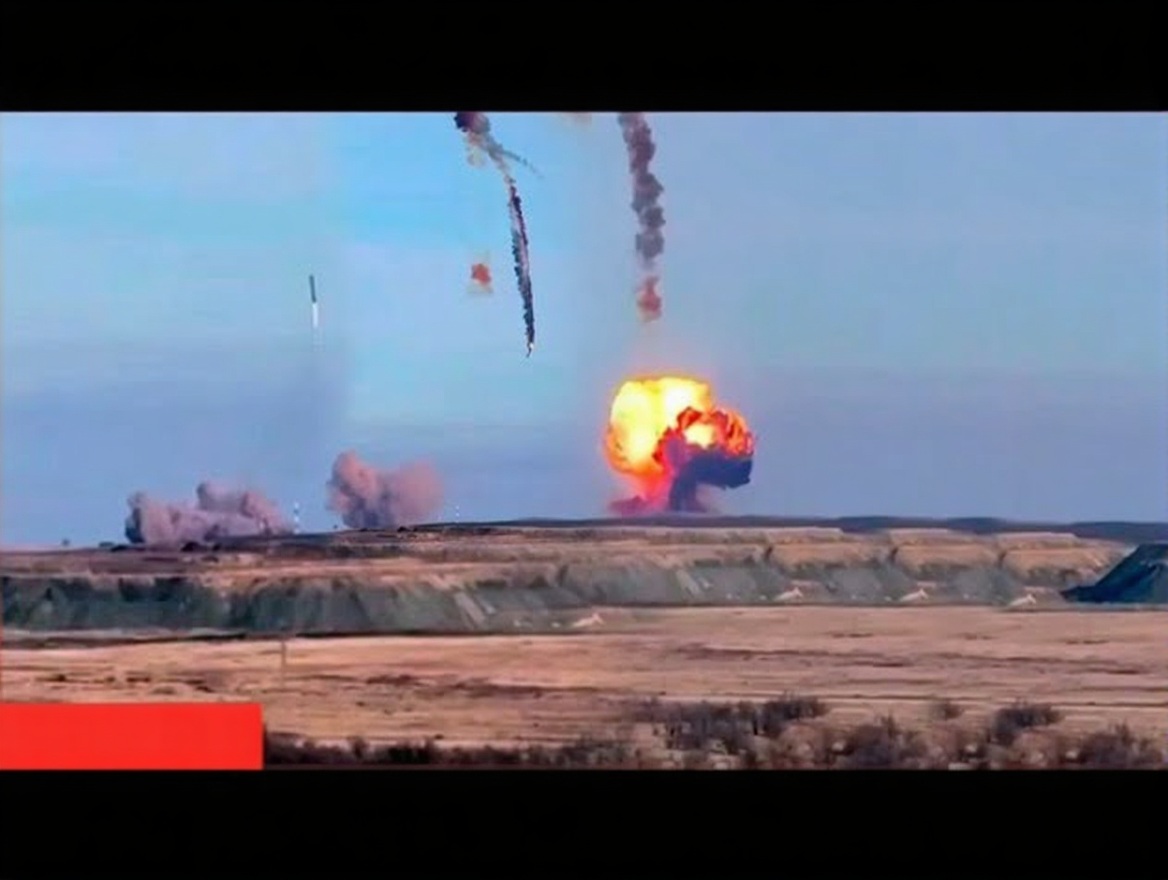
A failed Avangard hypersonic missile test near Yasny in Russia’s Orenburg region has offered a rare, public glimpse of vulnerabilities in Moscow’s most prized strategic systems. Video filmed by local residents shows a missile climbing only a few hundred meters before an onboard explosion, loss of control, and a catastrophic ground impact, followed by a towering, orange-tinted cloud of toxic propellant.
Astra, a Russian outlet, reported a purple smoke cloud over the city, while Ukrainian defense media Militarnyi identified the projectile as a UR-100N ICBM carrying an Avangard hypersonic glide vehicle. Although Russian officials have stayed silent, the combination of location, fuel signature, and basing history strongly points to an Avangard-configured system.
Yasny: Russia’s Avangard missile regiment
Yasny hosts a missile unit of the 13th Orenburg Red Banner Rocket Division, part of Russia’s Strategic Rocket Forces and one of just 11 ground-based launch areas for long-range, nuclear-capable missiles. Open sources indicate that this division operates silo-based UR-100NUTTKh missiles reconfigured to carry Avangard glide vehicles, with around a dozen launchers in service as of 2025.
Since 2019, the older R-36M2 “Voyevoda” missiles at Yasny have been slowly swapped out for new systems that can carry Avangard glide vehicles, and at least one group is expected to be completely updated by 2023–24, according to the Russian Strategic Missile Forces. So, any major problem at this site raises concerns about how reliable Russia’s
Avangard carrier: UR-100N versus Sarmat
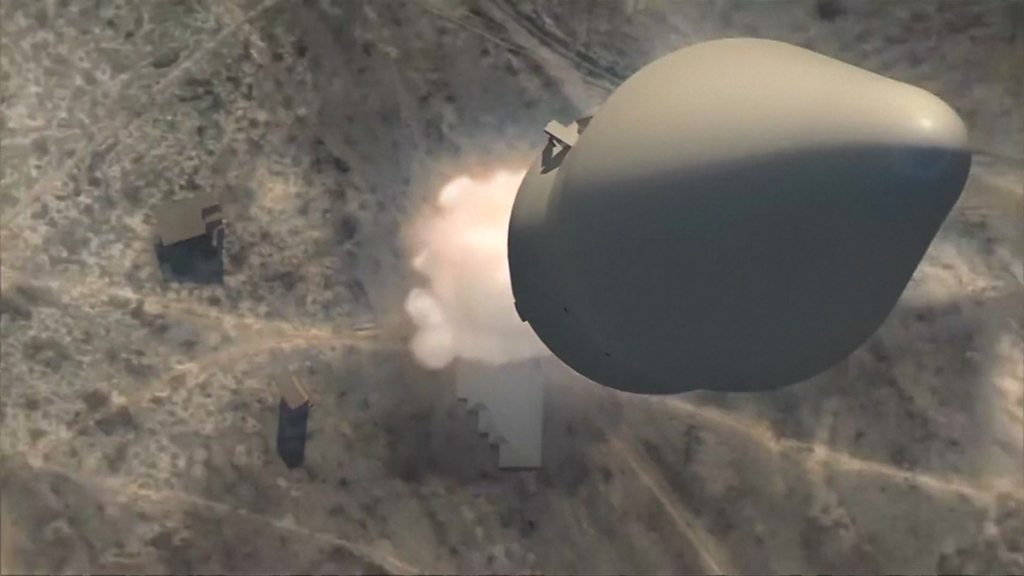
The failed Avangard hypersonic missile test has reignited debate over which ICBM actually carried the glide vehicle. Publicly, Russia has identified two compatible carriers: the Soviet-era UR-100N (SS-19 “Stiletto”) and the newer RS-28 Sarmat super-heavy ICBM.
Avangard itself is a nuclear-capable boost-glide vehicle designed to survive and outmaneuver missile defenses at speeds reportedly up to Mach 20–27 over ranges beyond 6,000 km. Most open-source assessments still associate it primarily with refurbished UR-100NUTTKh silos, which Russia has repurposed specifically for Avangard deployment.
Some analysts argue that the plume signature and silo configuration at Yasny could also match the RS-28 Sarmat program, which has suffered several test problems. However, because Sarmat has had few successful flights and ongoing technical issues, many independent experts still think that a UR-100N-based Avangard setup is the more likely option here.
What the orange cloud reveals
Footage and eyewitness accounts from Yasny show a low-altitude explosion over the steppe. Witnesses then saw the missile tumble and break apart, trailing debris across the sky. Moments later, a massive orange cloud rose, hanging over the launch area like a toxic veil. That color strongly suggests burning nitrogen-based oxidizers mixed with hypergolic fuels.
Systems like UR-100N and R-36M2 use similar liquid-fuel combinations in their silo-based stages. These propellants deliver high performance and long-term storage, but they are extremely toxic. When a launch goes wrong, as with the failed Avangard hypersonic missile test, contamination risks rise sharply. Russian regional authorities said evacuation was unnecessary, yet residents may still worry about lingering fumes.
Early-flight failure and reliability
Defense News Today’s frame-by-frame analysis suggests the missile climbed only 200–400 meters. An internal event then triggered structural breakup and loss of control. The observed sequence was boost, onboard explosion, and tumbling descent. A secondary blast from unspent fuel followed. Together they point to early propulsion or control system failure.
For Russia, that is particularly awkward. Avangard has been showcased as a mature, serial-production capability since 2018. Moscow markets it as being able to punch through any existing missile defenses. A visible launch-phase mishap near an operational Avangard base undermines that narrative. Moscow may quietly write it off as a one-off technical anomaly.
Russia’s hypersonic posture
From a strategic perspective, the failed Avangard hypersonic missile test matters less for warhead physics and more for perceptions of system robustness. Hypersonic glide vehicles are only as credible as the booster, silo infrastructure, and launch procedures that put them on trajectory.
Western and Ukrainian analysts already track Russian struggles with other flagship systems, such as the RS-28 Sarmat heavy ICBM and various naval hypersonic projects. A conspicuous failure at Yasny will feed into assessments that Russia’s cutting-edge deterrent remains operationally fragile, especially under sanctions and supply-chain stress.
For additional background on how hypersonic missiles fit into Russia’s broader modernization, see Defence News Today’s coverage of the Zircon hypersonic cruise missile and China’s evolving long-range air-to-air arsenal in J-10C PL-17 testing.

How NATO and Ukraine will read the failure
NATO planners will treat the Yasny incident as a valuable technical data point. Each failed Avangard hypersonic missile test reveals more about Russian launch timelines and propellant behavior. It also hints at weak points in silo operations and supporting ground procedures. Ukrainian intelligence and partners will fold this failure into a broader picture of Russian strategic-forces readiness.
They will compare it with other reported test anomalies and recurring infrastructure accidents. In public, the Kremlin will insist that Avangard remains invincible and fully combat-ready. Behind closed doors, specialists will dissect telemetry and debris from Yasny in exhaustive detail. Their goal is to stop the next test from ending in the same orange cloud over the steppe.
References
- https://militarnyi.com/en/news/failed-launch-of-avangard-system-hypersonic-missile-exploded-at-russian-test-site/
- https://www.pravda.com.ua/eng/news/2025/11/28/8009468/
- https://missilethreat.csis.org/missile/avangard/
- https://en.wikipedia.org/wiki/UR-100N
About the Author