

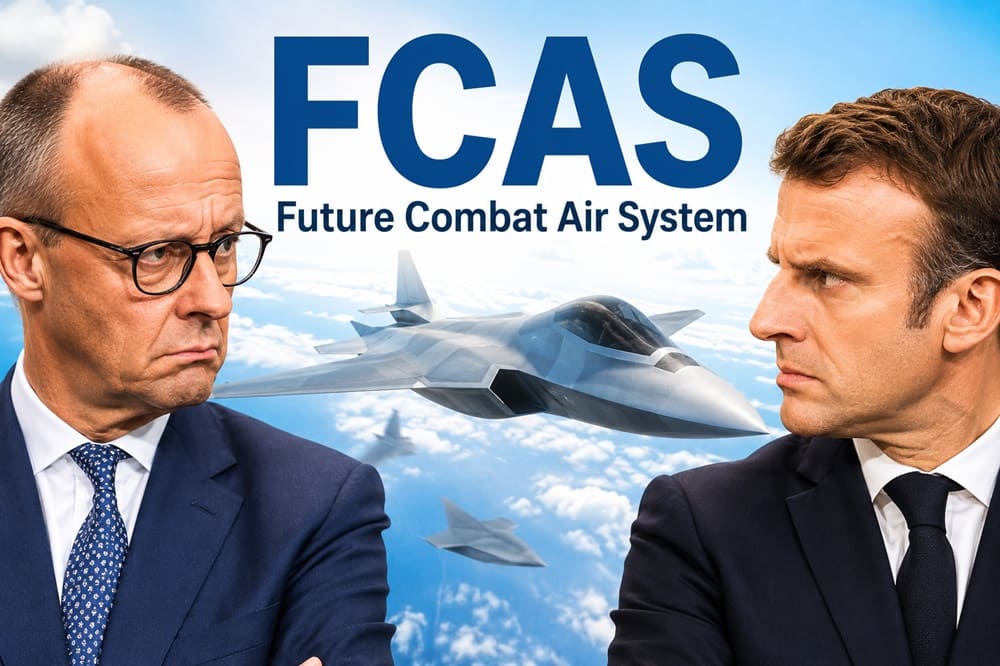
Europe’s $110bn FCAS Fighter Jet Collapses
The FCAS fighter jet project has suffered its biggest setback since launch. Germany and France have halted development of the joint New Generation Fighter, the crewed aircraft at the heart of the Future Combat Air System. However, they haven’t killed off all FCAS technology lines.
The decision comes after years of tension between Dassault Aviation and Airbus. Dassault wanted to maintain strict control over the fighter design. German and Spanish industry, represented by Airbus, wanted a more balanced industrial split. So a programme designed to embody European defence unity finally snapped over control, workshare and national requirements.
Why FCAS important for Europe
Germany and France launched FCAS in 2017, under Angela Merkel and Emmanuel Macron. Later Spain joined the programme (through Indra), giving it a wider European industrial base. The idea was to replace France’s Rafale and Germany’s Eurofighter Typhoon in about 2040.
But FCAS was never simply a stealth fighter. It was a systems-of-systems approach. A crewed New Generation Fighter would be teamed with remote carrier drones, advanced sensors, next-generation weapons and a Combat Cloud. That network would integrate air, land, sea, space and cyber assets into one tactical picture.
That ambition meant the FCAS fighter jet project had a price tag above €100 billion, or some $110 billion. It was also politically significant. Macron used it as proof that Europe could build sovereign military technology without relying on the United States.
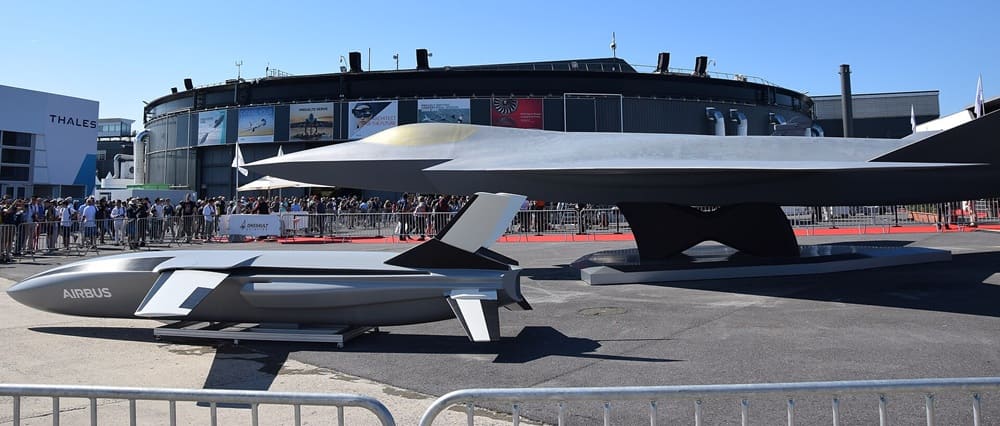
Airbus and Dassault’s industrial argument
The industrial argument was the programme’s main weakness. Dassault built and exported the Rafale, so the French saw the company as Europe’s leading designer of combat aircraft. However, Airbus represented Germany and Spain, which had invested money, factories, and skilled labour and expected equal treatment.
The clash affected workshare, IP, design authority and decision-making. It also delayed the fighter’s next stage. German officials could only push the industry so far, while French officials would not accept a fighter programme that weakened Dassault’s control over the airframe.
Common airframe, different requirements
The dispute also revealed a deeper problem. France wanted a future aircraft to carry nuclear weapons and operate from aircraft carriers. Germany did not need either capability. As a result, both governments were trying to develop one fighter built around two different military doctrines.
Germany reportedly looked at a two-aircraft solution under the FCAS umbrella. One jet could satisfy French nuclear and carrier needs. Another could cater to German and Spanish priorities. Shared engines, sensors, weapons, software and cloud systems may have cut costs.
But France turned away from that road. In the eyes of Paris, dividing the airframe undermined the logic of a joint fighter. From Berlin’s perspective, agreeing to a French-led single aircraft would be accepting funding requirements that the Bundeswehr would not use. So the FCAS fighter jet project had arrived at a point where compromise no longer solved the technical problem.
Combat Cloud Survives
The Combat Cloud is now the most important FCAS component left. It can still deliver value, because the future of air combat depends on data fusion, secure communications and distributed targeting. A cloud architecture could link Eurofighters, Rafales, drones, ground radars, missiles and command centres.
Still Combat Cloud without New Generation Fighter changes the entire programme. FCAS becomes less a flagship sixth-generation aircraft effort and more a narrower networking project. That is useful for now, but it doesn’t answer Europe’s 2040 fighter replacement problem.
For more background, see Defence News Today’s Europe coverage. For airpower analysis, see Defence News Today’s air force section.
Impact on Germany, France and Spain
France now has the choice of funding a Dassault-led Rafale successor, looking for a new European partner, or extending the Rafale development for longer than planned. But each option has cost and schedule and export-risk consequences.
Germany has a different dilemma. Berlin needs rapid rearmament after Russia’s all-out invasion of Ukraine. It already chose the F-35 for nuclear-sharing missions, and it may now invest in Eurofighter upgrades, American platforms or another European sixth-generation path.
The third most exposed partner is Spain. Through Indra, Madrid was a supporter of FCAS and expected industry to play a role in Europe’s future combat-air ecosystem. It now has to decide whether to continue with Combat Cloud work, go along with Germany or assess rival programmes.
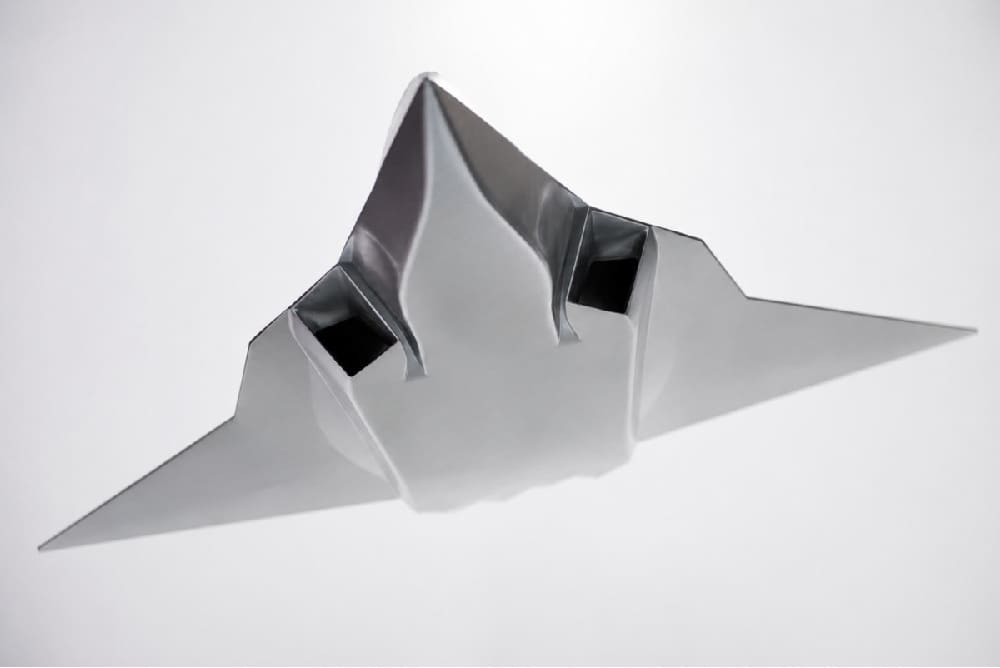
The broader European fighter gap
Fallout does not mean Europe is devoid of aerospace know-how. Advanced know-how exists at Dassault, Airbus, Safran, MTU, Indra, MBDA and Hensoldt. Yet Europe still struggles to turn that expertise into a coherent combat-air programme.
Meanwhile, a competing sixth-generation project—the UK-Italy-Japan Global Combat Air Programme—is advancing. The U.S. continues to field upgrades to its F-35s, while China is expanding its stealth-fighter ecosystem. The collapse of the FCAS fighter jet project could, therefore, reshape European airpower for decades.
Conclusion
FCAS failed because the politics never matched the industry and military requirements. “It was a daring idea, and the Combat Cloud still counts. But a fighter aircraft needs clear leadership, stable requirements and strong design authority.
Germany and France were divided on fundamentals. So Europe has lost not only a joint aircraft but also squandered the time, credibility and a unique opportunity to consolidate its combat air industry before the next generation arrives.
References
- https://www.reuters.com/business/aerospace-defense/german-french-leaders-unable-resolve-fcas-fighter-jet-dispute-sources-say-2026-06-08/
- https://www.theguardian.com/world/2026/jun/08/france-and-germany-abandon-joint-project-to-build-european-fighter-jet
- https://www.airbus.com/en/products-services/defence/future-combat-air-system-fcas
- https://www.defensenews.com/global/europe/2026/03/04/french-german-fighter-program-on-life-support-as-dassault-blames-airbus/
About the Author

Russia is at there doorstep and they are still fighting with each other, they will never learn.