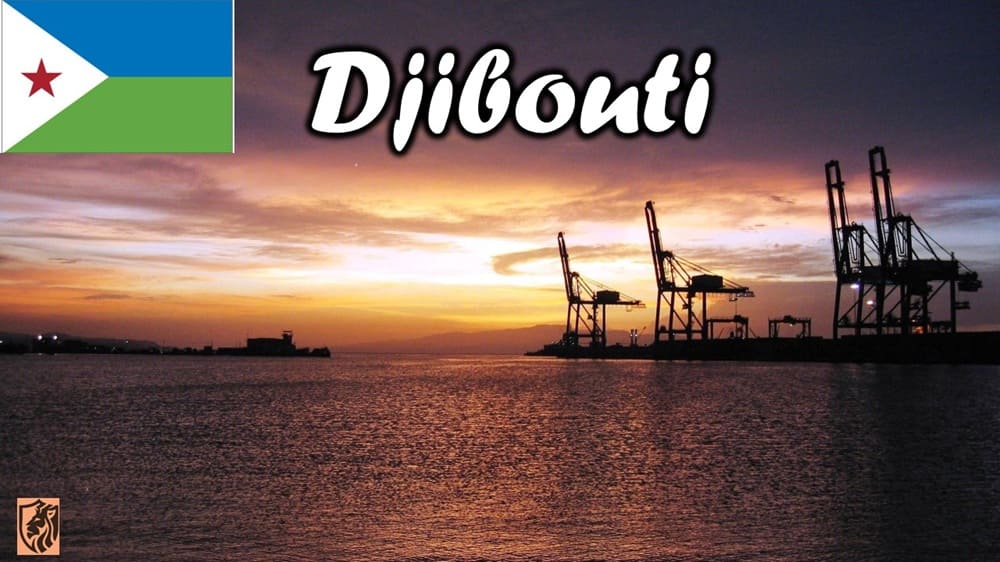
Djibouti: Our geography is our oil
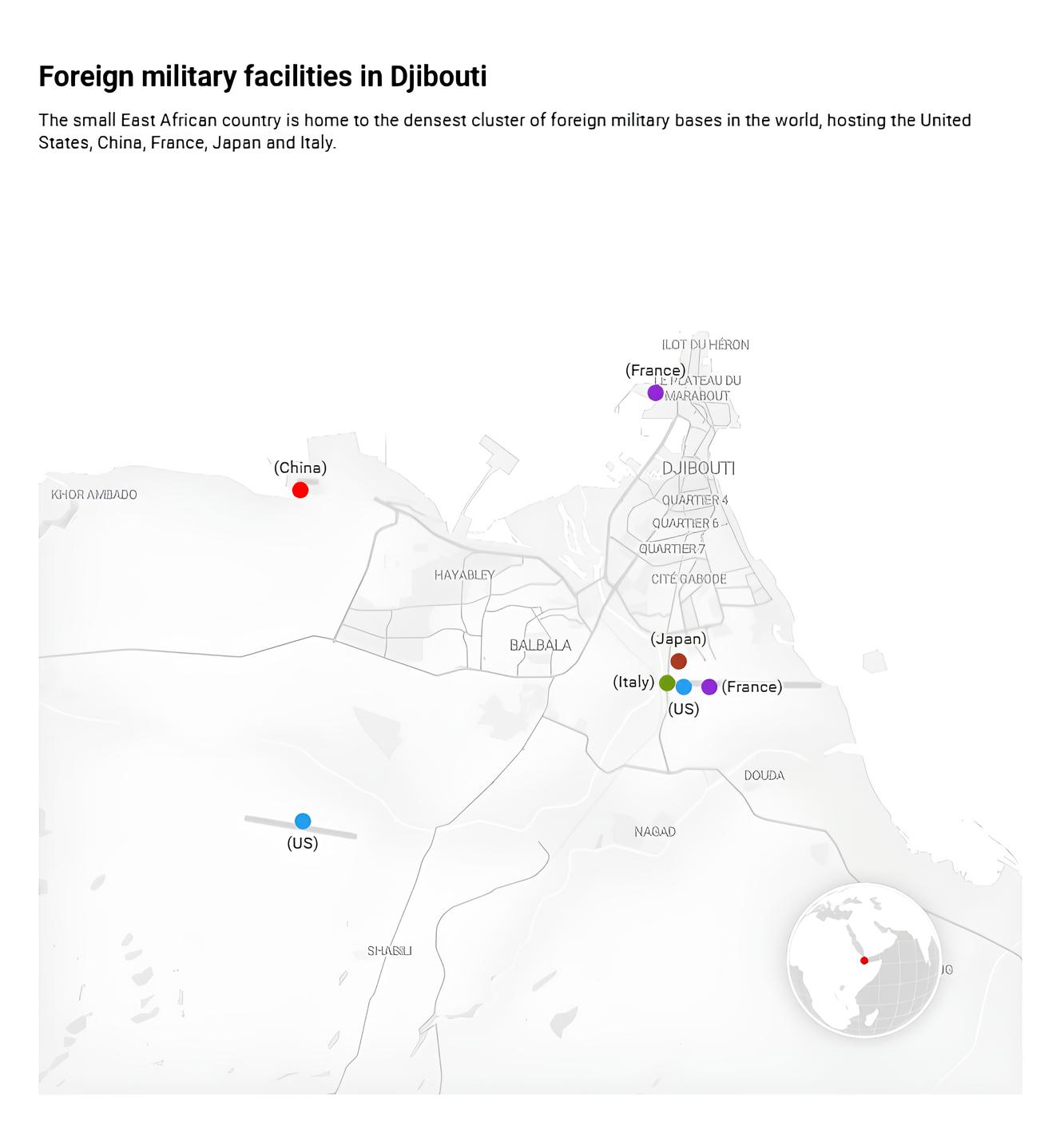
Djibouti doesn’t have much oil, minerals, or a big market at home. But it controls access to one of the world’s most important shipping lanes. Because of this, Djibouti has foreign military bases from the US, China, France, Japan, and Italy along a short stretch of coast. President Ismail Omar Guelleh has used his position to turn geography into money, power, and the stability of his regime.
Importance of Bab el-Mandeb
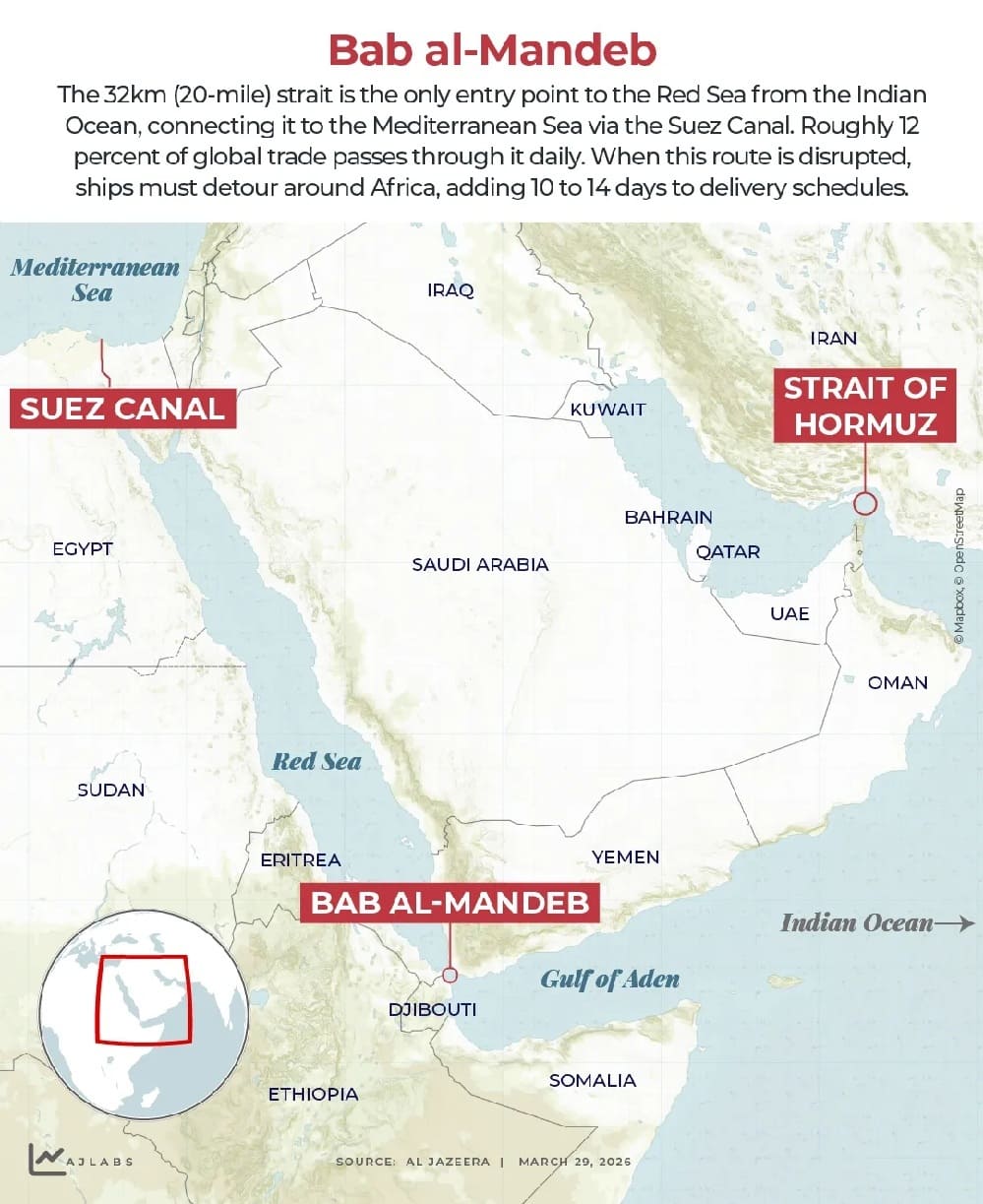
The Bab el-Mandeb is the main reason why Djibouti has foreign military bases. This chokepoint is only about 30 kilometers wide at its narrowest point. But about 12% of the world’s maritime trade goes through it, and a lot of digital traffic between Europe and Asia also goes through submarine cables that run along the same route. Djibouti is strategically located next to both a shipping lane and a data corridor.
That makes the country crucial strategically. A power in Djibouti can monitor traffic heading to the Suez Canal, assist with operations in the Red Sea and Gulf of Aden, and maintain the Horn of Africa’s accessibility. Commercial states also see Djibouti as a way to protect merchant shipping, make sure supply chains are safe, and show their presence without having to build a bigger one in the region.
Why major powers stay there
The American presence is still the most obvious. Camp Lemonnier, which used to be a French Foreign Legion base, is still the only permanent US military base in Africa and is home to about 4,000 US, joint, and allied troops. That one fact explains why Djibouti has foreign military bases even though it has a small population and few resources.
France, on the other hand, never really left after Djibouti became independent in 1977. France still sees Djibouti as a strategic link between Africa, the Middle East, and the Indo-Pacific. In 2024, France renewed its mutual defense pact with Djibouti. Japan and Italy came later, mostly because piracy off the coast of Somalia and general insecurity in the Red Sea made the route too important to ignore. This corridor is crucial for safe maritime trade, especially for Japan.
China changed the game
The balance changed when China came. In 2017, Beijing didn’t just build a military base. It was linked to ports, infrastructure, and transportation, especially the railway that connects Djibouti to Ethiopia, which is landlocked. About 90% of Ethiopia’s trade with other countries goes through Djibouti, and about 85% of Djibouti’s GDP comes from helping Ethiopian trade, according to former US ambassador Larry Andre.
So, the fact that Djibouti has foreign military bases is not just a military story. It’s also a story about money and logistics. Djibouti used basing deals to support a larger development plan that focused on ports, transportation, and trade in the region. The country moved even closer to Beijing when its relationship with Emirati port operator DP World fell apart. In September 2024, Xi Jinping and Guelleh raised ties to a “comprehensive strategic partnership,” which is China’s highest level of diplomacy. The announcement made the change more clear.
Value of geography
Djibouti has made access to its services clear. In 2017, Ilyas Dawaleh, the finance minister, said that the US paid about $65 million a year, France $30 million, China $20 million, and Japan and Italy just over $3 million each. For a small state, those numbers were large. They showed that Djibouti had figured out how to rent out strategic importance without owning gas terminals or oilfields.
The country’s model is still more than just a simple landlord-tenant relationship. Djibouti has tried to avoid relying on one patron by letting several rival states stay at the same time. This delicate balance empowers Djibouti and exposes it to potential risks. If Washington and Beijing are more open about their competition, or if the Red Sea conflict gets worse, Djibouti could go from being a broker to a frontline pressure point.
Red Sea crisis increased Djibouti’s value
The recent unrest has made the argument stronger. ACLED says the Houthis attacked over 520 ships during their Red Sea campaign, with at least 176 being targeted. At the same time, UNCTAD said that the amount of cargo passing through the Suez Canal was still about 70% lower than it was in 2023 by early May 2025. Because of these developments, navies, insurers, and shipping companies now see military infrastructure nearby as even more important.
That’s why Djibouti is now more important than ever for foreign military bases. Djibouti presents itself as a relatively stable living environment in a region plagued by war, piracy, missile strikes, and shipping issues. That picture is important. If the country doesn’t look safe anymore, its premium goes down. Djibouti still maintains its advantage, provided the Red Sea remains contested and other options remain weak.
Djibouti Replacement
Competitors are making an effort. Somaliland has pushed Berbera as a possible location for outside powers, and Russia has tried to bring back a plan for a naval base in Sudan. Still, neither option has taken Djibouti’s place. Analysts say the US is still there because it has no better option, even though China is nearby. In basing politics, “good enough now” is often better than “better later.”
For related reading on the wider theater, see Houthi Tech Boosts Somali Piracy Range — PMPF Warns, Iran War Tests Chinese Air Defense Claims, Al Jazeera’s original report, and UNCTAD’s Review of Maritime Transport 2025.
What the rents do not solve
Djibouti’s strategy has a flaw at home. Official unemployment is almost 26%, and more than one in five people lives in extreme poverty. Some people say that base income has made the state much stronger than it has made life better for most people. The local labor spillover is still limited because most of the military supply chain comes from other countries.
That criticism is important because it’s clear at the state level why Djibouti has foreign military bases, but it’s not as clear at the household level. Guelleh has been in charge since 1999. He got rid of term limits in 2010 and won a fifth term in 2021 with 98 percent of the vote. Foreign powers did help Djibouti’s government stay stable, but they also helped make the political system even more centralized.
Conclusion
In today’s world of security, Djibouti has one of the best geopolitical business models. It rents out access to a key point that is important to navies, traders, data networks, and other countries. The real reason Djibouti has foreign military bases is that geography became the country’s most valuable export.
But the model isn’t without risk. If the Red Sea situation gets worse, if other bases grow stronger, or if great-power competition gets worse, it will be harder for Djibouti to keep its balance. But for now, the formula still works. Djibouti doesn’t have oil, but it does have something like it: a map location that people are willing to pay for.
References
- https://defensenewstoday.info/houthi-tech-boosts-somali-piracy-range-pmpf-warns/
- https://defensenewstoday.info/iran-war-tests-chinese-air-defense-claims/
- https://www.aljazeera.com/news/2026/4/8/our-geography-is-our-oil-why-djibouti-hosts-many-foreign-military-bases
- https://unctad.org/publication/review-maritime-transport-2025
About the Author