
Reagan Saved Pakistan’s Nuclear Programme
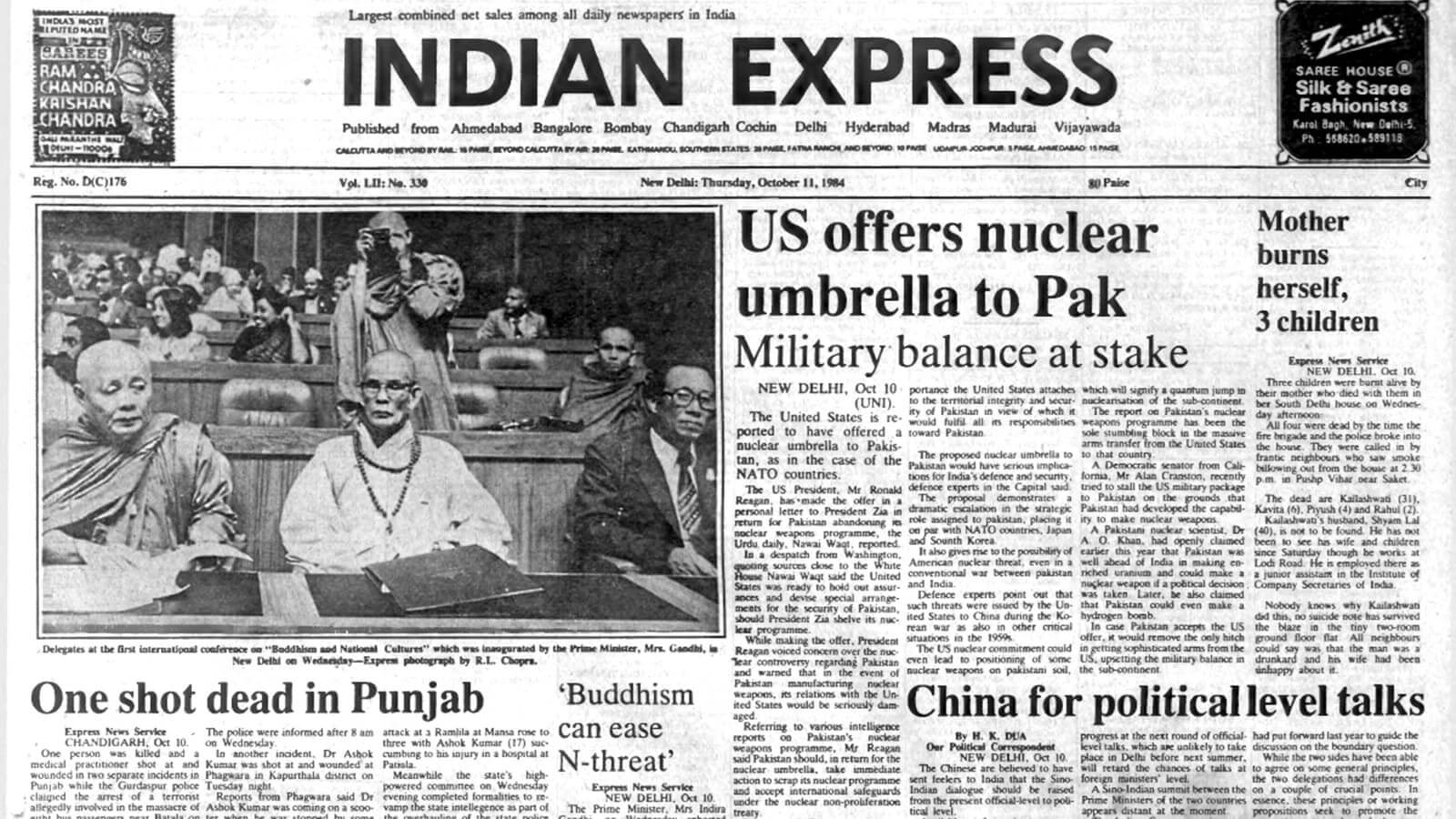
The assertion that President Ronald Reagan “saved” Pakistan’s nuclear programme is contentious, but declassified American documents indicate a high degree of factuality behind it—if one takes the word “saved” politically, not technically. The Reagan administration did not provide Pakistan with centrifuges or directly fund its nuclear weapons development or laboratories.” Instead, the United States repeatedly thwarted nuclear non-proliferation legislation that might have spoilt the larger U.S.-Pakistan strategic relationship even as Pakistan was developing its uranium-enrichment and weaponisation capabilities.
The decisive factor was Afghanistan.
After the Soviet invasion of Afghanistan in December 1979, Pakistan remained the main geographical channel for Washington to support the Afghan resistance. By 1981, the goal of containing Soviet expansion had moved higher in Washington’s operational priorities than that of forcing Pakistan to dismantle its unsafeguarded nuclear infrastructure.
The Nuclear Problem Reagan Inherited
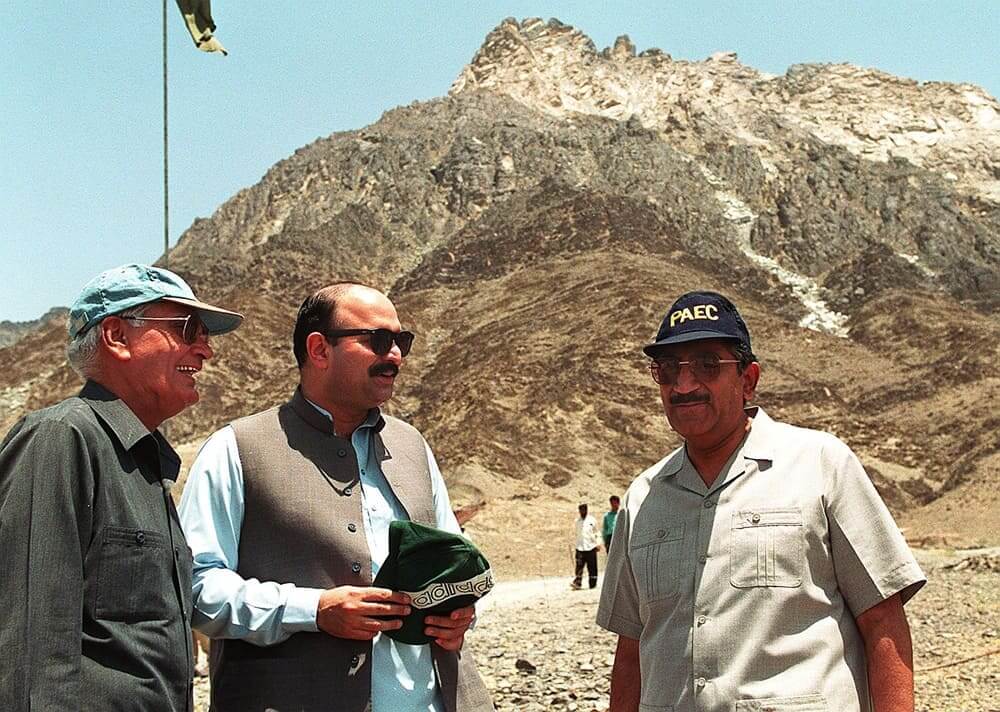
Reagan was not the father of Pakistan’s nuclear programme. The Indian nuclear test of May 1974 only cemented Islamabad’s resolve to acquire a similar strategic capability. By the late 1970s, the United States intelligence community became aware that Pakistan was constructing a gas-centrifuge uranium enrichment plant at Kahuta. A CIA assessment in January 1979 said that Pakistan might have acquired most of the technology and equipment needed for a plant producing centrifuges that could one day make highly enriched uranium for several nuclear weapons a year.
However, U.S. intelligence concluded it would likely be several years before Pakistan produced enough indigenous fissile material for an explosive device. President Jimmy Carter’s administration responded with the Symington Amendment. The law restricted U.S. aid to countries that had, or were developing, unsafeguarded uranium-enrichment technology. So in 1979, the United States cut off most of its economic and military aid to Pakistan, and then the Soviets invaded Afghanistan. Pakistan has moved from a proliferation problem to a strategically important front-line state.
Reagan Removed the Immediate Sanctions Barrier
Reagan’s administration negotiated a large strategic aid package with Islamabad when he assumed office in January 1981. The programme was valued at about $3.2 billion, with about half allocated to military assistance and the rest to economic aid. Pakistan also bought sophisticated American weapons, most notably the F-16 Fighting Falcon. More important for Pakistan’s nuclear programme was the legislative framework that came with this relationship. Congress has authorised the President to waive the Symington restrictions on Pakistan until 30 September 1987.
Without the waiver, Pakistan’s unsafeguarded enrichment programme might have put American aid in jeopardy from time to time. That did not mean, however, that Washington favoured Pakistan’s nuclear programme. The Reagan administration continued its diplomatic pressure, intelligence gathering and export control operations. But the strategic calculation had shifted. Pakistan could continue to receive American military and economic assistance and keep its nuclear infrastructure as long as it did not cross certain clear political red lines. That was the difference.
The Secret Walters Mission
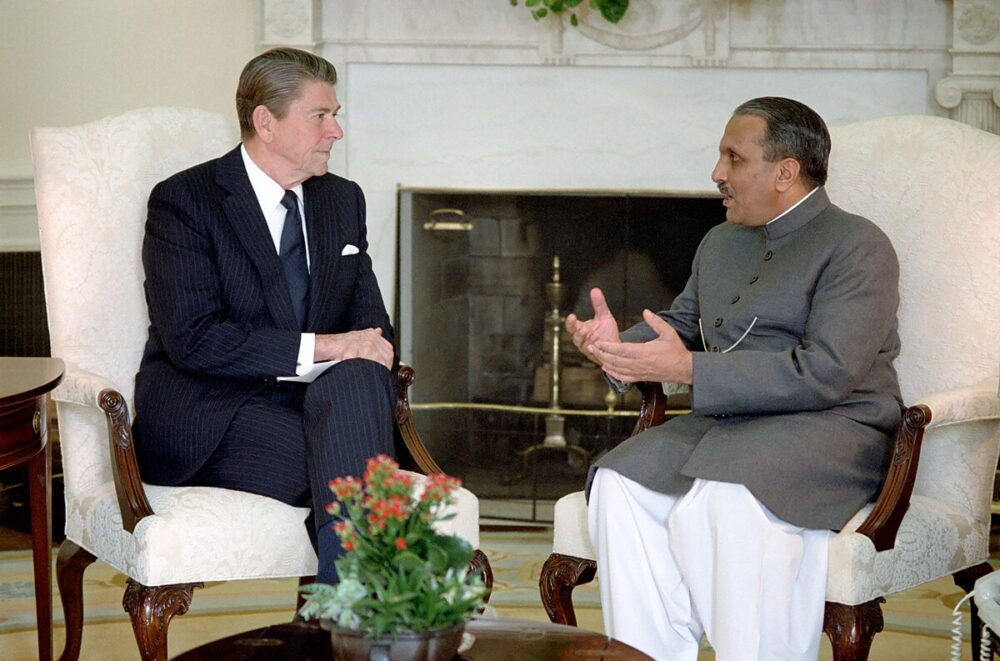
One of the more revealing incidents occurred in July 1982. President Reagan had sent former Deputy CIA Director General Vernon Walters to meet President General Zia-ul-Haq in secret. Walters arrived with concerns about what Washington considered to be forceful intelligence regarding Pakistani attempts to acquire components associated with nuclear weapons development. A previously unreported U.S. Embassy cable shows Walters telling Zia that Washington had what it called “incontrovertible intelligence” on Pakistani procurement activity. Zia denied Pakistan had developed nuclear arms.
But the American delegation clearly considered the intelligence serious enough to threaten the entire bilateral relationship. Later, Walters said Zia was aware that U.S. intelligence had hacked into key parts of Pakistan’s activities. The thing that was extraordinary was what came next. Washington did not sever ties with Pakistan. The administration, instead, wanted to set political “red lines” while preserving the strategic relationship necessary for Afghanistan. The episode underscores the central paradox of policy in the Reagan era: the more worried American intelligence was about Pakistan’s nuclear activities, the more valuable Pakistan became to American geopolitical strategy.
Pakistan Became a Nuclear Threshold State
The 1980s saw continued progress in the programme. Kahuta enriched uranium-235 using gas centrifuges. Civilian nuclear fuel is normally only of relatively low enrichment. Highly enriched uranium can provide fissile material for nuclear weapons. Washington wanted to limit Pakistan’s enrichment to an informal maximum of about 5%, according to recently declassified U.S. records.
However, by 1987, U.S. officials were telling their Pakistani counterparts that American intelligence indicated the enrichment level at Kahuta had climbed above 90%. If that was correct, this was weapons-grade material and a fundamental change from civilian-scale enrichment. Thus the Reagan administration had a more difficult balancing act between possessing nuclear infrastructure, making weapons-grade material and actually possessing an assembled “nuclear explosive device“. That legal distinction would be crucial.
The Pressler Amendment Paradox
Congress tightened the nuclear conditions with the 1985 Pressler Amendment. The provision required the president of the United States to certify annually that Pakistan did not possess a nuclear explosive device and that continued assistance by the United States would significantly reduce the risk of Pakistan acquiring one. Notice what the legislation did not require. The president does not have to certify that Pakistan had given up uranium enrichment. He was not required to attest that Pakistan had halted nuclear weapons-related research.
The statutory threshold was possession of a nuclear explosive. This gave the executive branch far more leeway to continue relations with Pakistan than a standard based on enrichment, weapon research or nuclear procurement would have allowed. Reagan repeatedly made the required certification. In an October 1985 interview with reporters, Reagan said Washington had no evidence that Pakistan already had the bomb, but he emphasised that the United States opposed the spread of nuclear weapons in South Asia.
The 1987 Pervez Case
The acid test was in 1987. U.S. Customs officials detained a Pakistani national, Arshed Pervez, for attempting to purchase specialised materials. Maraging steel and beryllium, materials used in nuclear technology, were at the centre of the case. Later declassified records would reveal that American officials thought Pervez was part of a wider Pakistani procurement network. Then the backstabbing began. Agency officials said that without sanctions, they could come to see Pakistani violations as routine. Other officials emphasised the strategic cost of destroying cooperation with Islamabad while Soviet forces were still in Afghanistan.
A National Security Council memo from July 1987 shows how narrowly Washington defined its nuclear boundaries. It listed a few American expectations of Pakistan: no nuclear test, no transfer of nuclear weapons technology, no manufacture of a nuclear explosive device, no unsafeguarded reprocessing and restrictions on uranium enrichment. The importance of this document is that it shows Washington had a pretty good understanding of the nuclear programme, right down to several technical details. This was no case of misunderstanding. That was a question of strategic priorities.
Reagan Chose Waivers Instead of Rupture
The clearest documentary evidence surfaced in January 1988. Aid was not cut off under the Symington and Solarz amendments because of waivers signed by President Reagan in defiance of activities related to Pakistan’s nuclear programme. The White House publicly argued that sanctions would not succeed in meeting Washington’s non-proliferation objectives and that damaging the U.S.-Pakistan relationship would harm American strategic interests. That statement simply summed up Reagan’s doctrine toward Pakistan. Washington would lean on Islamabad in private, limit sensitive exports, create nuclear red lines, and dissuade a test, but it would maintain the alliance over the Afghan war. Pakistan simultaneously maintained the strategic space it needed to allow its nuclear infrastructure to grow.
Did Reagan Really “Save” the Programme?
No American administration has actually built Pakistan’s nuclear programme. The effort was the work of Pakistan’s scientists, engineers, procurement networks and political leadership. Nor did Reagan forget about proliferation. His administration conducted intelligence operations, diplomatic interventions, and export-control campaigns aimed at containing Pakistan. But the argument is much more strategic. Without the 1981 Symington waiver and the later presidential certifications and waivers in 1988, Pakistan would have faced much greater U.S. economic and military pressure during one of the most sensitive developmental stages of its nuclear programme. Geopolitically, Afghanistan gave Islamabad unprecedented leverage. Pakistan provided Washington with access to the Afghan resistance.
Conclusion
Meanwhile, even as evidence mounted that Pakistan was moving toward a nuclear weapons capability, Washington continued to cultivate a strategic partnership. This was the case for most of the Soviet-Afghan war. The political calculus changed with the withdrawal of the Soviet troops and the new Cold War climate. In 1990, President George H. W. Bush declined to issue the Pressler certification, which led to the suspension of most U.S. military assistance to Pakistan. But by then, the crucial decade had passed. The declassified record therefore suggests that Reagan did not “save” Pakistan’s nuclear programme through nuclear assistance. Washington’s more immediate objective was now to frustrate Soviet strategy in Afghanistan. This helped to protect the strategic environment in which the programme survived, grew and came close to weapon capability. That difference matters — and it matters much more historically than the headline suggests.
References
- U.S. Department of State, Foreign Relations of the United States, 1981–1988, documents concerning Pakistan, the Symington Amendment and U.S. security assistance.
- National Security Archive, “The Most Superb and Patriotic Liar”, U.S. Embassy Islamabad cable concerning General Vernon Walters’ July 1982 nuclear discussions with President Zia-ul-Haq.
- Ronald Reagan Presidential Library, Shirin Tahir-Kheli, “Dealing with Pakistan’s Nuclear Program: A U.S. Strategy,” National Security Council memorandum, 23 July 1987.
- Ronald Reagan Presidential Library, “White House Statement on the Continuation of Military Aid to Pakistan,” 15 January 1988.
About the Author