

DeepSeek in Africa — Cheap AI, Costly Risks
China’s DeepSeek and Africa’s AI ambitions
At first glance, China’s DeepSeek chatbot expansion in Africa appears to benefit both parties. African start-ups get powerful generative AI at a fraction of Western prices, while Beijing gains another lever of digital influence across the continent. However, for defense and security analysts, the model raises familiar concerns about data sovereignty, surveillance, and strategic dependence.
DeepSeek’s backers sell a tempting message to African users. You pay far less than for Western models and burn far fewer compute resources. On paper, you still receive an impressive modern reasoning engine. In practice, the bargain hides a higher price in data surrender and long-term strategic dependence. Over time, foreign providers can quietly shape or even control the digital infrastructure your institutions rely on.
DeepSeek vs Western models
According to early adopters, DeepSeek processes prompts at a fraction of the price of Western rivals, with some estimates putting the gap at around 94% cheaper than ChatGPT. For cash-strapped founders or government agencies, that discount feels irresistible. China’s DeepSeek chatbot expansion in Africa therefore plugs directly into real constraints: limited funding, scarce GPUs, and high energy costs.
However, the economic advantage comes with a string attached. DeepSeek’s architecture stores chat histories, prompts, and location data on servers under Chinese jurisdiction. Under China’s cybersecurity laws, authorities can access that data. For any African ministry, defense contractor, or state-owned enterprise using the tool, it creates a potential window into internal deliberations, strategy papers, and even intelligence-style queries.
Western AI providers remain far from perfect, but they typically operate under GDPR-style regimes and more established privacy norms. African policymakers now face a difficult choice: cheap inference today or tighter control over sensitive data tomorrow.
DeepSeek: China’s Quiet Military Edge in Africa
DeepSeek gives China a quiet military edge in Africa by creating digital dependence, not by sending troops. When African ministries, security agencies, or state firms use the chatbot for planning, procurement, or risk analysis, their questions and patterns travel through Chinese-controlled systems.
That metadata helps Beijing map local power networks, vulnerabilities, and public mood far better than classic intelligence alone. In a crisis, China could quietly shape replies, limit access, or prioritize friendly narratives, turning a cheap AI helper into a dual-use tool for influence, information operations, and future military planning.
Huawei: Safe Cities and the surveillance
Huawei’s role in China’s DeepSeek chatbot expansion in Africa should not surprise anyone who has tracked the company’s earlier “Safe City” and smart-surveillance exports across the continent. Those networks already knit together CCTV cameras, facial recognition, license plate readers, and data center infrastructure for partners from Nairobi to Lagos.
DeepSeek simply rides on top of the same physical and logical infrastructure. The combination turns classic surveillance platforms into something closer to a full-fledged “digital security stack” that can mine, summarize, and interpret vast amounts of citizen and sensor data. For authoritarian governments, the temptation is obvious; for civil society, the risk is equally clear.
From a defense-and-security standpoint, this stack blurs the distinction between civilian and national-security data. Economic-risk analysis, border-security modelling, or even wargaming scenarios fed into DeepSeek could be of immense interest to foreign intelligence agencies. You might not upload battle plans directly, but you will certainly upload the questions that reveal how you think.
AI infrastructure gap: South Africa leads
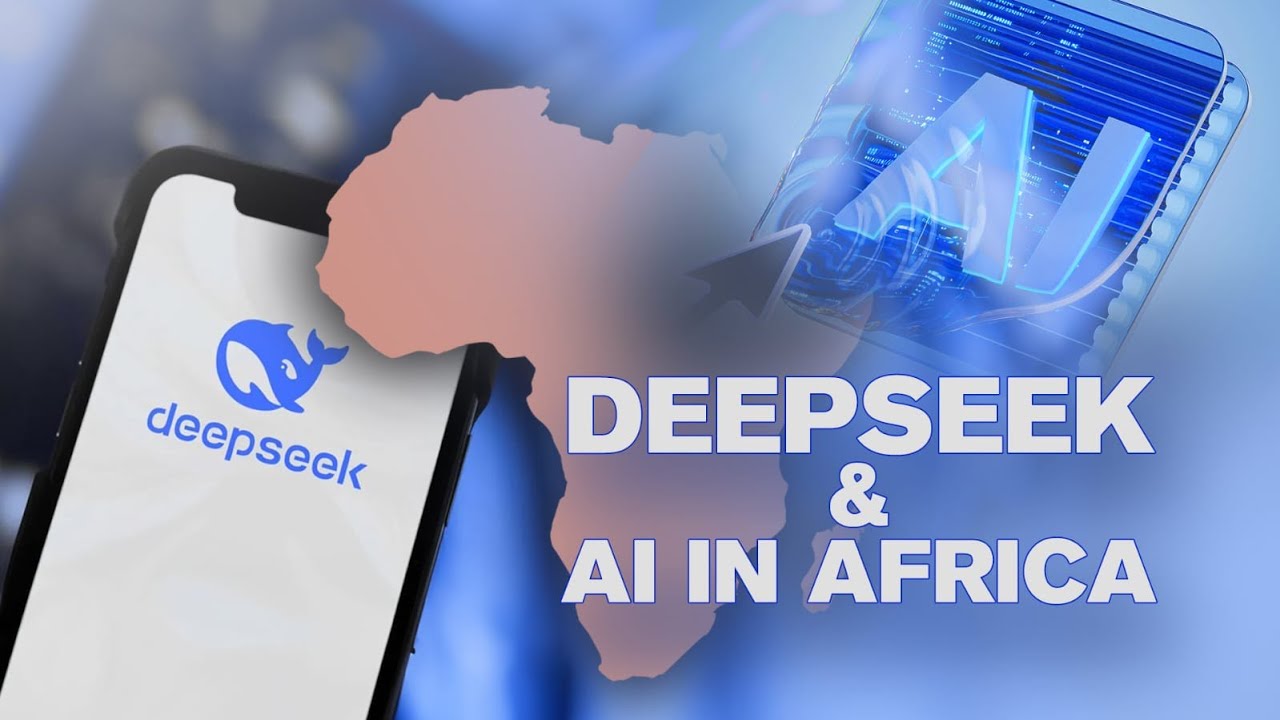
Most African states still struggle to build the hardware backbone that modern AI demands. South Africa leads Sub-Saharan Africa with 49 AI-capable data centers, followed by Kenya with 18 and Nigeria with 16. Other countries, including Angola, Ghana, Mauritius, and Tanzania, are racing to catch up, while Egypt and Morocco anchor North Africa’s capacity.
This uneven map explains why China’s DeepSeek chatbot expansion in Africa has momentum. Many governments cannot justify large GPU clusters or high-end fiber backbones, so they gravitate to low-cost, cloud-hosted tools that foreign vendors conveniently bundle with the infrastructure. In effect, the same governments that outsource railways and ports are now also outsourcing AI services.
The risk is obvious: when a crisis hits, the provider can throttle access, tweak outputs, or quietly prioritize its own geopolitical interests. As analysts of earlier Belt and Road infrastructure learned, leverage often arrives wrapped in “development finance” branding and glossy brochures.
Belt and Road to Bot and Road
DeepSeek resembles a software-era replay of the Belt and Road Initiative. Instead of ports, railways, and power lines, China offers AI models, data center know-how, and end-to-end cloud stacks. Huawei, which helped build the physical layer of that earlier push, now supports the cognitive layer.
For militaries and security agencies, the analogy matters. If you rely on foreign suppliers for drones, SIGINT platforms, or radar, you instinctively worry about backdoors and kill switches. The same logic applies to AI infrastructure. A chatbot that sits in every ministry and parastatal can shape narratives, filter information, and influence how analysts frame choices. That is information power, not just IT support.
The mildly humorous summary for defense planners might read, “If your war-gaming tool phones home to Hangzhou, you do not fully own your OODA loop.”
“Edge” AI matters for security
Kenyan AI strategist Sidney Essendi and EdTech founder James Ong’ang’a both warn that African states risk becoming AI-dependent rather than AI-driven. Their concern goes beyond economics. Locally developed or privately hosted AI models can:
- Respect data sovereignty by keeping sensitive prompts and outputs within national jurisdiction.
- Support local languages and dialects that global models often mishandle, including military slang and indigenous place names.
- Embed local ethics and law, including constitutional limits on surveillance, rather than foreign security doctrines.
For child-focused education tools and defense-adjacent systems alike, Western open-source models deployed on edge devices offer one practical workaround. Running models on local hardware, even small ones, allows schools, firms, and agencies to keep the most sensitive data offline or within tightly controlled networks. That approach will not replace cloud AI, but it can stop every conversation from flowing through someone else’s data center.
Policy options: Procurement to Defense doctrine
So what should African governments, defense ministries, and regulators do as China’s DeepSeek chatbot expansion in Africa accelerates? A few practical steps stand out:
- Classify AI as critical infrastructure. Defense and interior ministries should treat core AI platforms, like telecoms or satellite networks, with security vetting and redundancy requirements.
- Segment usage by sensitivity. Use foreign cloud AI for low-risk tasks like translation or generic coding help, but keep strategic planning, intelligence analysis, and defense procurement work on local or allied infrastructure.
- Mandate data residency for key sectors. Require in-country hosting for defense, health, finance, and electoral data, regardless of which vendor supplies the model.
- Invest in regional AI hubs. Pool resources through AU or sub-regional blocs to fund GPU clusters, research centers, and training pipelines, rather than negotiate one-on-one with every foreign provider.
- Build doctrine for AI-enabled information warfare. Militaries already plan for cyber and EW; they now need AI-specific contingency plans, including scenarios where a foreign chatbot suddenly degrades service or feeds manipulated outputs.
For a deeper dive into Africa’s digital battlespace, readers can explore Africa’s cyber and electronic warfare trends on Defense News Today (for example, the feature on Africa’s emerging cyber battlefront) and background analysis on China’s digital Belt and Road in Africa.
Conclusion and another “AI debt trap.”
DeepSeek shows that world-class AI no longer belongs exclusively to Washington or Silicon Valley. That pluralization can benefit African users, but only if they avoid repeating the mistakes of earlier infrastructure waves. Cheap AI that quietly exports your data and shapes your information environment is not a bargain; it is a strategic liability.
The strategic question for African leaders is simple, even if the implementation is not: will the continent become a price-sensitive consumer of other people’s AI, or a creator of sovereign systems that serve its security and development goals?
Getting the answer wrong may not just affect start-ups and schools. Over time, it could shape how African militaries plan, fight, and deter in a world where algorithms increasingly sit beside officers at every planning table.
References
- https://adf-magazine.com/2025/11/chinas-deepseek-chatbot-expansion-in-africa-raises-alarms/
- https://carnegieendowment.org/posts/2025/03/deepseek-ai-implications-africa
- https://www.csis.org/analysis/watching-huaweis-safe-cities
- https://www.atlanticcouncil.org/in-depth-research-reports/issue-brief/what-is-driving-the-adoption-of-chinese-surveillance-technology-in-africa/
About the Author