

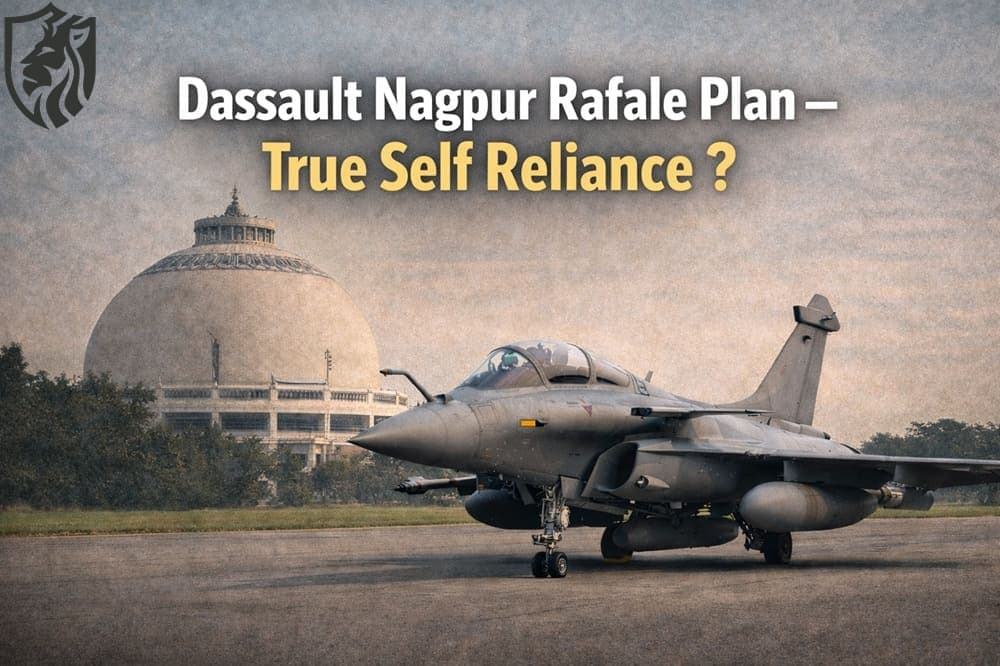
Dassault Nagpur Rafale Plan—True Self Reliance ?
The Dassault Nagpur Rafale plan is coming back because India’s airpower gap is no longer just a theory. India has about 29 fighter squadrons, but the goal is to have 42. Retirements keep the squadrons less prepared. So, New Delhi has started a major modernization push worth 3.6 trillion rupees (about $40 billion), which includes more Rafales and maritime patrol planes. But procurement headlines don’t answer the tougher question: what does it mean to be self-reliant? A “Made in India” badge can mean anything from putting things together to having full control over the design. So, the number of planes is just as important as the industrial model.
What “Industrial Model” Really Means
Commentary on the Dassault Nagpur Rafale plan paints Nagpur as a possible hub where suppliers, tools, quality systems, and final integration know-how can all be found in one place.
If that happens, it could speed up timelines, stabilize spare parts, and create a steady flow of upgrades. However, achieving true independence hinges on securing control over critical components such as software-defined mission systems, electronic warfare libraries, radar modes, and weapons integration. In real life, most OEMs keep these areas very safe, even when they move production to other countries.
Rafale is already in Nagpur and beyond
Nagpur isn’t starting from scratch. Reports say that the Dassault–Reliance venture in the area has made five Rafale parts that go to France and are used in all Rafale planes, not just India’s.
That means something. It shows that Indian tools, inspection, and supply can all meet the standards for exporting. In the meantime, Dassault and Tata Advanced Systems signed four Production Transfer Agreements to make parts of the Rafale fuselage in India.
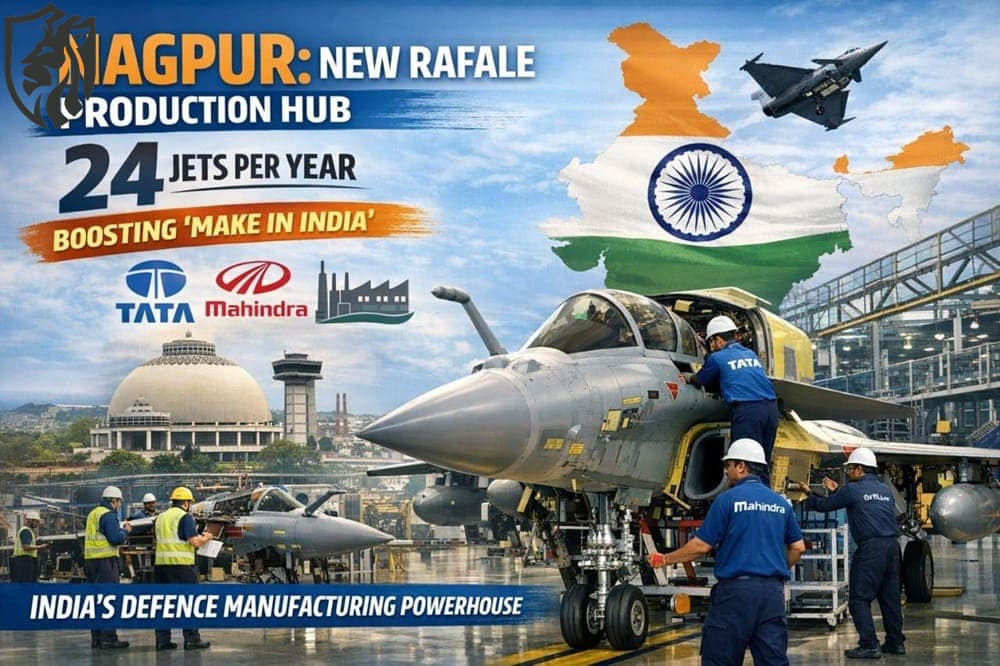
A special factory is planned for Hyderabad. According to Reuters, the site hopes to make up to two complete fuselages per month, with the first units expected to be ready by FY2028. This venture holds significant importance as it marks the first production of Rafale fuselages outside of France. So, when people talk about Nagpur as a future Rafale node, they are really talking about whether India should move from “parts and structures” to “system integration and lifecycle control.”
Buying Drivers: Skills, Numbers, Deadlines
India’s defense planners have already signaled urgency. Reuters reports that the government has granted the first approval for a larger acquisition package. Indian media has connected the development to a possible 114-jet Rafale pathway worth about 3.25 trillion rupees, but more approvals and negotiations are still needed. India is also pushing for more local fighter production. HAL is currently developing 180 Tejas Mk-1A, but issues with engine supply have caused delays in deliveries. So, if a local Rafale production line ever happens, it won’t be just for show. It would be a way to protect capacity so that squadrons don’t drop even more while homegrown programs grow.
Self-reliance isn’t assembly; measure it.
To fairly evaluate the Dassault Nagpur Rafale plan, closely monitor these four quantifiable factors:
1) Learning curve and value-added
Local structures are helpful, but integration work teaches you more. In other words, wiring, flight-line checks, test procedures, and acceptance responsibility are what make the industrial “muscle” that will last through the next program.
2) Sovereignty in sustainability
The most important benefit is often MRO depth, which includes shorter turnaround times for LRUs, access to repair data, and the ability to stock and certify spares locally. Costs and readiness are here. For more information on how upgrades to Rafale’s capabilities and survivability affect operational planning, see our internal breakdown of India’s Rafale enhancement path.
3) Freedom to upgrade
If India can’t change the core software, EW libraries, or sensor fusion logic, it still needs OEM permission to build a jet there. Also, weapon integration always brings export controls into the picture.
4) Rights to export and IP position
India can ship planes or subassemblies on predictable commercial terms without any political problems each time. This is what real self-reliance means. Dassault’s “global markets” language in the Tata partnership stands out because it suggests India could export parts of the supply chain, even without full aircraft export rights.
India has already signed a $7.4 billion deal for 26 Rafale naval fighters—22 single-seat and four twin-seat. The planes are expected to be delivered by 2030. That contract is important because it keeps the Rafale ecosystem “hot.” Training, spare parts, maintenance packages, and mission planning skills all get better as the fleet grows. Therefore, real fleet growth, not just PowerPoint, lends credibility to any business plan in India.
Why Nagpur Matters to Analysts
If India secures repeatable production, deep sustainment, and upgrade roles, Nagpur becomes strategically vital. If the work stops at OEM-locked assembly, India still gains, but mostly jobs and machining. That outcome adds minimal military strength and sovereign capability. To grasp France’s practical view of industrial sovereignty, compare this debate with its state-led model. France prioritizes strict qualification, trusted suppliers, and high-confidence aerospace supply chains.
Conclusion
The Dassault Nagpur Rafale plan makes sense because India already makes parts for the Rafale and is starting to make fuselages. But India should not use pictures of factories to judge success; it should use control and results. If the model gives Atmanirbhar Bharat the ability to maintain its own systems, improve them, and boost exports, it supports the initiative in a strong way. Even if the model only provides assembly, it remains useful; however, this does not equate to self-reliance.
References
- https://idrw.org/dassaults-nagpur-rafale-plan-a-new-industrial-model-for-india-but-is-it-true-self-reliance/
- https://www.reuters.com/world/india/india-clears-proposal-buy-114-rafale-fighter-jets-dassault-reports-say-2026-02-12/
- https://www.dassault-aviation.com/en/group/press/press-kits/dassault-aviation-partners-with-tata-advanced-systems-to-manufacture-rafale-fighter-aircraft-fuselage-for-india-and-other-global-markets/
- https://www.business-standard.com/article/companies/five-parts-being-made-at-nagpur-plant-to-be-integrated-with-all-rafale-jets-122121500621_1.html
About the Author