

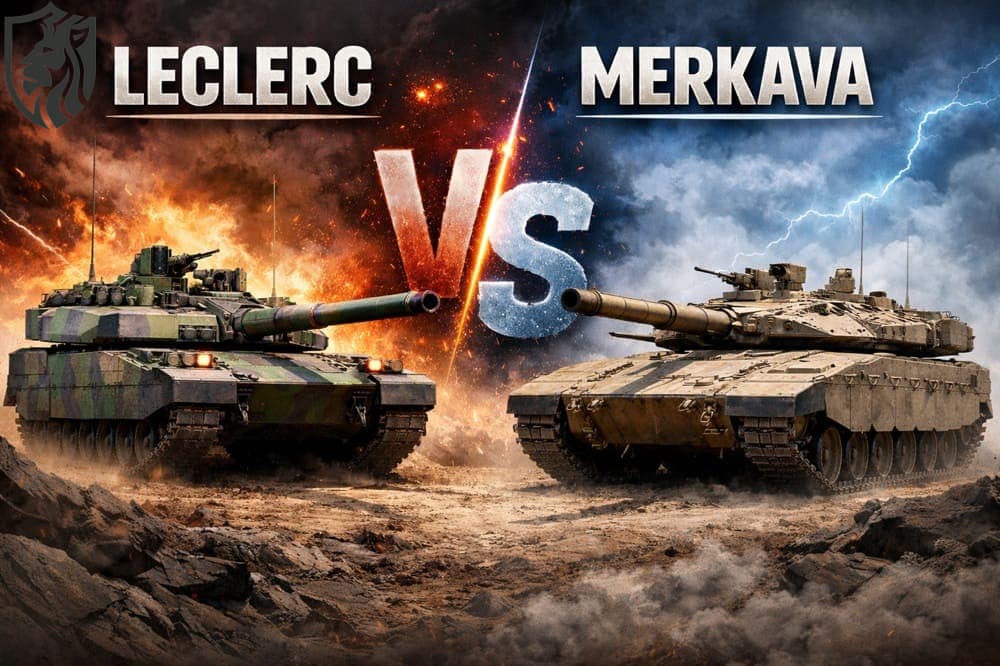
Cyprus Battle Tank Choice — Leclerc vs Merkava
Cyprus rarely buys main battle tanks, which is exactly why this decision matters. A tank fleet usually stays in service for 30 to 40 years, so the Cyprus National Guard needs a platform that can meet operational demands for the next 30 years. Moreover, Cyprus cannot tailor-build vehicles at home. Therefore, the chosen tank must fit local terrain, training realities, and long-term sustainment capacity.
Doctrine impact, not inventory
A tank purchase influences more than just firepower. It also locks in ammunition stocks, spare pipelines, simulator choices, recovery assets, and upgrade pathways. Consequently, Cyprus must judge the “whole system” value, not only the gun and armor.
In practice, Cyprus’ battle tank choice sits at the intersection of budget, diplomacy, and readiness. The Ministry of Defense also has to weigh how fast it can field a credible capability without creating a logistics burden it cannot afford.
Leclerc XLR vs Leopard 2
The European market offers two headline main battle tanks: France’s Leclerc XLR and Germany’s Leopard 2 tanks. Both bring modern fire control, observation, and protection packages, and they anchor multiple European armored forces.
Why Leclerc leads
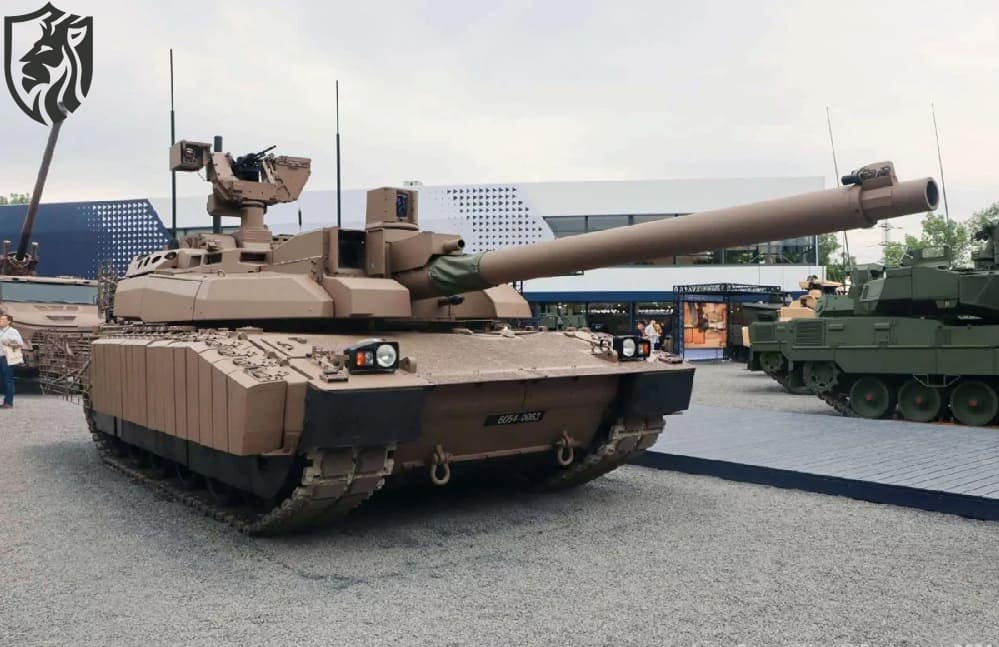
Cyprus maintains strong defense ties with France. In addition, about 85% of Cyprus’ SAFE program (military upgrades) reportedly links to French purchases, which naturally favors a French route for training and support. However, the key constraint is cost.
The Leclerc price is estimated at €16–18 million per unit, which pressures a small procurement budget even with SAFE-related funding. That price point matters because tanks do not arrive “complete” at the sticker price. Cyprus must also fund spares, depot capacity, ammunition, crew training, and mid-life upgrades.
Merkava option and pricing
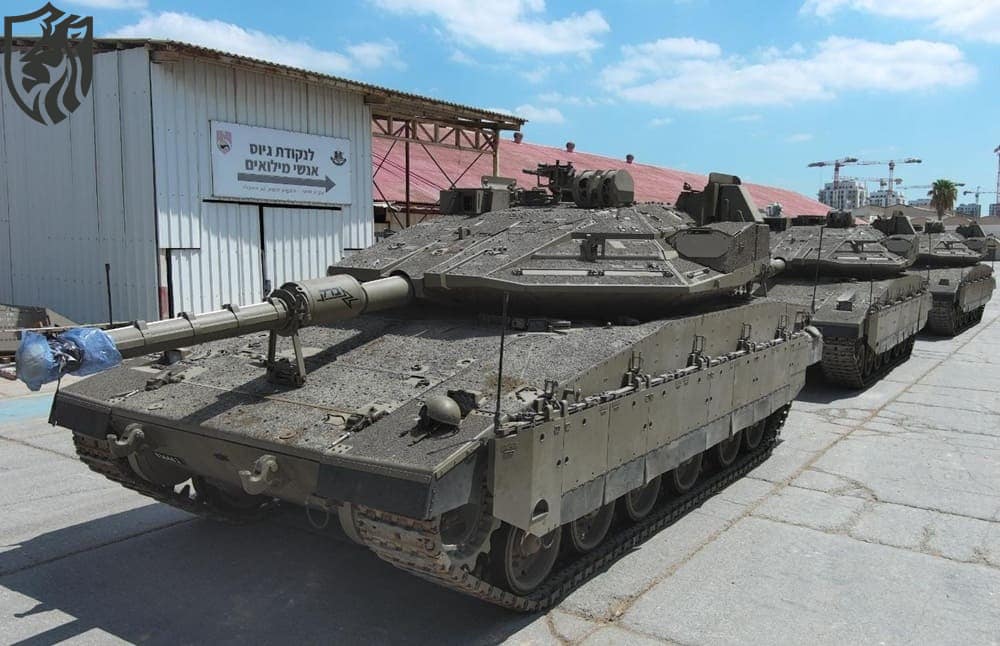
Cyprus also explored using Israeli-made Merkava tanks—Mk II or Mk III—but talks paused after 7 October 2023. Israel prioritized keeping its tank force fully available due to heightened operational demand. Still, Israel has reportedly signaled that it will resume discussions when the situation allows.
Case for used Merkavas
Cost drives Merkava’s appeal. Used Merkava Mk II/III units are estimated at $4–5 million each (about €3.7–4.6 million). For context, Merkava Mk IV pricing is cited at $6–10 million (about €5.5–9.2 million), depending on terms and support packages.
Capability comparisons also matter. Merkava tanks use 120mm ammunition and sit in the same weight class as their European peers, emphasizing crew protection by design. Additionally, geography helps. Israel’s proximity can simplify support cycles and shorten logistics chains, which can be decisive for a smaller force.
Latest Leclerc vs Merkava tank comparison
| Category (2026) | Leclerc XLR (France) | Merkava Mk 4 “Barak” (Israel) |
|---|---|---|
| “Latest model” baseline | XLR modernised Leclerc under SCORPION | Mk 4 Barak (5th-gen upgrade of Merkava 4 family) |
| Core design focus | Networked combined-arms manoeuvre + high-end fire control | Crew survivability + sensor-fused situational awareness + rapid target cycle |
| Crew | 3 (autoloader) | 4 (manual loader) |
| Main gun | 120 mm smoothbore (L/52 class) | 120 mm smoothbore (Israeli 120mm family) |
| Ammunition | NATO-standard 120mm natures (national qualifiers apply) | NATO-standard 120mm natures (national qualifiers apply) |
| Loading system | Autoloader (high sustained practical rate, lower crew burden) | Manual loading (flexible handling; larger crew) |
| Fire-control & engagement | Fully digital FCS; strong hunter-killer; fast first-round hit probability | Upgraded FCS with heavy automation support; fast sensor-to-shooter workflow |
| “AI/decision support” | Primarily network-enabled battle management and digitalisation upgrades | Explicit “combat cockpit” concept with AI-aided data fusion and tasking support |
| Crew displays & HMI | Modernized avionics and digital interfaces | Touchscreen “combat cockpit”; advanced crew station ergonomics |
| Situational awareness | High-end day/thermal sights; improved networking and blue-force picture | 360° camera/sensor fusion emphasis; “see-through armour” style crew display concept (helmet/display integration) |
| Battle management/networking | SCORPION integration (vehicle networking, shared tactical picture) | Deep C2 integration tuned to IDF target-bank and joint fires workflows |
| Active protection (APS) | APS integration depends on chosen package and fleet policy | Trophy APS widely associated with Mk 4 family; Barak fields it as a key layer |
| Armour philosophy | Compact MBT; modular composite armour; upgrade kits improve mine/RPG resilience | Modular composite armour with strong survivability bias; protection-centric layout |
| Engine layout | Rear-mounted power pack | Front-mounted powerpack (signature Merkava trait) |
| Power (typical class) | ~1,500 hp class | ~1,500 hp class |
| Combat weight (typical) | ~57 t (varies with kits) | ~65 t class (varies with kits) |
| Power-to-weight feel | Lighter, more agile, and strong acceleration | Heavier, protection-driven, and mobility-optimized for rough terrain and survivability |
| Max road speed (typical) | ~70+ km/h class | ~60–65 km/h class |
| Range (typical road) | ~500–550 km class | ~500 km class |
| Urban fighting aids | RWS options, improved protection kits, strong optics | Urban survivability emphasis; RWS and integrated sensors support close combat |
| Sustainment reality | High-end electronics and unique subsystems; modernisation aligns with French fleet support | Commonality within IDF ecosystem: upgrade depth is strong but export support package matters |
| Best-fit use case | Rapid reaction, manoeuvre warfare, networked European-style combined arms | Survivability-first operations, dense ISR/targeting environment, urban/complex terrain focus |
| Biggest trade-off | Top-tier fire control and mobility, but costly and system-heavy | Exceptional crew protection + sensor fusion, but heavier and more variant-dependent |
Key decision drivers
Cyprus’ battle tank choice will likely hinge on four practical filters.
Sustainment and training
A cheaper tank can become expensive if it demands rare spares, unique tooling, or complex refurb work. Conversely, a pricier tank can pay back if it reduces downtime and simplifies training.
Interoperability and momentum
SAFE-linked procurement momentum appears to favor France, given the reported 85% French share in Cyprus’ application. Therefore, the Leclerc path may integrate more smoothly with parallel upgrades.
Post-7 October timelines
Even if Cyprus prefers Merkava, Israel’s post-7 October operational tempo affects availability and delivery certainty. So, Cyprus must weigh low unit cost against schedule risk.
Terrain fit and employment
Cyprus needs a tank that fits local operating conditions, defensive tasks, and long-term manpower constraints. That reality favors designs that reduce crew workload and maintenance friction.
What happens next
In the coming months, Cyprus expects talks with Israel to restart, while the French track remains strong through existing procurement alignment. Either way, Cyprus’ battle tank choice will set its armored posture for decades.
References
- https://in-cyprus.philenews.com/local/cyprus-tank-acquisition-strategic-decisions-january-2026/
- https://in-cyprus.philenews.com/local/cyprus-1-2bn-eu-defence-spending-plan-safe/
- https://cyprus.representation.ec.europa.eu/news/commission-approves-first-wave-defence-funding-eight-member-states-under-safe-2026-01-15_en
- https://www.gov.cy/media/2025/12/15122025_Strategic-Partnership-EN.pdf
About the Author