
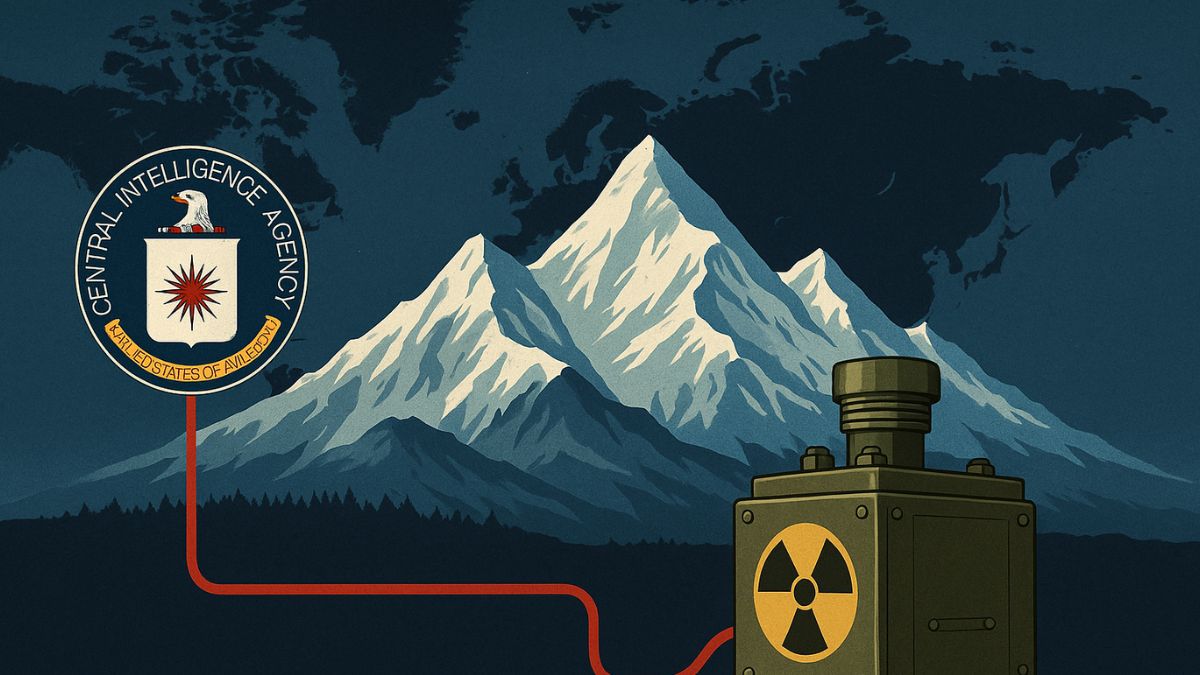
CIA Nuclear Device in Himalayas — Nanda Devi Mystery
At the height of the Cold War, Washington wanted better insight into China’s fast-moving nuclear and missile work. Satellites still had gaps, and airborne collection faced politics and geography. Therefore, US intelligence looked for a blunt workaround: put a high-altitude listening post on a Himalayan giant and let physics do the rest.
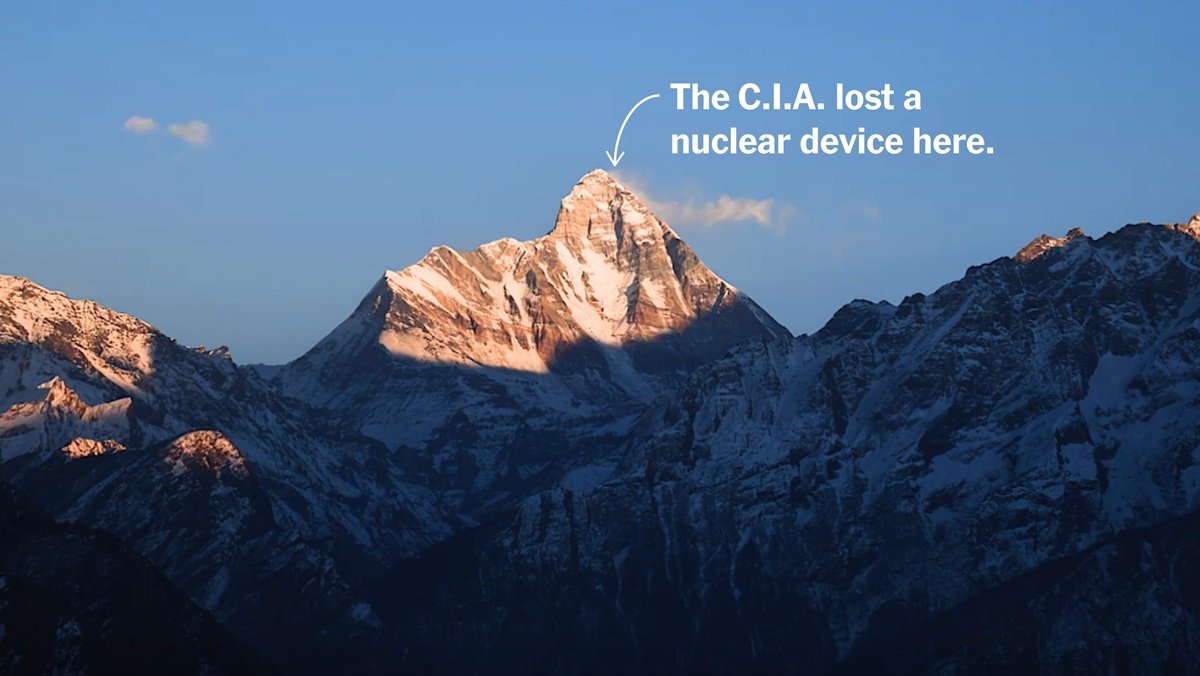
That decision led to the CIA nuclear device in the Himalayas story that still unsettles officials and locals alike. In 1965, a joint effort involving American climbers and Indian partners attempted to place a surveillance package high on Nanda Devi (about 7,817 meters/25,646 feet). The goal was simple: collect telemetry and signals linked to Chinese tests and missile activity.
Lost CIA Nuclear Device on Nanda Devi
From a technical angle, the plan relied on line-of-sight and altitude. A ridge high enough could “see” farther over terrain, and it could also reduce interference. Moreover, planners hoped a remote site would stay deniable and difficult to tamper with—at least in theory.
However, the Himalayas punish theory. As the 1965 team pushed upward, a violent storm forced a life-or-death retreat. The climbers cached the payload near the upper camps and descended. When a return party came back the next spring, the cache site had vanished—likely swept away by avalanche and icefall.
Nuclear Power: The Key Enabler
The surveillance package needed persistent electricity in sub-zero conditions without refueling. That requirement pointed to a radioisotope generator. RTGs convert heat from radioactive decay into electrical power through thermocouples, and the US has long used plutonium-238 for this purpose because it provides steady heat output.
Reporting identifies the generator as a SNAP-19C-type unit and describes it as roughly 50 pounds in the field accounts. (Some sources also describe the broader instrument package as substantially heavier.) In any case, once the storm hit, no one could safely haul it down.
What kind of nuclear device it was
It wasn’t a nuclear bomb, and it couldn’t “go off.” It was a SNAP-19C radioisotope generator—basically a rugged, long-life nuclear battery built to power a covert listening post in brutal Himalayan cold. Instead of a chain reaction, it made heat from the steady decay of plutonium-238, and simple thermocouples turned that heat into electricity. That’s why planners preferred it: it operates for years without needing fuel, has no moving parts, and does not require sunlight. The fuel sat in sealed capsules designed to survive accidents, yet it still becomes a radiological risk if those capsules ever crack or corrode.
Why Recovery Was Nearly Impossible
After the disappearance, teams reportedly searched using radiation and metal-detection methods. Yet glaciers do not “hold still.” They creep, fracture, and bury objects under meters of snowpack and debris. Consequently, even a well-defined search grid can become meaningless after one catastrophic avalanche cycle.
The modern anxiety centers on two linked questions: environmental release and misuse. On the first, historical reporting and later assessments have repeatedly argued that the immediate contamination risk looked low, including field checks conducted years after the mission. Still, the uncertainty remains because the device was never recovered.
Cover-up: Deniability vs Blowback
Even if the engineering looked defensible on paper, the politics were combustible. The mission stayed quiet for years and then surfaced publicly in 1978, when US press reporting described nuclear-powered instruments on Himalayan peaks and noted that one unit had been lost near the Ganges headwaters. The disclosure triggered anger in India and embarrassment in Washington.
Notably, 1978-era reporting also described follow-on efforts, including a later placement on a nearby peak (Nanda Kot), implying the concept did not die with the first failure. That detail matters because it shows this was not a one-off stunt; it was part of a serious collection debate inside the Cold War toolkit.
Climate Change Rekindled Fears
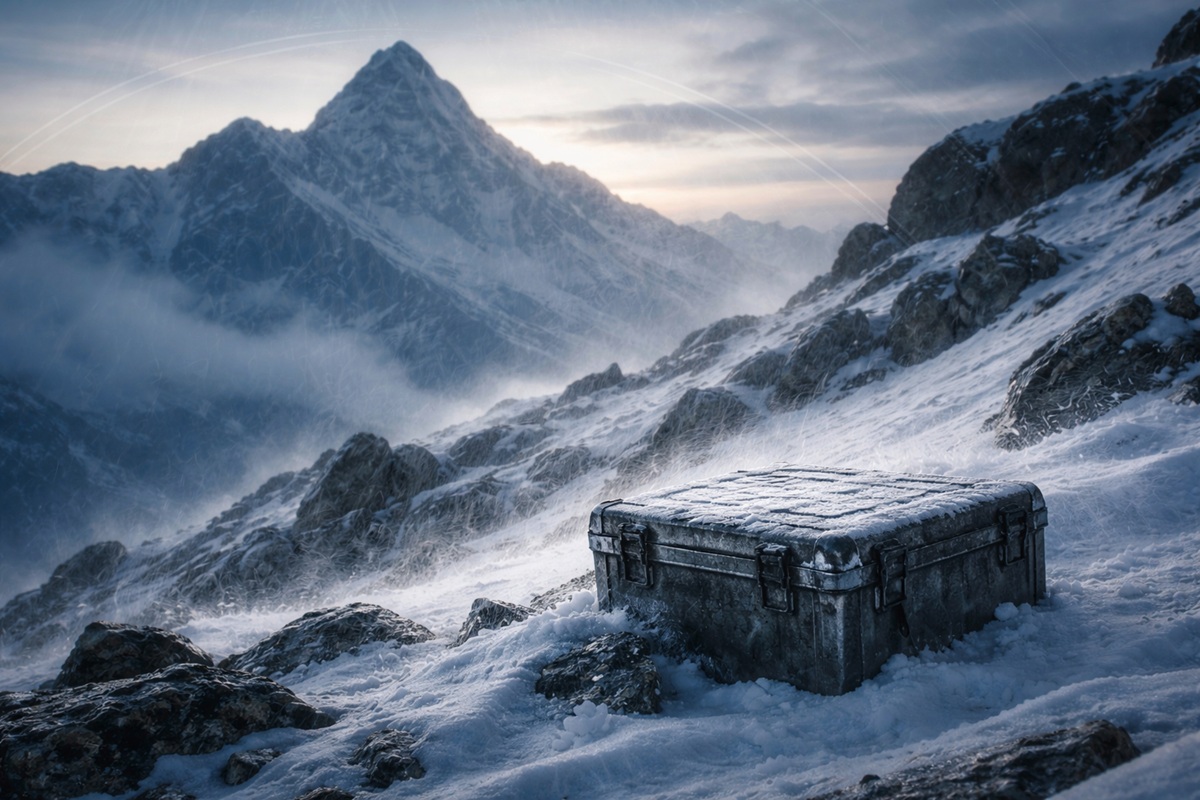
The CIA nuclear device in the Himalayas issue persists because glacier melt changes timelines. As ice retreats, buried material can re-emerge—or it can migrate downslope into new meltwater channels. Moreover, communities downstream depend on glacier-fed rivers across the wider Ganges basin, so even low-probability scenarios attract attention.
That said, an RTG is not “loose powder.” Designers typically encapsulate fuel in robust forms intended to resist dispersal in harsh environments. Therefore, worst-case claims should be treated cautiously unless backed by measurements. The honest bottom line is simpler: no recovery means no closure, and uncertainty becomes a permanent feature.
What analysts should watch next
If officials ever revisit the case, the key variables will be practical, not rhetorical. First, where would you search on a moving glacier system after 60 years? Second, what sensor suite can distinguish a small heat source or shielded radiation signature under meters of ice and rock? Third, what political framework would govern a recovery operation in a sensitive border-adjacent region? For detailed scholarly articles on Nuclear technology, visit Defense News Today.
References
- https://m.economictimes.com/news/defence/cia-nuclear-device-lost-in-nanda-devi-to-spy-on-china-a-cold-war-secret-buried-in-indias-himalayas-is-still-a-grave-danger-to-humanity/articleshow/125957852.cms
- https://www.washingtonpost.com/archive/politics/1978/04/13/cia-put-nuclear-spy-devices-in-himalayas/61cf72f2-dfdc-4586-a695-11a6d823a097/
- https://www.energy.gov/ne/articles/what-radioisotope-power-system
- https://science.nasa.gov/planetary-science/programs/radioisotope-power-systems/about-plutonium-238/
About the Author