China’s KJ-500 Reshapes Airpower
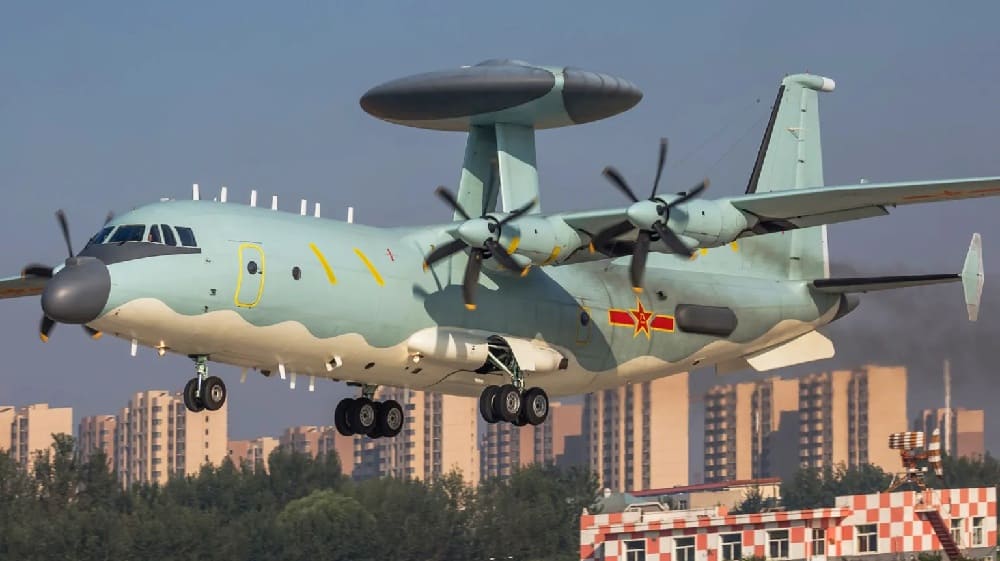
The KJ-500 AWACS is a big change in how China shows off its airpower in the Indo-Pacific. The People’s Liberation Army (PLA) now focuses on interconnected systems instead of standalone aircraft. As a result, this platform improves situational awareness, speeds up combat decisions, and makes coordination across multiple domains better. Additionally, analysts are starting to see the KJ-500 AWACS as an important part of China’s move toward network-centric warfare. This method puts information dominance ahead of traditional platform superiority.
AESA Persistent Surveillance
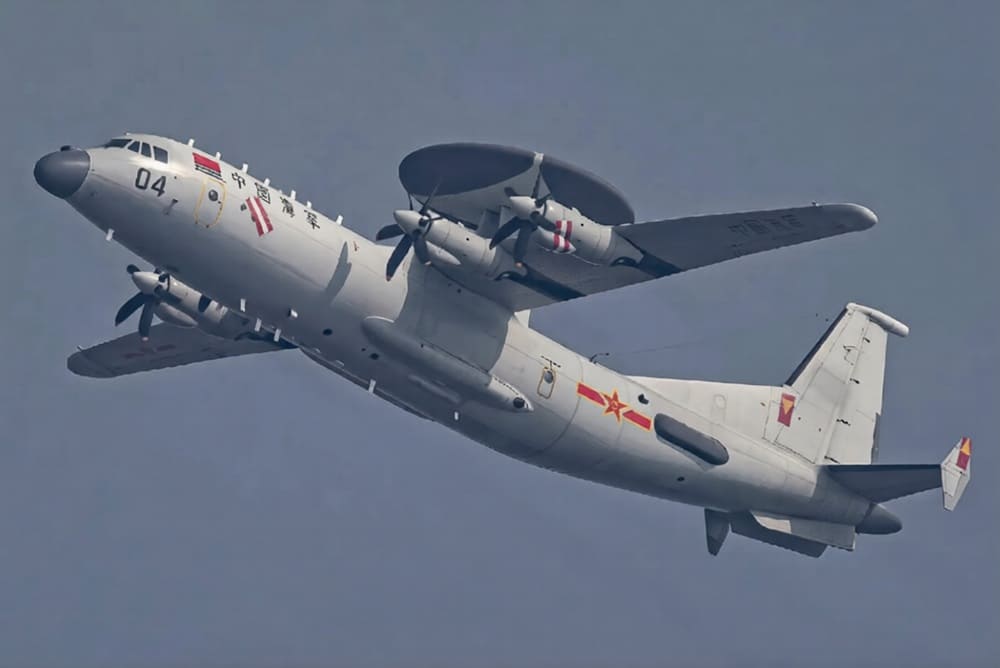
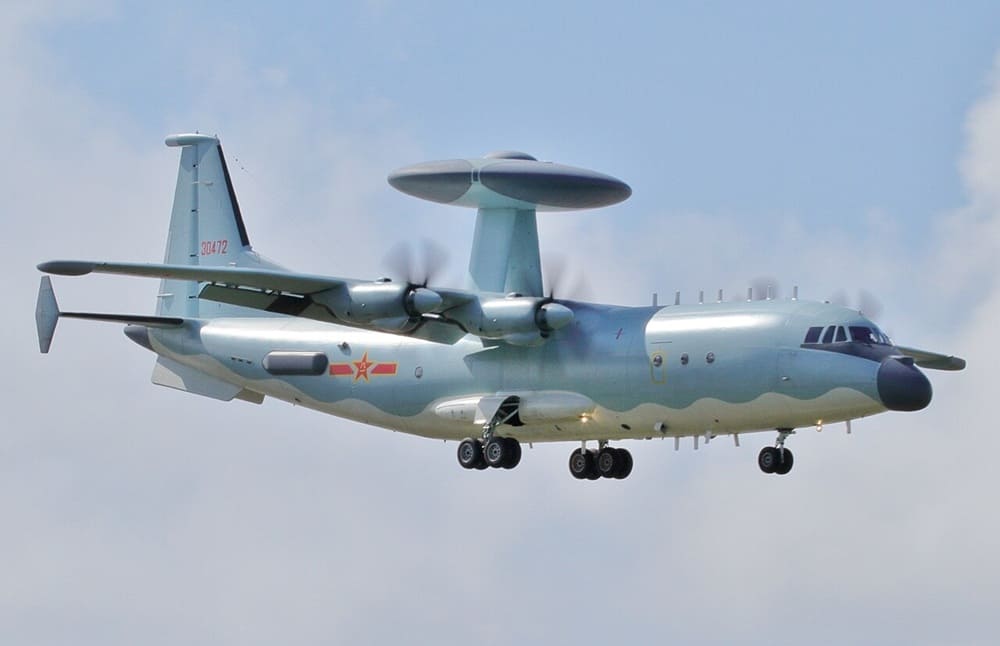
The KJ-500 AWACS’s tri-panel Active Electronically Scanned Array (AESA) radar is what makes it work. This system gives you 360-degree coverage all the time, unlike older rotating radomes. So, operators can keep track of things without having to wait for updates. The AESA configuration also makes it easier to locate fast-moving and hard-to-see targets. The plane is based on the Y-9 turboprop airframe and has a long range and high operational efficiency. Reports indicate that China operates over 60 units, indicating its extensive coverage.
Kill Chain to Kill Web
The KJ-500 AWACS is a key part of China’s “kill chain.” In the past, forces kept detection, targeting, and engagement separate. But this plane combines those steps into one smooth process. In addition, the platform links fighters, drones, naval ships, and missile systems through secure data links. Because of this, China is moving toward a “kill web” where many sensors and shooters work at the same time. This interconnected structure makes it much easier to respond to combat.
Faster Warfare Decisions
Speed is what makes modern conflict what it is, and the KJ-500 AWACS directly shortens the OODA loop, which stands for observe, orient, decide, and act. By sending data in real time, it helps commanders make decisions more quickly. Because of these advantages, enemies have less time to react. Because of this advantage, opponents have to use stealth, electronic warfare, and weapons that can hit from a long distance. The focus of the battle is shifting from the amount of firepower to the speed of information sharing.
Silent Shooter Operations
One of the KJ-500 AWACS’s most important jobs is to help “silent shooter” tactics. In this model, stealth planes use data from outside sources to target their targets and send out as little radar as possible. The AWACS platform finds and follows enemy assets, then sends targeting information safely. Because of these capabilities, stealth fighters can fire beyond-visual-range (BVR) missiles without giving away where they are. This method makes it more likely that people will survive and increases the range of engagements.
China’s A2/AD Edge
The KJ-500 AWACS makes China’s anti-access/area-denial (A2/AD) framework much stronger. By increasing detection ranges, it helps find threats that are far away from China. Furthermore, this ability helps long-range missile systems hit aircraft carriers and forward bases. Because of this, US and allied forces are at greater risk of operational problems in areas where there is a lot of fighting, like the Western Pacific.
Cost-Effective Deployment
The fact that China is making a lot of KJ-500 AWACS shows that they have a plan. The PLA puts scalability first instead of relying on a few expensive platforms. This method makes sure that there is constant surveillance over large areas. Furthermore, having more than one plane makes redundancy, which makes it less likely that losses will happen. So, China is always aware of what’s going on, even during long operations.
Indo-Pacific Security Impact
The KJ-500 AWACS’s rise changes the security situation in the Indo-Pacific. In the past, the United States and its allies had the most advanced airborne early warning systems. But China’s growing fleet is closing that gap. Furthermore, the use of advanced data links and sensor fusion makes it harder for stealth and coordination to work as well as they used to. Regional powers must now change how they deal with this changing threat landscape.
Operational Risks
The KJ-500 AWACS has some positive points, but it also has some clear weaknesses. It becomes a prime target in conflict situations because it is a valuable asset. Furthermore, its dependence on data networks makes it more dangerous. Cyber attacks or electronic warfare could make it difficult to talk to each other. So, enemies may try to make the system worse instead of destroying it completely.
Information Dominance Edge
The KJ-500 AWACS is more than just an airborne radar platform. It indicates that China is moving more toward information-driven warfare as a whole. It speeds up and makes things more accurate by connecting sensors, platforms, and weapons into a single network. Ultimately, the effectiveness of the Indo-Pacific battlespace will hinge on the quality of connections and the speed of decision-making. Because of these factors, systems like the KJ-500 AWACS will be very important in how future air battles turn out.
References
- https://defencesecurityasia.com/en/china-kj500-awacs-indo-pacific-kill-chain-airpower-shift/
- https://www.janes.com/defence-news/news-detail/chinas-kj-500-aewc-capabilities-analysis
- https://www.globalsecurity.org/military/world/china/kj-500.htm
- https://www.csis.org/analysis/chinas-airborne-early-warning-capabilities
About the Author