



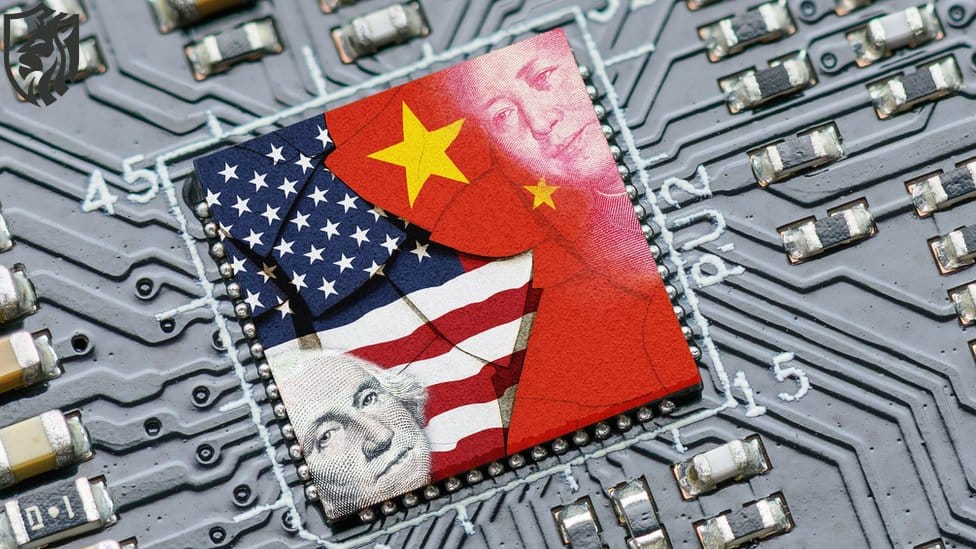
China’s Gallium Grip Erodes US Military Edge
The Mineral War Is Reshaping Power
China’s gallium grip is no longer a niche supply story. It is now a strategic lever with real military weight. Beijing commands almost all primary gallium production and has tightened export controls since 2023. Those controls culminated in a formal ban on shipments to the US in December 2024, with added curbs on key extraction know-how in early 2025.
China’s gallium grip matters because gallium compounds power wide-bandgap semiconductors. These devices thrive in heat, voltage, and frequency where silicon struggles. Militaries use them in AESA radars, electronic warfare, and power electronics. Smaller arrays, wider detection ranges, and more robust systems are the end results.
How tight is the competition?
China’s gallium grip has reached near-monopoly. CSIS estimates China provides roughly 98% of the world’s primary gallium. The same analysis highlights over 11,000 US defense parts that require gallium and notes that nearly 85% of defense supply chains containing the element include at least one Chinese supplier. Those numbers explain Washington’s alarm.
Because the controls now cover both material and extraction technologies, transshipment and quick capacity build-outs are harder. In January 2025, Beijing also restricted the export of the high-performance resins used to recover gallium efficiently—another pressure point.
Re-exports keep key flows alive.
China’s gallium grip has not halted all US access. Despite the 2024 ban, US consumption has continued via indirect routes. Stimson’s trade study shows Chinese germanium shipments to Belgium surged ~224% in 2024 as direct US flows dropped to zero, indicating a rerouting pattern.

Gallium re-exports are harder to trace, yet US imports from Germany and Canada rose even as those countries relied on Chinese supply and recycling. Overall, US gallium imports fell ~77% from 2021 to 2024 but did not vanish.
These workarounds buy time. However, they rely on gaps that tighter enforcement could close quickly. They also raise costs and uncertainty for fabs and defense primes.
GaN and radar rivalry is intensifying.
China’s gallium grip accelerates GaN uptake across military systems. GaN helps build compact, efficient AESA radars and power modules. The US still leads on systems integration, yet supply shocks erode schedule and cost margins. In contrast, China’s integrated chain—from materials to modules—compresses timelines and spreads dual-use benefits.
Meanwhile, US programs are shifting to GaN across the Navy SPY-6, Army LTAMDS, Marines’ G/ATOR, and F-35 upgrades. That shift deepens exposure to gallium volatility unless new sources emerge.
Washington’s Response Has Limits
China’s gallium grip has triggered a US policy mix: DPA funding, stockpile reviews, friendshoring, and allied deals. Analysts argue the bottleneck is not only mining; it is refining and processing. New facilities can take 10–20 years to come online. Even reopened US mines have historically shipped concentrates to China for separation, underscoring a processing gap.
Moreover, Beijing can flood markets and crush margins if non-Chinese producers ramp up, discouraging private investment. This market power, combined with controls over resin and technology, maintains high costs for Western producers without the need for public subsidies or offtake guarantees.
Can allies close the gap?
China’s gallium grip is pushing deeper coordination with Canada, Australia, Japan, and Europe. CSIS points out that there are realistic short-term solutions: recovering gallium from alumina refineries and recycling scrap, along with buying together to reduce But allied capacity, permitting delays and domestic priorities, still constrains speed.

The price of de-risking
China’s gallium grip sits inside a wider critical-minerals contest. CEPA tracks US attempts to “friendshore” and mobilize financing for corridors like Lobito. Yet the global investment needed to de-risk minerals runs from $590 billion to over $2 trillion by 2040, far beyond current US outlays. The US has flagged $600 billion in infrastructure finance through PGII, but that spans many sectors and partners. Competing with China’s higher risk appetite and state tools remains challenging.
Nationalization trends in the Global South complicate new offtakes. Western firms also face governance and compliance limits that Beijing often sidesteps. Those differences shape where new mines, refineries, and long-term contracts land.
Exports and partnerships will feel the impact.
China’s gallium grip will not cripple US forces tomorrow. However, it can raise unit costs, lengthen production cycles, and slow export backlogs. That hurts time-sensitive partners, from Ukraine to Israel and Taiwan. Delays ripple into training, sustainment, and integrated air defense rollouts.
A practical playbook
Targeted, near-term moves can blunt China’s gallium grip.
- Secure agreements for allied offtakes immediately by utilizing pooled procurement and establishing price floors to protect projects from sudden price drops.
- Fast-track permits for processing plants and side-stream recovery at alumina and zinc facilities.
- Back extraction-resin substitutes and related IP to cut China’s process edge.
- Expand scrap-to-gallium capacity to bridge primary shortages and diversify feedstock.
- Right-size a gallium stockpile to buffer shocks while projects scale.
Conclusion
China’s gallium grip shows how minerals can matter as much as missiles. The contest is industrial, not just military. Whoever secures a stable gallium supply—and the processing tech behind it—will set the pace for radar, EW, and next-gen power electronics.
References
- https://www.csis.org/analysis/beyond-rare-earths-chinas-growing-threat-gallium-supply-chains
- https://www.stimson.org/2025/chinas-germanium-and-gallium-export-restrictions-consequences-for-the-united-states/
- https://warontherocks.com/2025/04/a-federal-critical-mineral-processing-initiative-securing-u-s-mineral-independence-from-china/
- https://cepa.org/article/rare-earths-can-we-de-risk-from-china/
About the Author







This is the harsh truth: nearly all septic companies just pump tanks. They act like quick-fix salesmen at a disaster convention. But Septic Solutions? They are unique. It all started back in the early 2000s when Art and his brothers—just kids hardly tall enough to carry a shovel—assisted install their family’s septic system alongside a grizzled pro. Visualize this: three pre-teens knee-deep in Pennsylvania clay, understanding how soil absorption affects drainage while their friends played Xbox. “We never just dig trenches,” Art told me last winter, warm coffee cup in hand. “We discovered how ground whispers secrets. A patch of wetland vegetation here? That’s Mother Nature screaming ‘high water table.'”
https://squareblogs.net/wychanazpf/seasonal-furnace-air-filter-maintenance-tips-for-skagit-county-homes
Let me share the brutal truth: most HVAC failures occur because someone skipped a step. Didn’t calculate the load properly. Used incorrect equipment. Misjudged the insulation needs. We’ve personally fixed dozens of these disasters. And every time, we record another learning. Like in 2017, when we decided on adding remote monitoring to all system. Why? Because Sarah, our senior tech, got sick of watching homeowners lose money on poor temperature management. Now clients save $500+ yearly.
https://titusubcb847.huicopper.com/the-real-difference-between-certified-and-uncertified-hvac-contractors