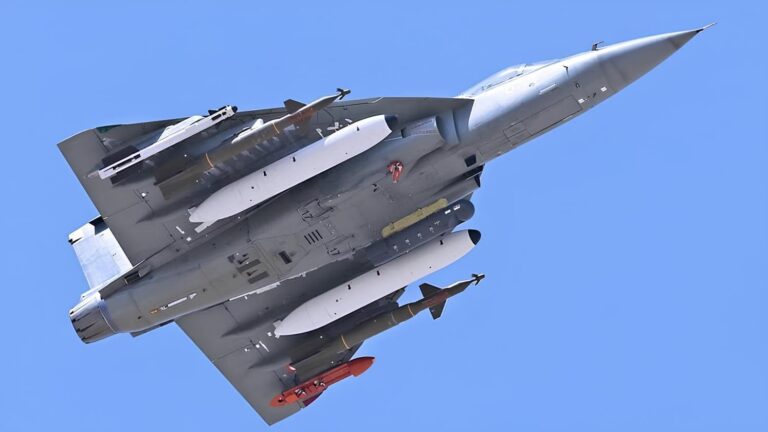
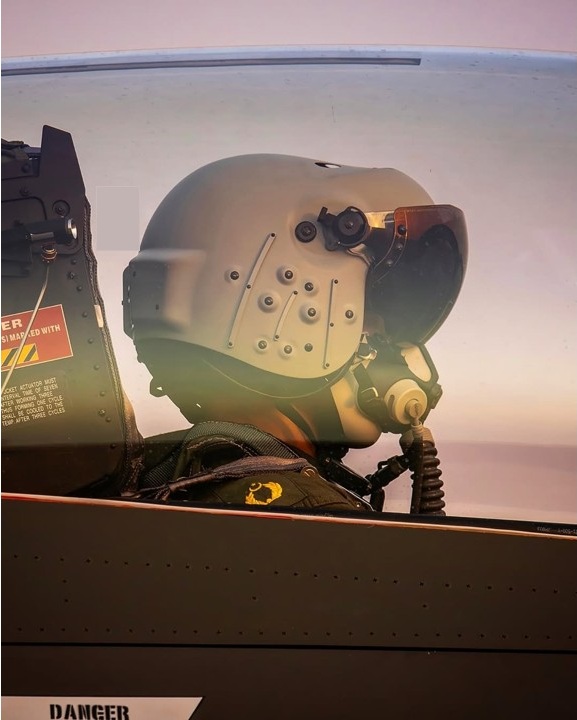
China equip PAF J-10CE with J-20's AR Helmet
J-10CE Helmet-Led Cockpit: Why Pakistan Chose It
Pakistan did not buy the J-10CE for prestige. Instead, it bought decision speed in a contested air environment. That approach matters because India can field more aircraft and a deeper industrial base.
Pakistan announced the J-10CE deal in December 2021. Moreover, reporting shows the first batch arrived at PAF Base Minhas (Kamra) in March 2022, just months after signature.
For a solid baseline on the delivery timeline, see this AINonline report on the first J-10CE batch delivered to Pakistan. The initial order focused on 25 aircraft, and many assessments place unit cost in the USD 40–45 million range.
However, modern air combat rewards the side that compresses the sensor-to-shooter loop. Therefore, Pakistan’s interest in a helmet-mounted augmented-reality display fits a wider shift towards networked warfare.
AR Helmet Impact in Real Air Combat
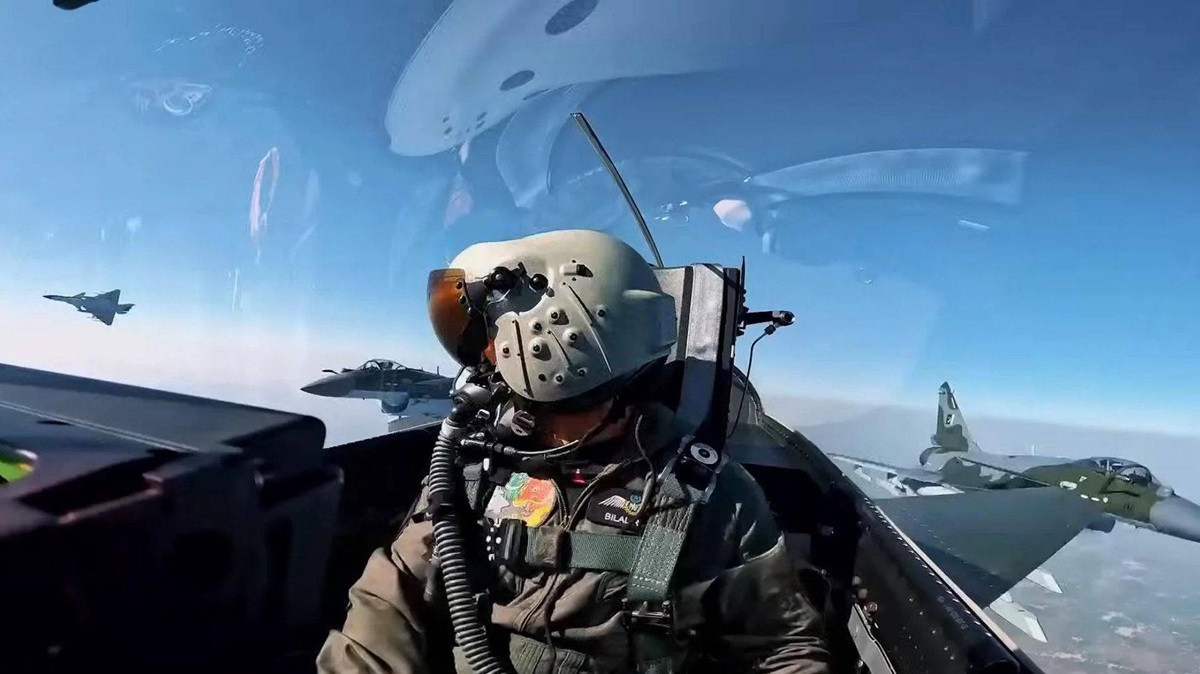
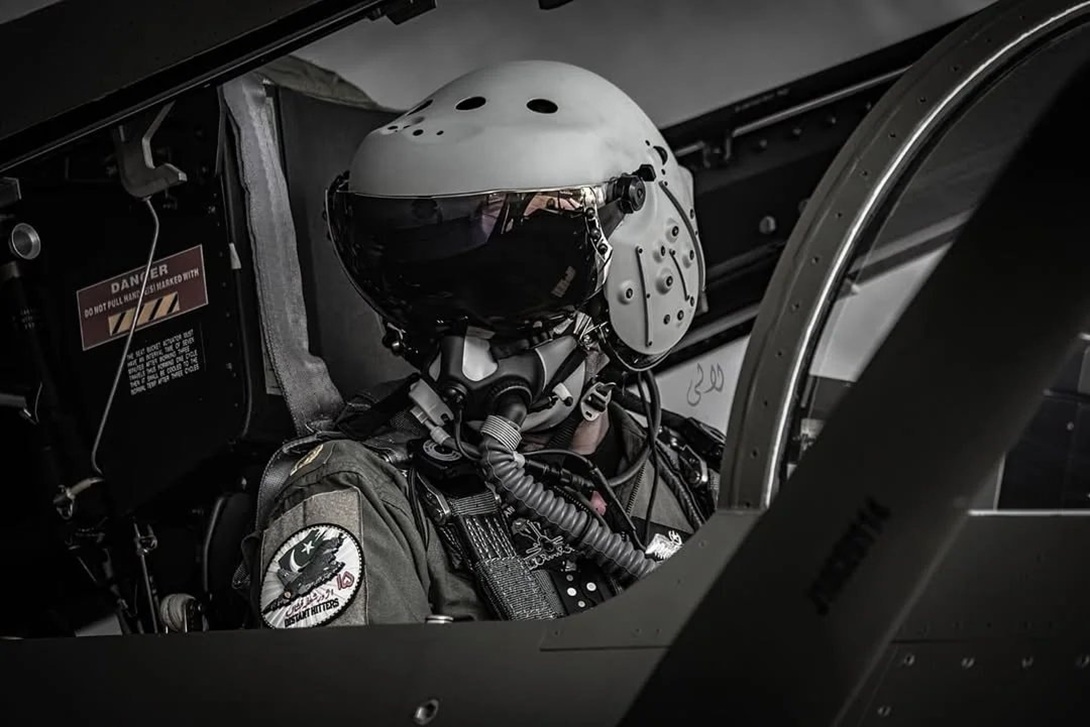
A helmet display is a workflow change, not a gimmick. When the pilot looks at a target, the system can align cues with the outside world. As a result, the pilot spends less time “heads down” and more time flying, scanning, and maneuvering.
Open analysis of the J-10C family describes a modern cockpit with HOTAS and a Chinese helmet-mounted sight/display concept for rapid cueing. Consequently, the helmet turns sensor fusion into swift action, especially when the spectrum turns noisy.
Sensor Fusion and BVR: Why Timelines Win
The J-10CE pairs an AESA radar with passive sensing and datalinks, so it can build tracks without relying on one sensor. Yet the pilot still has to act. Therefore, the helmet matters because it can keep threat cues in view while the jet turns vigorously or defends.
Such information matters most in combat beyond the visual range. In South Asia, BVR timelines usually decide outcomes before pilots ever see each other. Pakistan operates the export PL-15E air-to-air missile, which open sources list as a PAF weapon. Even so, the advantage is not the missile alone. It is the whole chain: track quality, mid-course updates, emissions control, and pilot decisions.
May 2025 Air Clash: Evidence vs Claims
The May 2025 India–Pakistan escalation made airpower claims unavoidable. Pakistan said it downed several Indian aircraft, including Rafales, while India stayed mostly quiet in real time.
Independent review of imagery suggested at least two Indian jets appeared to have crashed, including a Rafale and a Mirage 2000, but it could not confirm the exact cause of loss. Later, India’s air force chief claimed it shot down several Pakistani aircraft, and Pakistan’s defense minister rejected the claim and called for independent verification.
So, treat “one helmet caused one kill” narratives with caution. Still, the episode underlined a stark reality: both sides now fight through networks, data links, and timing.
Rafale vs J-10CE: Integration Over Hype
India’s Rafale sits inside a mature Western ecosystem. It also has access to helmet-mounted display options. For instance, the Thales Scorpion head-mounted display is marketed as an augmented-reality HMD using hybrid inertial/optical tracking to improve situational awareness.
However, integration decides outcomes. A helmet that links tightly to sensors, electronic warfare, datalinks, and weapons can outperform a “better” visor on paper. Therefore, Pakistan’s choice reflects its military doctrine, which aims to reduce cockpit friction, accelerate decision-making, and create the perception of a larger force despite its smaller size.
To understand networked air combat from a Pakistan-focused perspective, these two internal reports are helpful:
J-10CE AR Helmet vs Rafale Scorpion Helmet
Both helmets strive to make faster decisions when seconds seem to pass by. The Rafale’s Thales Scorpion has clearer, verifiable details. It projects full-color, augmented-reality cues and uses hybrid inertial-optical tracking, so the symbols stay steady even when the pilot pulls hard G.
As a result, the pilot spends less time hunting for information and more time flying. The J-10CE world also points to a modern Chinese helmet-mounted sight/display approach, but OSINT reporting does not confirm that Pakistan’s export helmet is the same unit used on the J-20 though there are chances. The helmet’s connection to sensors, datalinks, and missiles is most important since most Chinese tech is classified and not open to the world.
Limits and risks
Helmet overlays can also mislead. A degraded track can look “certain” on a visor. Therefore, training must teach when to distrust symbology and fall back to simpler cues. Moreover, faster decision loops can shorten political space to pause, which raises escalation risk.
What to watch next
First, watch the data links. A helmet only helps if the track picture stays coherent when jamming rises. Therefore, improvements in airborne early warning, relay nodes, and encryption matter as much as the visor itself.
Second, watch electronic warfare and deception. India and Pakistan will both push harder on radar suppression, decoys, and passive detection. In that environment, the side that can “see” without shouting on radar will usually receive the first clean shot.
Third, watch the pilot’s workload. AR can prevent “soda-straw” awareness, yet it can also overload the pilot. The best forces will tune symbology, automate routine tasks, and train crews to challenge the picture when it looks too neat.
Finally, watch the upgrade cadence. China tends to iterate quickly across software, datalinks, and weapons. If Pakistan keeps pace with that upgrade cycle, the PAF J-10CE augmented reality helmet becomes part of a moving system, not a one-off accessory.
Conclusion
The PAF J-10CE augmented reality helmet represents a practical attempt to win the timeline in South Asia’s BVR-heavy environment. It cannot replace training or resilient networks. However, it can reduce cockpit friction, speed decisions, and improve survivability in the first exchange.
References
- https://www.ainonline.com/aviation-news/defense/2022-03-14/first-batch-chinese-j-10-fighters-delivered-pakistan
- https://www.thalesgroup.com/en/solutions-catalogue/defence/air/scorpion-fighter-aircraft
- https://www.reuters.com/world/asia-pacific/india-shot-down-six-pakistani-military-aircraft-may-air-force-chief-says-2025-08-09/
- https://www.washingtonpost.com/world/2025/05/09/fighter-jets-india-pakistan-attack/
About the Author