
China Container Ship Missile Battery Seen in Shanghai
25 Dec 2025 Sighting
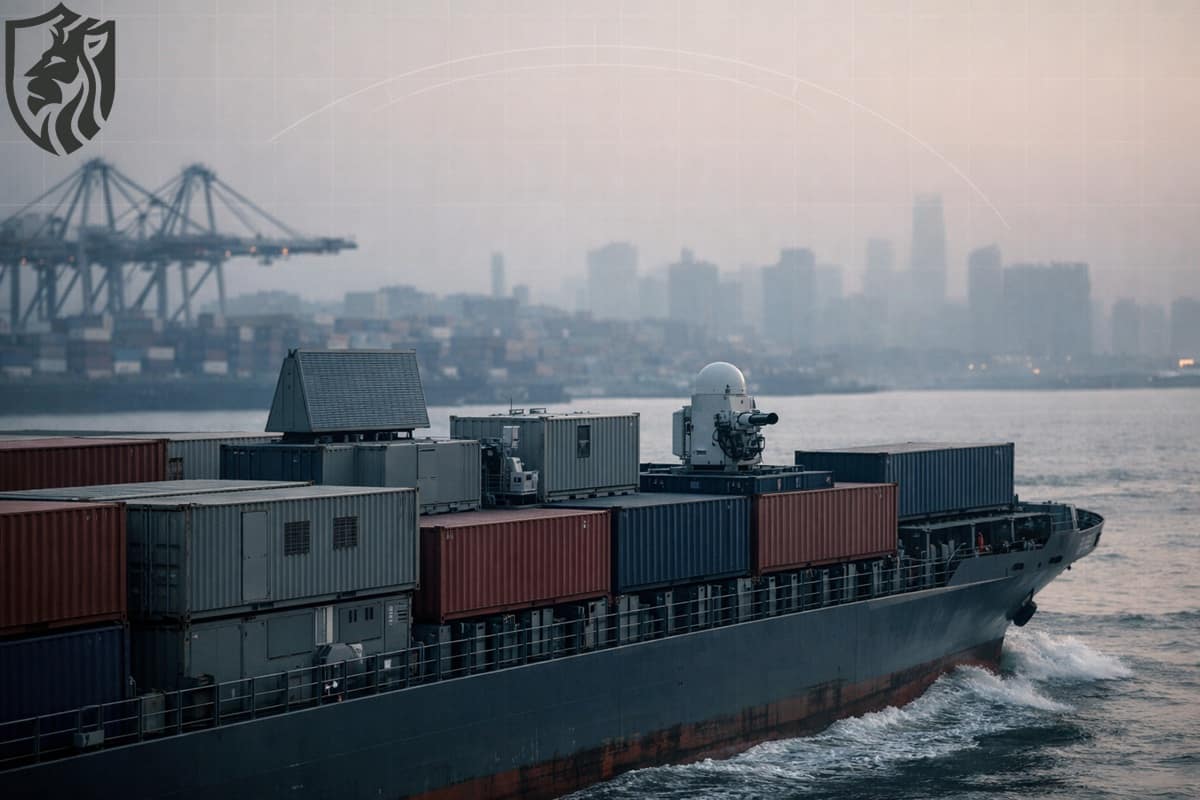
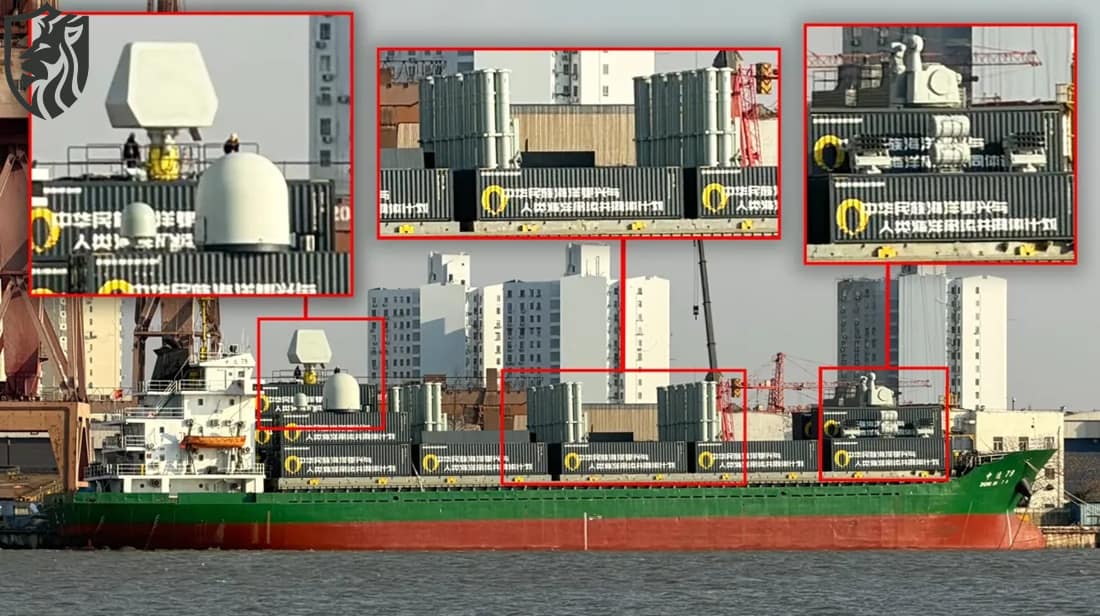
Images shared online on 25 December 2025 appear to show a Chinese civilian container carrier refitted into a heavily armed platform. Naval News reports it confirmed the vessel’s existence using satellite imagery showing it in Shanghai. At first glance, the ship looks like a normal box carrier. However, its deck load presents a distinct image. Instead of commercial containers alone, it carries multiple containerized weapon and sensor modules. That mix points to a deliberate attempt to blend combat power into a civilian silhouette—at least at a distance.
48 containerized VLS cells appear
The most striking feature is the ship’s containerized vertical launching system. Naval News describes at least 48 VLS cells, arranged as three rows of 16, with what looks like four cells per container and four containers per row. This layout is relevant for two reasons. First, it suggests the ship can generate a meaningful missile salvo. Second, the container format supports rapid role changes. In theory, a crew could swap “cargo” modules between voyages or disperse launchers across several ships. That flexibility sits at the heart of the container ship missile battery debate in China.
Merchant Hull Defensive Fit
Several OSINT sources also note the ship carries a Type-1130 close-in weapon system (CIWS) and at least three decoy launchers near the bow, with the possibility of six if mounts appear on both sides. That defensive suite changes how analysts should read the design. A token launcher might suggest a technology demonstrator. By contrast, a CIWS plus decoys implies planners expect the ship to operate under threat, at least long enough to fire. Therefore, the platform looks less like a static test rig and more like a workable concept.

Containerized sensors include FCR and an AESA.
The sensor fit also appears purpose-built. Several OSINT sources identify a Type-344 fire-control radar (FCR), commonly associated with guiding radar-controlled naval guns. Alongside it, the report describes an unknown flat-faced array, likely AESA, mounted slightly to port and one container higher than the Type-344. That placement could support broader air search, target-quality tracks, or improved guidance support. Still, public imagery cannot confirm its exact role. What it does confirm is intent: the ship carries more than launch boxes—it carries a sensor stack to cue and protect them.
Likely Missile Loadout
The exact load-out remains unconfirmed. Several OSINT sources list plausible candidates from the PLAN’s shipborne inventory, including the CJ-10 land-attack cruise missile, the YJ-18 family for anti-ship/land-attack roles, and the YJ-21 anti-ship ballistic missile. Air defense is also possible, but still uncertain. If the ship has launch cells that work with China’s GJB 5860-2006 standard for a “universal” vertical launch system, it could use weapons like the HHQ-9 family, depending on how deep the cells are and how Put simply, the platform’s real value may not be one missile type. Instead, it may lie in choice and ambiguity. A missile battery on a container ship in China forces opponents to plan for multiple credible load-outs, even when they cannot confirm which one is aboard.
Why Use a Container Carrier?
Containerization compresses timelines and expands options. A navy can field launcher modules without designing a new combatant hull. Moreover, a civilian profile can complicate surveillance and targeting—especially in crowded sea lanes. There is also a magazine-depth argument. Modern maritime fights often hinge on who can sustain salvos. A container carrier offers deck space and displacement that purpose-built warships rarely match. As a result, a converted merchantman could act as an auxiliary missile magazine, a decoy-heavy ambush platform, or a surge-capacity shooter in a wider task group.
Not Just a Chinese Concept
Containerized strike systems have spread because they are modular and politically flexible. Russia’s Club-K concept, revealed publicly in the early 2010s, showcased how a standard container could conceal cruise missiles and associated systems. The United States has also tested containerized launch. In October 2023, the US Navy reported an LCS fired an SM-6 from a Mk 70 Mod 1 containerized launcher during a live-fire event. The common thread is clear: modular launchers lower barriers to deploying long-range effects from unconventional platforms.
What to Watch
Several practical questions will decide whether this becomes a major operational shift or a niche experiment:
- Command-and-control: Can the ship integrate targeting data fast enough for modern anti-ship warfare?
- Rules and risk: How will China manage escalation if a civilian-looking hull carries strategic weapons?
- Survivability: Can decoys and CIWS keep the ship alive long enough in a contested environment?
- Numbers: One ship is a headline; a fleet of them changes campaign math.
Conclusion
If more hulls appear, the concept becomes harder to dismiss. For analysts, the key is not just what this ship carries today. It is what the model enables tomorrow. In short, this containerized concept signals a practical shift in how navies can add missile volume fast. Moreover, the mix of VLS cells, sensors, and close-in defence suggests real intent, not a mock-up. However, doctrine, targeting, and survivability will decide its value. For now, it keeps planners guessing—and that uncertainty is the point.
References
- https://www.navalnews.com/naval-news/2025/12/container-ship-turned-missile-battery-spotted-in-china/ Naval News
- https://www.navalnews.com/naval-news/2023/10/us-navy-lcs-successfully-fires-sm-6-from-mk-70-payload-delivery-system/ Naval News
- https://euro-sd.com/2025/05/articles/44048/if-it-floats-it-fights-containerised-naval-munitions/ European Security & Defence
- https://en.wikipedia.org/wiki/GJB_5860-2006 Wikipedia
About the Author