

Challenger 2 Tank — RPG Storm Survivability Explained
Story and its importance
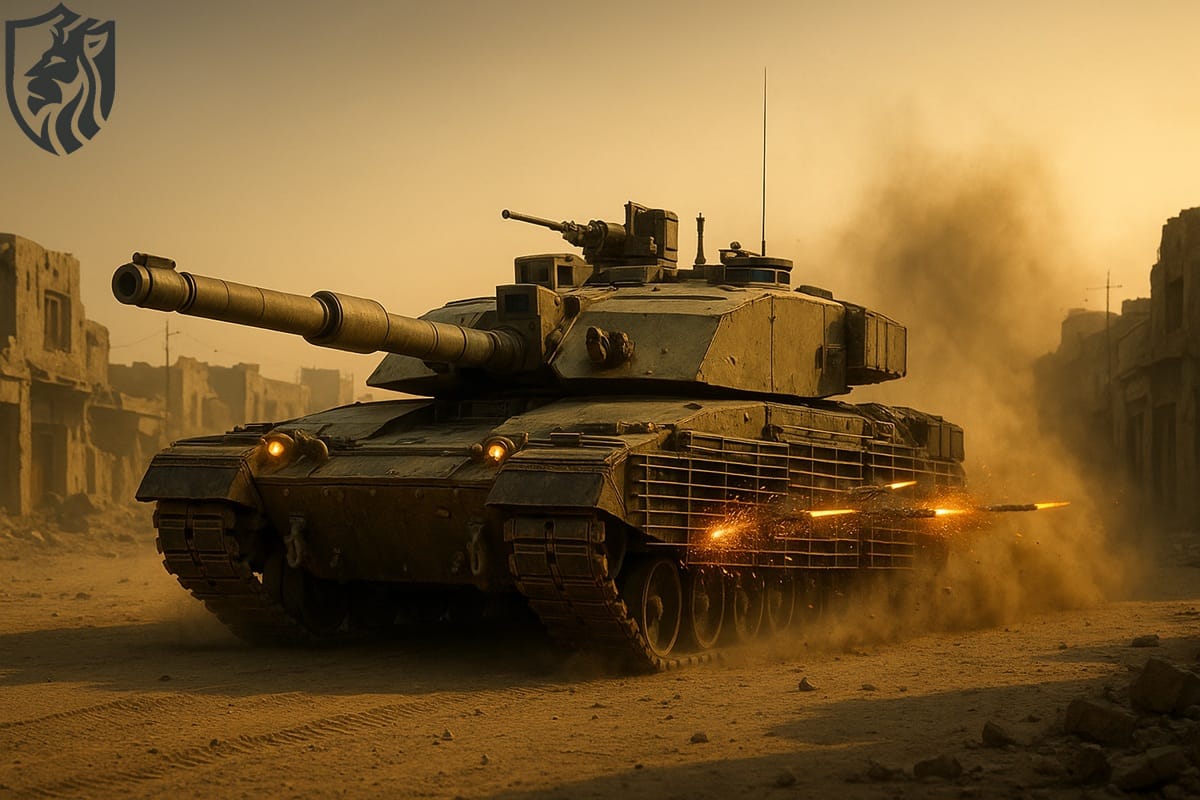
The tale that Challenger 2 survives 100+ RPGs comes from brutal urban fighting around Basra in 2003. Accounts differ on the exact number of impacts. Nevertheless, the outcome is consistent: a British tank took sustained RPG fire and kept fighting. For defence professionals, the lesson is clear. Survivability results from layered armour, crew discipline, and tactics, not a single miracle feature.
Context: urban warfare compresses risk
The dense streets of Basra reduced engagement ranges and increased the number of attack angles. RPG teams fired from windows, alleys, and rooftops. Therefore, even elite armour absorbs repeated hits. The question was not whether a tank would be struck; it was whether it would remain effective. British units adapted quickly with combined arms and smart vehicle handling.
Armour fundamentals: Dorchester at the core
Challenger II’s base protector is Dorchester’s composite armour. Ceramics and metals disrupt a shaped-charge jet and spread residual energy. Consequently, the frontal arc punishes legacy RPG threats. Side aspects remain more vulnerable, yet skirts and internal layout shield vital components. The Tank Museum’s open material explains how these layered packages defeat jets and rods. See its accessible overview for technical grounding.
Add-on protection: skirts, cages, and TES
British crews fitted side skirts and, later, Theatre Entry Standard (TES) kits. Slat-bar armour matters because it pre-detonates or deforms an RPG’s liner during standoff. Moreover, belly plates and roof elements reduce underbody and top-attack risks. This modular approach allowed vehicles to tailor protection for cities without crippling mobility.

Design for damage tolerance
Survivability also depends on internal engineering. Ammunition sits in protected bins; bagged charges reduce cook-off risk. Automatic fire suppression limits secondary damage. Electrical and hydraulic systems include redundancy. Therefore, even with peripheral hits, stabilisation and navigation often remain available. A moving, stable tank yields accurate fire and denies RPG teams a static aiming point.
Crew drills: the decisive human layer
Technology only works when crews work the plan. Commanders scanned with independent sights while gunners used thermal imaging to maintain aim. Drivers “jockeyed” the hull to spoil enemy angles. Loaders kept the 120 mm L30A1 fed with the right natures for the target. Furthermore, smoke dischargers disrupted hostile sightlines during repositioning. This disciplined choreography prevented follow-up killing shots.
Physics: why many RPG hits fail
RPGs are lethal, yet physics still rules outcomes. Oblique impact increases path length and may deflect the jet. Tracks, skirts, and external stowage often degrade the liner before it reaches the main armour. Additionally, many hits land in non-vital zones. Stacked together, these factors explain how a tank can take numerous strikes without catastrophic penetration.
Evidence and uncertainty, kept honest
Precise counts vary by source; some say “dozens”, others “scores”, and headlines repeat “100+”. However, verifiable elements align: the tank endured sustained multi-angle RPG fire and stayed in action. The UK Ministry of Defence and independent analysts describe the platform’s armour philosophy and upgrades, which support the plausibility of high survivability in such conditions.

Tactical integration: combined arms wins cities
Tanks do not fight cities alone. Infantry clears upper storeys and dead ground; armour suppresses and breaches. Air and UAV feeds improve situational awareness. Therefore, British formations paired Challenger 2s with dismounts and engineers to reduce ambush opportunities. Tempo, not static presence, proved critical for survival and mission success.
What this means for force planners
Urban operations will continue to proliferate. Forces should prioritise modular protection kits, rapid field repairs, and sensor coverage. Training must stress battle drills under fatigue and surprise. Stocking skirt spares and external components keeps vehicles in the line. Additionally, procurement should balance armour mass with mobility and thermal management to preserve endurance.
A measured takeaway
The headline, “Challenger 2 survives 100+ RPGs,”, is memorable. Yet the enduring lesson is deeper. Layered armour, resilient systems, and drilling crews create survivability, which is compounded. When those layers combine with combined-arms tactics, a modern MBT can remain combat-effective even under extreme, repeated attack.
References
- https://tankmuseum.org/article/challenger-2
- https://www.gov.uk/government/collections/army-equipment
- https://www.rusi.org/explore-our-research/publications/commentary/urban-warfare-lessons
- https://www.janes.com/defence-news (IHS Janes equipment and operations reporting)
- (External: UK MoD equipment pages)
About the Author