

Avro Arrow
Canada’s choice to stop its fighter programme and buy the CF-18 Hornet is a clear example of how politics, money, and military strategy influence defense purchases. This significant choice changed Canadian aviation history and started discussions that still occur today.

The Avro Arrow: A Sign of Progress
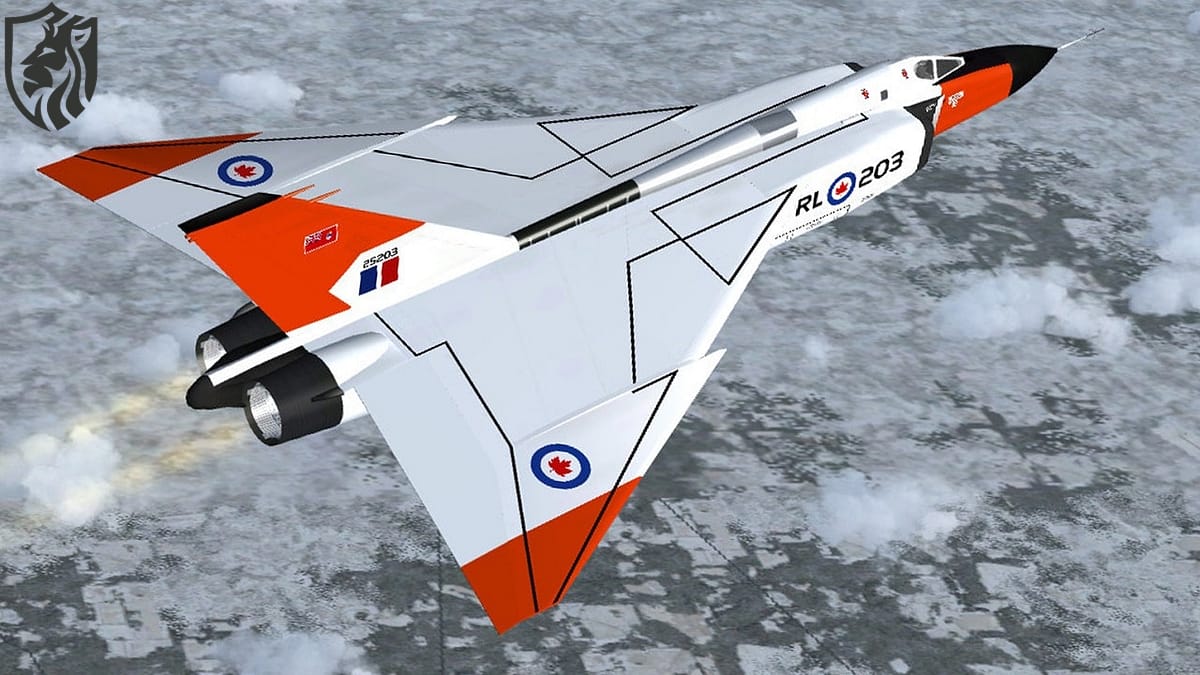
In the 1950s, Canada sought to strengthen its defense against the Soviet threat. The result was the Avro CF-105 Arrow, a modern supersonic interceptor created to protect Canadian airspace. The Arrow was notable for:
- Mach 2+ Speed: It could exceed twice the speed of sound.
- Advanced Technology: It had the latest radar and missile systems.
- Delta-Wing Shape: Its design aimed to intercept at high altitudes.
Reasons for Cancelation of the Arrow
Prime Minister John Diefenbaker abruptly cancelled the Arrow programme in 1959, despite its innovative design. Several reasons contributed:
- Rising Costs: The project’s expenses grew beyond plans, causing worries about its viability.
- Shifting Defence Needs: The emergence of ballistic missiles shifted the focus away from interceptors.
- Coordination with the U.S.: Canada chose to align its defense with the U.S. via NORAD, adopting American BOMARC missiles.
- Political Influences: There is speculation that the U.S. swayed Canada’s choice to leave the Arrow for American systems.
The Journey to the CF-18 Hornet
By the late 1970s, Canada required a new fighter jet to replace its old fleet, such as the CF-104 Starfighter and CF-101 Voodoo. Rather than restarting domestic aircraft production, Canada initiated the New Fighter Aircraft Program (NFAP) to buy an existing multirole fighter.

Reasons for Not Building a Domestic Fighter
- Money Issues: Creating a domestic fighter would have demanded significant funds, similar to the difficulties of the Arrow Program.
- Technological Gaps: Canada did not have the resources or skills to rival advanced aerospace countries like the U.S. or the Soviet Union.
- Operational Needs: As a NATO and NORAD member, Canada needed systems that worked with its allies.
- Risk Reduction: Selecting a tested design like the CF-18 reduced development uncertainties.
Choosing the CF-18 Hornet
After reviewing several options, including the F-16 Fighting Falcon, Dassault Mirage F1, and Panavia Tornado, Canada selected the McDonnell Douglas CF-18 Hornet in 1980.
Why the CF-18 Was Suitable
- Twin-Engine Setup: Suitable for operating over Canada’s large and remote areas, where single-engine reliability posed risks.
- Multirole Functionality: The Hornet performed well in air-to-air and ground-attack roles, meeting Canada’s dual defense needs.
- Compatibility: Crafted to work smoothly with U.S. systems under NORAD, improving joint operations.
- Cold Weather Modifications: To adapt to Canadian weather, the CF-18 received tougher landing gear and upgraded technology.
Could Canada Have Made Another Domestic Fighter?
Although starting a domestic fighter programme in the 1970s or 1980s seemed possible, it presented major challenges:
- High Costs: Developing a new fighter required funds that Canada’s defense budget could not provide.
- International Competition: The aerospace field has progressed greatly, making re-entering the market challenging for Canada.
- Allied Obligations: Canada’s dependence on NATO and NORAD made acquiring a compatible, established design more logical.
Legacy of the Avro Arrow and CF-18 Hornet
The Avro Arrow
The Arrow still serves as a strong symbol of Canadian innovation and ambition. People often view its cancellation as a lost opportunity for Canada to establish itself as a leader in aerospace technology. CF-18 Hornet

The CF-18 has been with Canada since the 1980s. It has done its job for NORAD and NATO, participating in many missions across the globe. But now, as the aircraft gets old, Canada is looking at the Lockheed Martin F-35 Lightning II to take its place.
Conclusion
Canada moving from making its fighter jets to buying the CF-18 Hornet shows a practical way to meet defense needs. The CF-18 has shown it can be useful, but the cancellation of the Avro Arrow still serves as a strong reminder of the difficulties and choices in military buying. For many in Canada, the Arrow’s story lives on as a symbol of what could have been.
References
- “The Avro Arrow: Canada’s Supersonic Dream”, Canadian Aviation Review, 2023.
- “CF-18 Hornet in Canadian Service”, Global Defence Insights, 2022.
- “Canada’s Fighter Jet Procurement History”, Military Aviation Journal, 20
About the Author