Canada Hits NATO 2% Defense Target
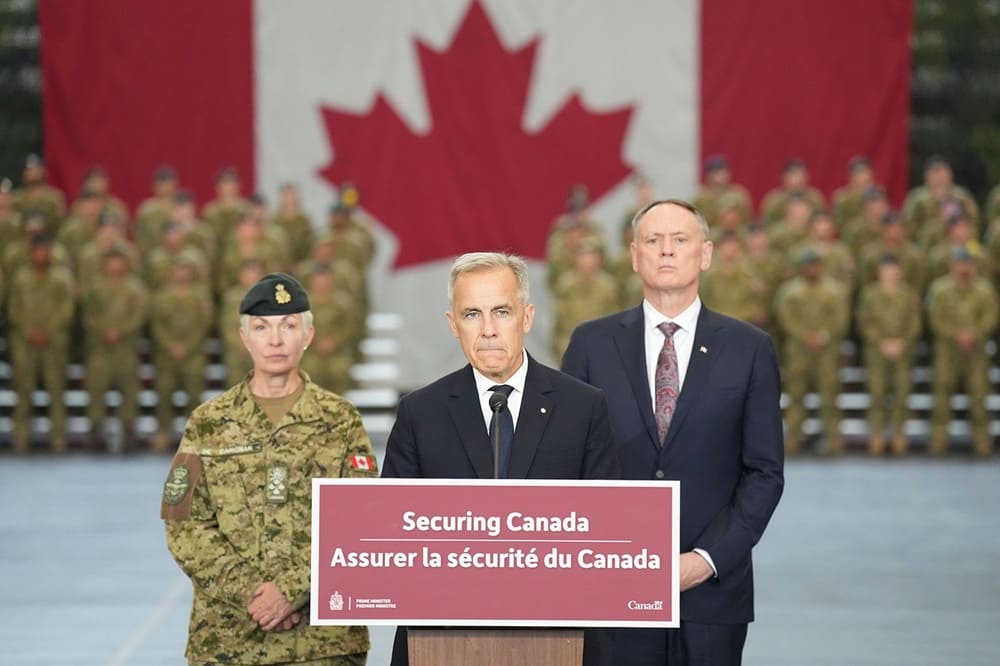
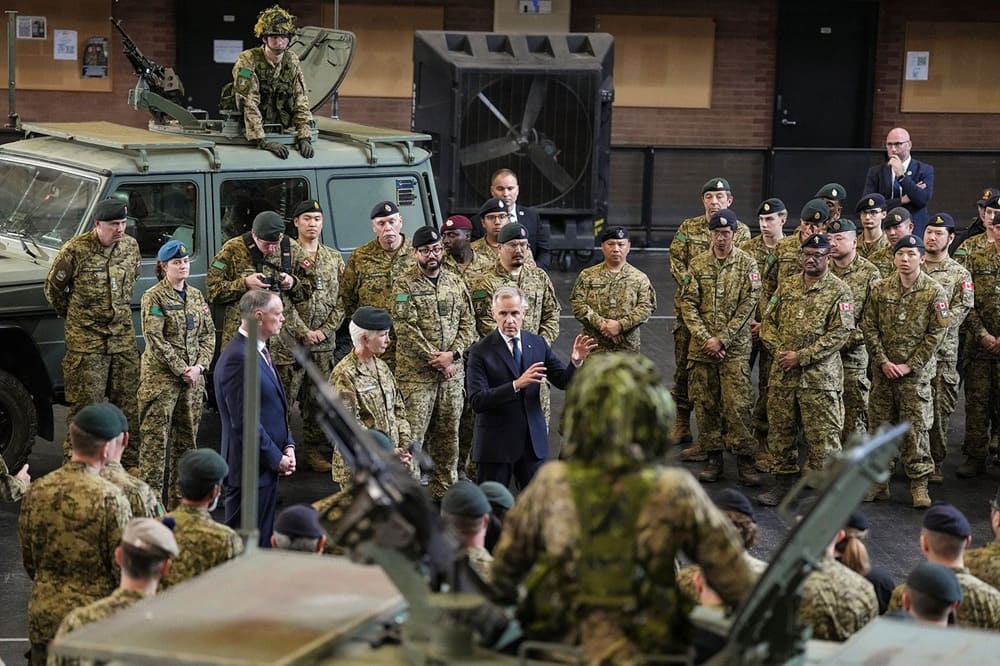
A few years ago, it seemed impossible for Canada to reach a certain political and military milestone, but now it has. For the first time in decades, Ottawa claims that it met NATO’s 2% defense spending benchmark in fiscal year 2025–2026. According to Bloomberg, Prime Minister Mark Carney characterized it as Canada’s largest defense burden in relation to its economic size since the fall of the Berlin Wall.
This is more than just an accounting milestone for defense watchers. In addition to affecting Arctic posture, force readiness, procurement credibility, and industrial policy, Canada’s meeting of the NATO 2% defense spending target alters how allies will assess Ottawa’s seriousness. Additionally, it shows that Canada no longer wishes to be perceived as
Canada Moved So Fast
The big change started in June 2025, when Carney’s government announced a defense acceleration plan that would add more than C$9 billion in 2025–26 alone. The package aimed to bring Canada up to NATO’s 2% line years ahead of schedule. Later, Ottawa said that total eligible defense spending had gone up to more than C$63 billion, which the prime minister called the biggest year-over-year increase in generations.
The political message was clear. Canada didn’t say that the move was just a symbolic concession to pressure from its allies. Carney, on the other hand, said it was a response to a harsher strategic environment that needs a stronger military, more resilient infrastructure, and a more independent security posture. So, the rise in spending is part of a larger plan to rebuild, rearm, and reinvest in the Canadian Armed Forces.
What’s Inside the 2% Figure
Headlines often omit an important point. The Department of National Defense budget is not the only thing that matters for Canada to meet the NATO 2% defense spending goal. The backgrounder from Ottawa says that more than C$14 billion of eligible spending came from other departments and agencies, such as cyber security, procurement, intelligence-related tasks, and help for veterans. The government says this approach is still in line with NATO reporting rules.
That’s important because the benchmark isn’t just about buying tanks, ships, or planes. When NATO’s spending directly helps defense outcomes, it covers a wider range of security issues. For Canada, that larger base helped close the gap faster and also showed how modern defense spending now includes cyber, space, logistics, and industrial resilience.
Where the Money Is Going
The new spending aims to address long-standing structural issues. Ottawa allocated funds for hiring and retaining employees, maintaining up-to-date equipment, digital modernization, developing new capabilities, supporting the defense industry, and strengthening partnerships with countries apart from the United States. This combination demonstrates Canada’s understanding of a fundamental truth: defense credibility relies on more than just headline procurement. It also depends on people, maintenance, networks, and production capacity.
The government also used the March 26 announcement to show off more than C$3 billion in infrastructure and defense projects in Atlantic Canada. These include upgrades to power and utilities at CFB Halifax Dockyard and Stadacona, new support facilities for the CP-8A Poseidon and CQ-9B Guardian fleets at 14 Wing Greenwood, a new combat training and integration center for future river-class destroyers, and housing for service members near 12 Wing Shearwater. Ottawa wants the NATO 2% defense spending goal to look real, not like an idea.
Matters for NATO
Timing is key. Mark Rutte, the Secretary General of NATO, said that in 2025, European allies and Canada will spend 20% more on defense than they did the year before. He also said that, for the first time since the 2014 benchmark was set, all allies said they would meet or exceed the 2% goal in 2025. So, Canada’s move is part of a much larger trend among allies, not just a decision made by Canada alone.
But the alliance has already gone past the old standard. In 2025, NATO leaders agreed that by 2035, 5% of GDP should go toward defense and related investments. This includes 3.5% for core military needs and 1.5% for other security-related needs. Canada has said in public that it will follow that path. Therefore, while 2% holds political significance, it is now more accurately perceived as a starting point rather than a final goal.
What to Expect Next
Now the real military test begins. On paper, Canada has met NATO’s 2% defense spending target. However, the bigger question is whether that money will produce deployable combat power.
Watch new recruitment numbers closely. Track maintenance recovery rates across the force. Measure munitions availability and stockpile depth. Follow Arctic surveillance programs and their delivery pace. Also monitor naval infrastructure upgrades. In addition, watch how quickly procurement reform moves. These indicators will show whether the rise is lasting. They will also reveal whether it was only a one-year spike.
Canada’s defense debate has also become an industrial debate. If Ottawa wants lasting sovereignty, it must fund domestic production. It must also strengthen allied supply chains. Moreover, it needs to speed up acquisition and delivery. That is especially true in the Arctic. There, distance, infrastructure, and response times matter as much as platforms. Therefore, Canada meeting NATO’s 2% goal matters beyond alliance optics. The real issue is whether bigger budgets create usable mass, readiness, and deterrence.
References
- https://www.bloomberg.com/news/articles/2026-03-26/canada-spends-2-of-gdp-on-defense-for-first-time-in-decades
- https://www.pm.gc.ca/en/news/news-releases/2026/03/26/prime-minister-carney-announces-canada-has-achieved-nato-2-defence
- https://www.canada.ca/en/department-national-defence/news/2026/03/canada-achieves-the-2-of-gross-domestic-product-defence-spending-benchmark.html
- https://www.nato.int/en/about-us/official-texts-and-resources/secretary-generals-annual-report/secretary-generals-annual-report-2025
About the Author