Can Pakistan Replace US Bases in the Gulf?
Can Pakistan Replace US Bases in the Gulf?
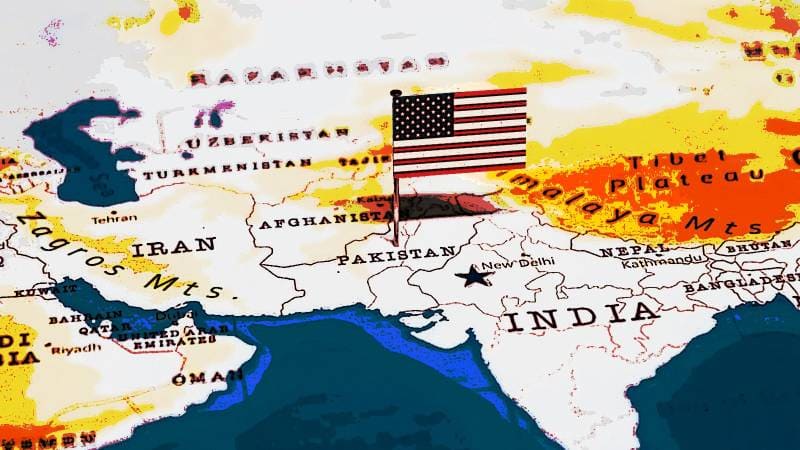
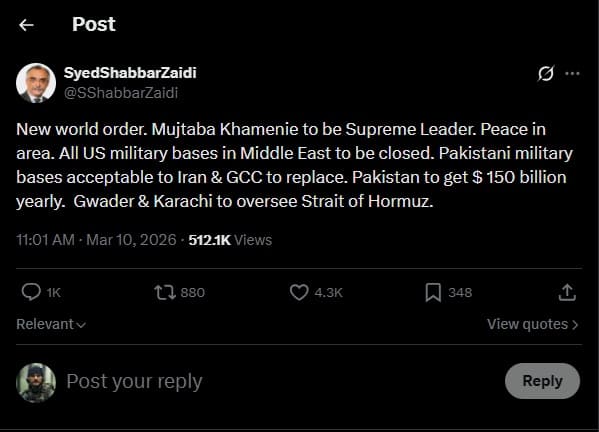
Syed Shabbar Zaidi’s viral tweet about being the X-Finance Minister of Pakistan paints a dramatic picture of a new Middle East. It says that Mojtaba Khamenei will be in charge of Iran, peace will return, all US military bases in the area will close, Pakistani bases will take their place, Pakistan will make $150 billion a year, and Gwadar and Karachi will be in charge of the Strait of Hormuz. It is a brave story. But bold stories are not the same as a good plan. To see if Pakistan can take over US bases in the Gulf, each part of the claim needs to be based on facts that are true now.
What the tweet gets right
The first part is no longer a guess. On March 12, 2026, Reuters said that Mojtaba Khamenei had taken over as Iran’s supreme leader after Ali Khamenei died. In that limited sense, the tweet correctly predicted a big change in Iran. Even so, one right call doesn’t make the whole chain right. In defense analysis, a correct opening move can still lead to a weak strategic conclusion.
Why peace still looks distant
It’s much harder to defend the peace claim. Recent reports from Reuters say that Iran’s new leader has used tough language about the Strait of Hormuz and has warned nearby countries that host American troops. That is not the way to talk about a stable order in the region. It instead points to coercion, signaling, and deterrence when things get tough. So, the idea that the region is quickly moving toward peace seems too early.
Why US bases are unlikely to disappear
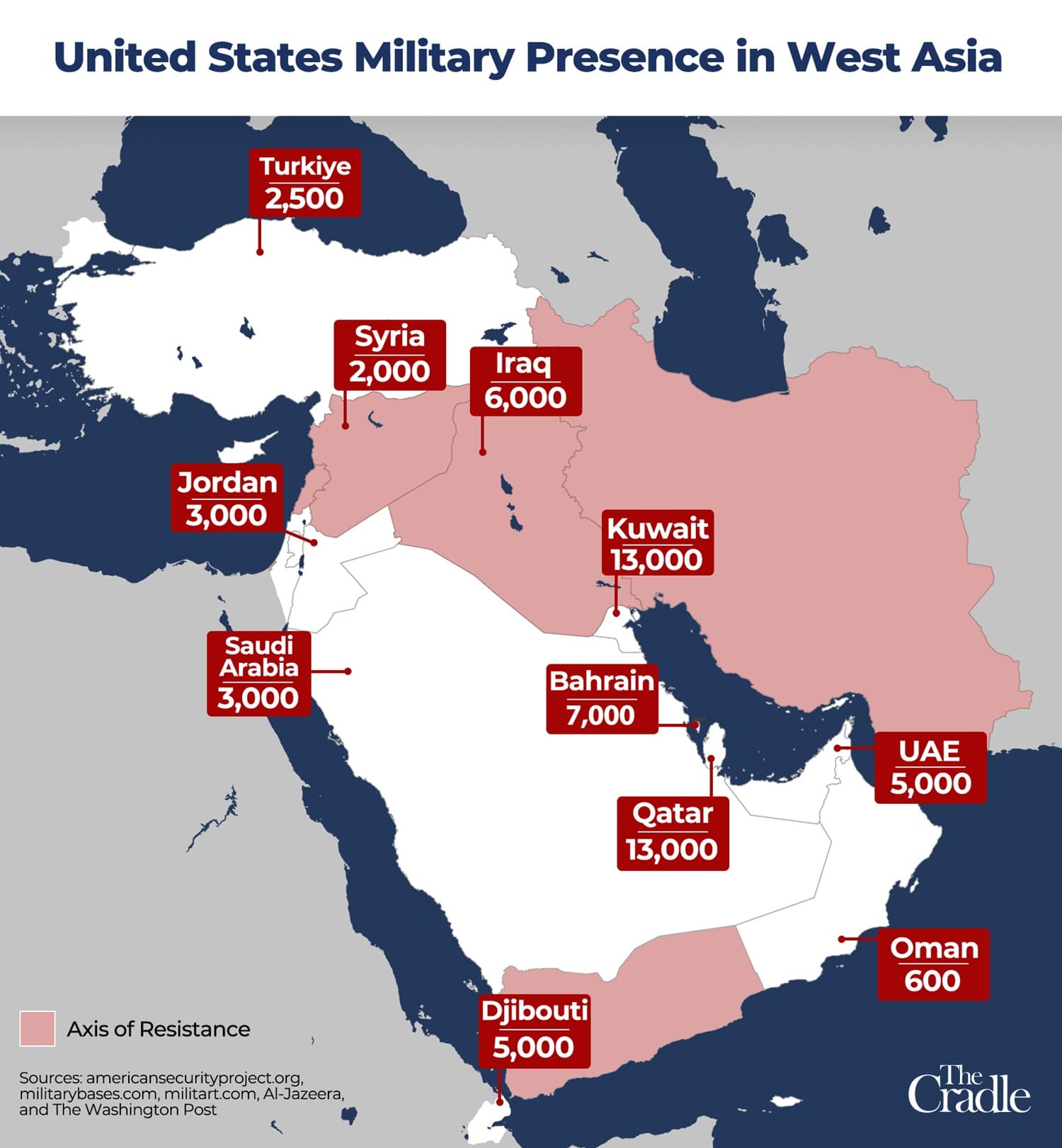
The point gets even weaker when it comes to American bases. According to Reuters, the US has major military bases in Bahrain, Qatar, Kuwait, the UAE, Iraq, Saudi Arabia, and Jordan. The US Central Command’s forward headquarters is still in Al Udeid, Qatar, where about 10,000 troops are stationed. The US Fifth Fleet is based in Bahrain. These aren’t just symbolic outposts. They help with air operations, missile defense, logistics, intelligence, and maritime security all over the region. Because of this, it seems very unlikely that the US military will leave the Gulf completely in the near future.
Can Pakistan replace US bases in the Gulf?
Pakistan does have a strong military and close ties with Saudi Arabia. In September 2025, Reuters said that Riyadh and Islamabad signed a mutual defense agreement that strengthened their long-standing security relationship. This week, Reuters also said that Prime Minister Shehbaz Sharif and Crown Prince Mohammed bin Salman talked about peace and stability in the region during their meeting in Jeddah. So, Pakistan is not a small player. It already matters to people who think about security in the Gulf.
But replacing the United States in the Gulf would take a lot more than just good will. It would need constant monitoring, air defense that works together, strategic lift, secure logistics, naval reach, and a command structure that can work in more than one state at a time. The Pakistani military is big and has a lot of experience, but it is mostly for protecting the country and its neighbors. That means the Gulf can play a bigger role. It doesn’t mean that Pakistan can fully replace Washington’s regional security network. That conclusion comes from looking at how big and spread out the current US base structure is.
There is also a lack of trust in politics. The Gulf monarchies do not have the same ideas about threats, and Iran does not see regional security in the same way that Riyadh, Abu Dhabi, or Manama do. Pakistan has mostly tried to keep a balance between Tehran and the Arab Gulf instead of setting up a new hard-security order for both sides at the same time. While some Gulf states may be happy to work more closely with Pakistan, it seems unlikely that both Iran and the GCC would agree to let Pakistan set up bases in their countries as a replacement system. That is a guess based on what Reuters said about Iran’s threats and the Saudi-Pakistani defense alignment.
Why the $150 billion figure fails the test
The part of the tweet that asks for money is the weakest. It says that Pakistan could make $150 billion a year. That number doesn’t pass a basic test of trustworthiness. According to Reuters, Pakistan’s federal budget for 2025–26 was expected to be around $62.3 billion, with defense spending at around $9 billion. In other words, the proposed yearly windfall would be more than twice as big as the federal budget. For numbers that big, there need to be signed agreements, open negotiations, or official plans. The public record doesn’t show any of that.
Can Gwadar and Karachi oversee Hormuz?
Pakistan’s ports do matter strategically. Gwadar sits near key Gulf shipping lanes, and Karachi remains central to Pakistan’s naval and commercial life. However, geography imposes hard limits. Britannica notes that the shipping lanes in the Strait of Hormuz lie mainly in Omani territorial waters and partly in Iranian waters. That means Gwadar and Karachi can support logistics, monitoring and maritime posture, but they cannot “oversee” Hormuz in the sovereign or operational sense implied by the tweet. They can influence the wider maritime environment. They cannot replace the geography of the chokepoint itself.
Final verdict
It’s possible that the tweet could be softer. If Gulf states diversify their security ties, Pakistan could become more important. It could make defense cooperation with Saudi Arabia stronger, improve coordination at sea, and use Gwadar more often in a crisis. But that’s not the same as saying that Pakistan can take over US bases in the Gulf. Mojtaba Khamenei is really getting ahead. Peace in the region is not. There is no sign that the US military will leave completely. It seems even less likely that Pakistan will be able to replace Iran and the GCC with a new order that both sides agree on. So, the tweet is a better thought experiment for geopolitics than a real prediction.
References
- https://defensenewstoday.info/trump-warns-iran-over-strait-of-hormuz-mines/
- https://defensenewstoday.info/insurgency-in-balochistan-pakistan-who-is-the-beneficiary/
- https://www.reuters.com/world/middle-east/us-military-facilities-middle-east-2026-02-28/
- https://www.reuters.com/world/asia-pacific/saudi-arabia-nuclear-armed-pakistan-sign-mutual-defence-pact-2025-09-17/
About the Author