

Bulgaria’s F-16 Block 70
A shaky debut
Bulgaria’s F-16 Block 70 fleet arrived with fanfare, then stumbled instantly. An electronic component failed on the first two-seat jet delivered in April 2024. The fault grounded the aircraft and exposed thin spare parts plans. Soon after, technicians found a fuel leak that required deeper repair. These are classic new-type issues, not an indictment on the airframe.
Logistically slowed momentum
The F-16 Block 70 is a modern, integrated platform. However, even routine snags become crises without parts on hand. Sofia lacked a robust spares package, so replacement items had to be shipped. Training slowed as a result, and acceptance testing was put on hold. With better provisioning, the first failure would likely have been a brief footnote.
Greenville’s growing pains
Lockheed Martin now builds Bulgaria’s F-16 Block 70 in Greenville, South Carolina. Production line moves are imperfect at first. Processes must stabilise; suppliers must sync, and teams must harden their quality rhythms. Consequently, some early airframes will show “teething” defects. Because lines typically mature quickly, those flaws can be fixed.
What exactly went wrong?
The first jet, tail 301, suffered the initial electronics fault and later a fuel leak. Local crews traced the leak to the fuel system but lacked capacity for a full replacement. After consultation, the manufacturer sent a specialist team to Bulgaria. The OEM continues to bear responsibility for the remedial work due to the aircraft’s lack of formal acceptance. That protects the Bulgarian Air Force from absorbing early risk.
Deliveries, money, and moving targets
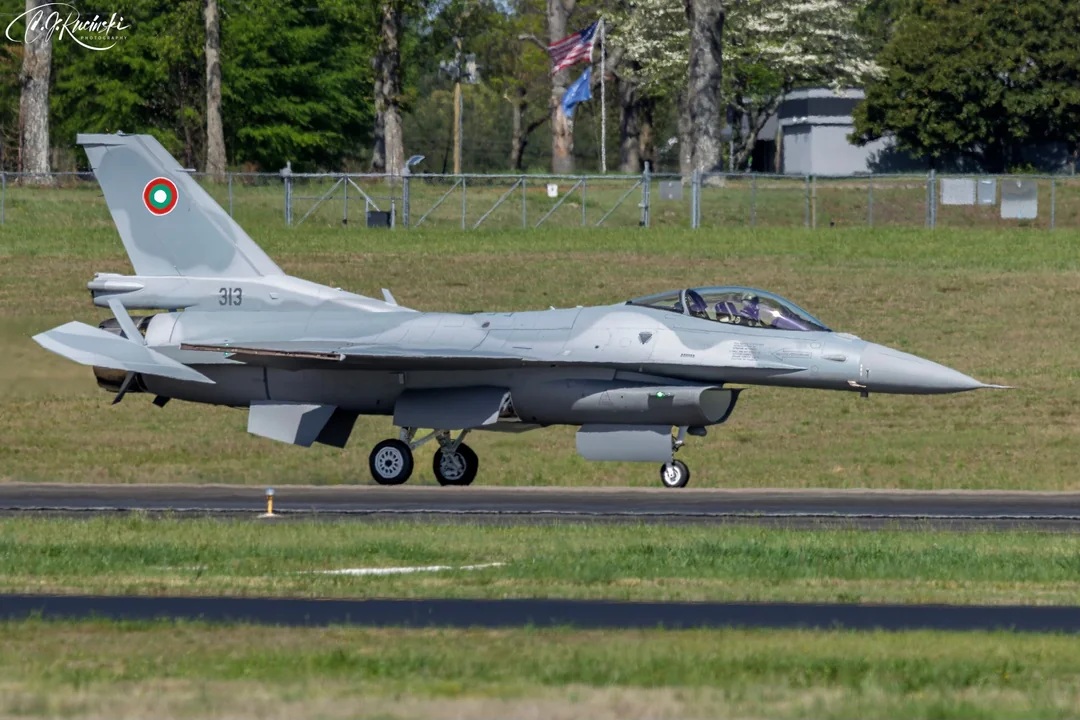
Bulgaria ordered an initial eight F-16 Block 70 aircraft for about $1.2 billion in 2019. Plans pointed to 2023–2024 handovers, yet timelines slipped. The second jet, a single-seater (tail 313), arrived in June 2024. Ferry schedules depend on tanker availability, which can shift. Moreover, a second 8-jet order worth roughly $1.3 billion will follow later.
Capability gap and MiG-29 sunset
Until it is accepted for operations, Bulgaria relies on its legacy MiG-29 Fulcrums for airspace defence. The F-16 Block 70 promises NATO-standard sensors, weapons, and data links. However, capability only arrives when aircraft, crews, spares, and software align. Planners must therefore time the MiG-29 drawdown based on the F-16’s demonstrated availability rather than paper delivery.
Sustainment is strategy
Air forces win on sorties, not on specification sheets. Sustainment sets the ceiling for readiness, especially for small fleets. Bulgaria’s F-16 Block 70 must launch with ample line-replaceable units, test gear, and trained maintainers. Moreover, a calibrated performance-based logistics model can lock in parts flow and reduce downtime.

Training, software, and configuration
Modern F-16s ship with advanced mission systems and evolving software baselines. Therefore, configuration control, data management, and simulator currency matter as much as hardware. If Sofia pairs technical fixes with rigorous training pipelines, the current delays should compress over the next rotations.
The road to acceptance
Neither tail 301 nor 313 is accepted into service yet. That status is inconvenient but useful. It keeps remediation under the manufacturer’s umbrella until issues close. Once the first aircraft clears acceptance, the remaining jets should follow faster. Early defects tend to fall steeply once processes stabilise and spares arrive.
Turbulence now, smoother air ahead
Talk of a “cursed jet” makes headlines, not policy. The F-16 Block 70 remains a proven, upgradeable fighter with a long runway of support. The F-16 has a huge base of satisfied customers, like Israel, Pakistan, Taiwan, etc.
However, Bulgaria’s path runs through better spares, disciplined sustainment, and tight OEM partnership. Addressing those levers will help the programme’s early misfires become a thing of the past.
References
- https://www.lockheedmartin.com/en-us/products/f-16.html
- https://www.dsca.mil/press-media/major-arms-sales/bulgaria-f-16-block-70-aircraft
- https://www.mod.bg/
- https://www.bta.bg/en
About the Author