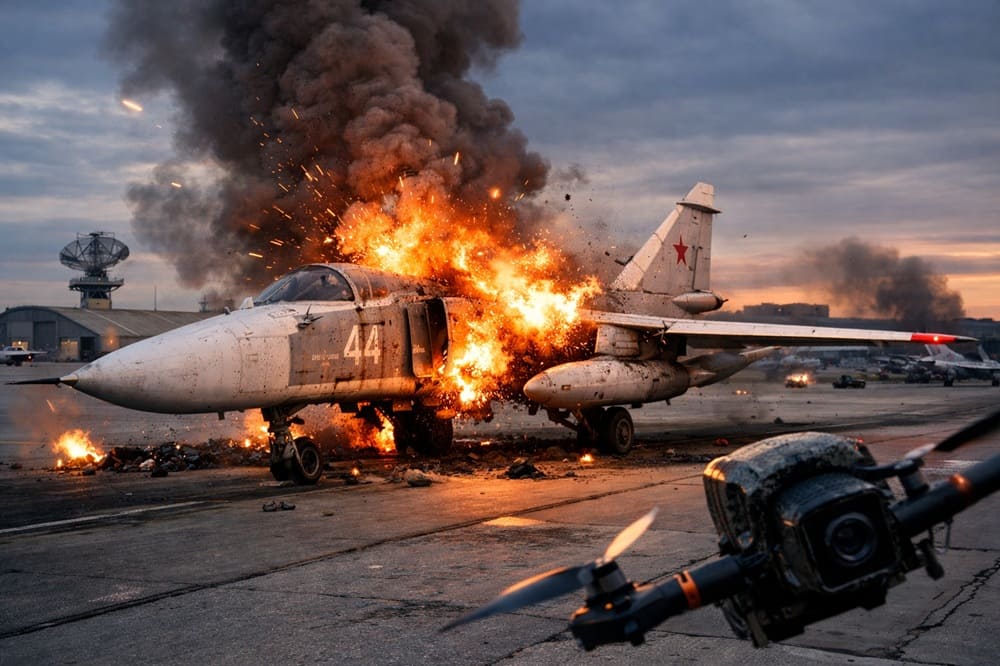
BREAKING: SBU Drone Blitz Hits 15 Russian Warplanes
Ukraine has pushed its long-range drone campaign from “nuisance” to sustained pressure. The latest example is a public Security Service of Ukraine statement and video compilation that claims a concentrated airbase strike record for 2025. Before this, several other attacks were recorded, which include the famous Spiderweb FPV assaults on Russian Air Force Tu-95s, causing immense embarrassment and huge losses to the Russian forces.
SBU’s Claim
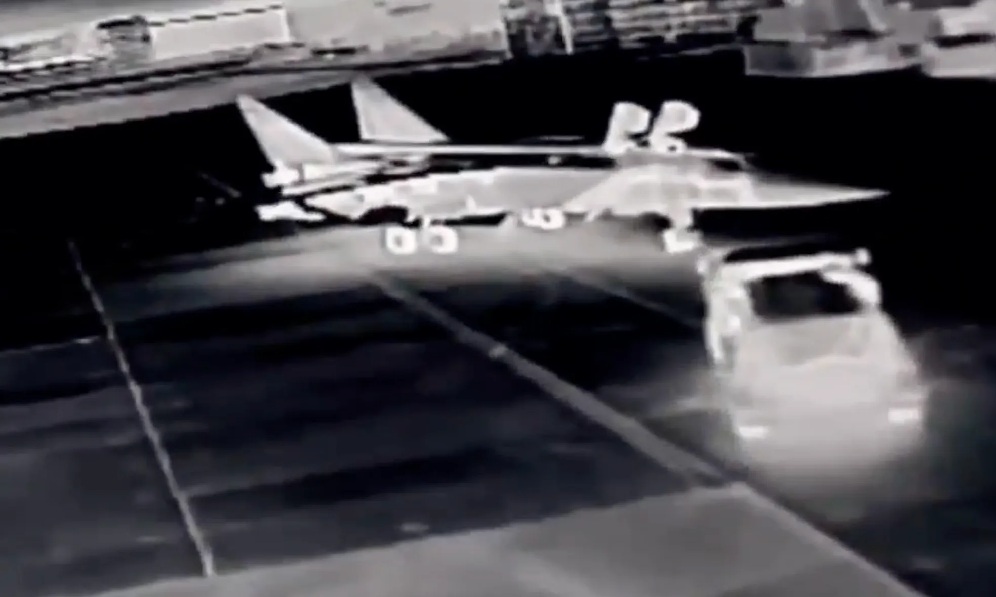
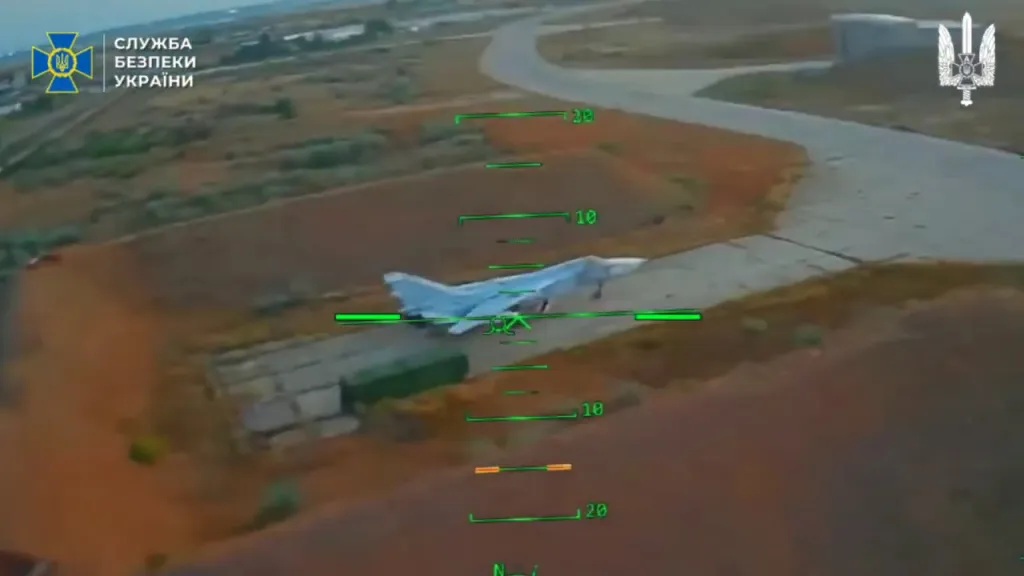
On 28 January 2026, the SBU said its “Alpha” unit struck five Russian airfields during 2025 and knocked about 15 aircraft out of action. It also claimed roughly $1 billion in damage and said the raids burned fuel and ammunition stocks. The SBU also published a roll call of affected platforms. It listed Su-30SM, Su-34, Su-27, Su-24, and MiG-31 jets, plus Mi-28, Mi-26, and Mi-8 helicopters, and one An-26 transport.
Those types matter. The Su-34 anchors Russia’s strike effort, while the MiG-31 remains a key high-speed interceptor and missile carrier. However, the SBU did not provide a strike-by-strike ledger, so outsiders cannot confirm which airframe suffered what kind of hit.
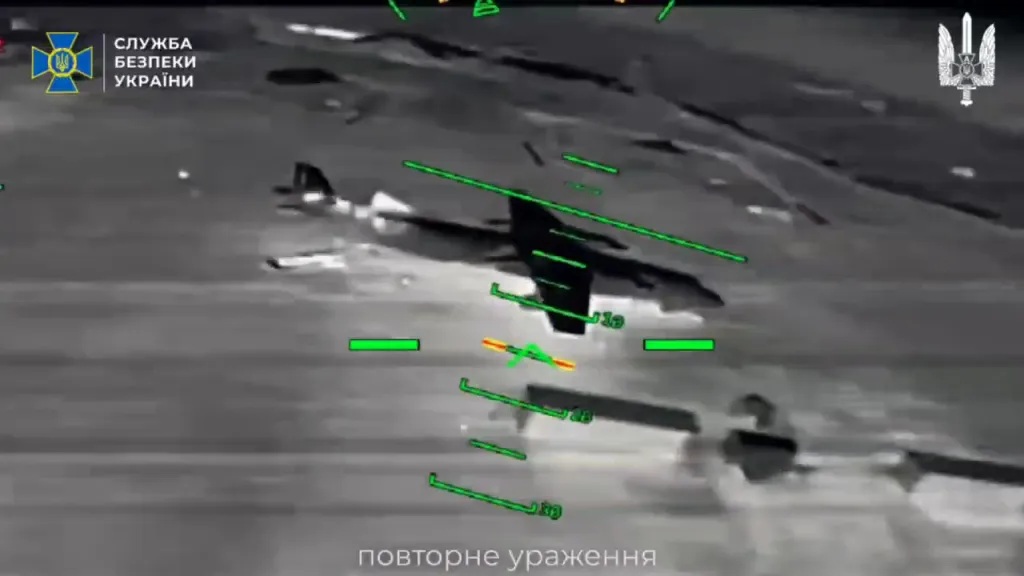
The video shows events, not proof.
The SBU’s montage is designed to persuade, not to audit. Video can show fires and secondary blasts, yet it rarely shows whether a jet is written off or later repaired. Therefore, OSINT has to match frames, dates, and locations before analysts can treat the visuals as confirmed losses. Open reporting also stresses why Ukraine targets aircraft on the ground, where small warheads can damage control surfaces, wiring, sensors, and fuel systems.
Why Saky and Kirovskoye matter
Several analysts argue the compilation links heavily to Crimea because it offers dense targets and shorter flight paths. One widely cited OSINT read points to Saky Air Base and Kirovskoye Air Base, linking the Su-30SM clip to Saky and the An-26 clip to Kirovskoye. Other elements have been linked to bases around Simferopol and Belbek Air Base. If that mapping holds, the logic is straightforward: Crimea compresses range and helps repeat strikes.
Why airbases stay vulnerable
Airbases are large and predictable. They concentrate fuel farms, parking ramps, munitions points, and command nodes in fixed layouts. As a result, even “damage” short of a total kill can impose a bigger readiness penalty than the blast footage suggests. The cost curve also favors the attacker. One-way drones cost a fraction of a modern strike jet, while defenders must cover wide perimeters and keep enough interceptors for salvos. The attacker only needs one leaker.
From raids to Spiderweb
The campaign did not start in 2025. Over time, Kyiv pushed further and then improved its methods and launch options. The most dramatic step was Operation Spiderweb on June 1, 2025, which was described as a coordinated attack using 117 FPV drones hidden in structures on trucks and launched from short range.
Early Ukrainian claims after Spiderweb destruction were very high. Later, U.S. officials cited by Reuters estimated Ukraine struck about 20 aircraft and destroyed around 10. That gap explains why analysts will treat the SBU’s “15 aircraft” figure as plausible but unverified until more evidence accumulates.
Verifying losses from video
Montage footage rarely clarifies “destroyed versus damaged.” Instead, analysts look for corroboration signals: satellite imagery that shows scorch marks and missing airframes, follow-on photos of towed aircraft, and unusual repair activity near hangars. They also watch for temporary runway closures, air-defense reinforcements, and rapid changes in parking patterns.
A good example is the alleged Su-57 strike at Akhtubinsk. Open reporting leaned on before-and-after satellite imagery rather than video alone, which is why it drew more serious scrutiny than a single clip on social media. This is also where the SBU’s platform list helps. If OSINT later confirms even a handful of named types in the right locations, it will add credibility to the broader “15 aircraft” claim.
How Russia may adapt
Russia has several realistic counters, but each costs money and time. Hardened aircraft shelters and rapid dispersal reduce the payoff of a single hit. Better camouflage and decoys can also soak up cheap drones, although they rarely solve the fuel-farm problem.
Finally, base commanders can build layered counter-UAS bubbles that mix jamming, passive detection, small-caliber guns, and quick-reaction teams. However, none of these options is free. The attacker forces the defender to protect enormous areas, which is exactly why airbase defense has become a budget line rather than a “local security” task.
What to watch next
Shelters and hardening show whether Russia expects repeat attacks. Decoys and deception can soak up drones, but they also signal strain. Counter-UAS rings that mix jammers, guns, patrols, and quick-reaction teams will matter more than single “silver bullet” systems.
Finally, basing shifts in Crimea may reveal the real operational cost. For more on counter-drone stacks, see Defense News Today’s coverage of Sanctum C-UAS 2025. For ongoing indicators of drone pressure and claimed intercepts, see our reporting on large Ukrainian drone waves.
Conclusion
If the SBU’s claims are accurate, the 2025 campaign resulted in the removal of approximately 15 aircraft from service across five airfields, causing approximately $1 billion in damage. Even if later audits trim the count, the trend stays the same: rear bases are no longer sanctuaries when cheap drones can reach parking ramps. That is the real meaning behind the SBU drone blitz that hit 15 Russian warplanes.
References
- https://ssu.gov.ua/en/novyny/5-airdromiv-minus-15-litakiv-i-1-mlrd-dolariv-daleka-matematyka-vid-alfa-sbu-video
- https://www.twz.com/air/ukrainian-drone-strikes-on-parked-russian-aircraft-seen-in-greatest-hits-video
- https://www.reuters.com/world/europe/ukraine-hit-20-russian-warplanes-destroyed-around-10-us-officials-say-2025-06-04/
- https://www.washingtonpost.com/investigations/2025/06/03/ukraine-attack-russian-bombers-damage/
About the Author