Pakistan-Saudi JF-17 Loan Swap Talks
Pakistan and Saudi Arabia are reportedly exploring a way to turn debt into hardware: a potential Pakistan-Saudi JF-17 jets-for-loans deal that would convert about $2 billion of Saudi loans into fighter-jet orders. According to Pakistani sources cited by Reuters, the discussions could deepen defense ties, just as Islamabad faces acute fiscal pressure and Riyadh recalibrates security partnerships amid doubts about long-term U.S. posture in the region.
Deal terms (reported)
Several OSINT reports frame the core mechanism as a loan conversion into aircraft procurement, with one source describing a wider package valued at $4 billion. That figure reportedly includes another $2 billion for additional equipment beyond the debt conversion. If accurate, the structure looks less like a single purchase and more like a bundled program—airframes plus mission systems, spares, and possibly weapons and support.
Crucially, the talks remain unconfirmed by the relevant ministries in Pakistan and by Saudi official channels, per Reuters and other OSINT reports. That silence matters because the deal would sit at the intersection of national budgets, airpower planning, and regional signalling—areas where both states often manage information tightly.
Why the JF-17 suits a debt swap
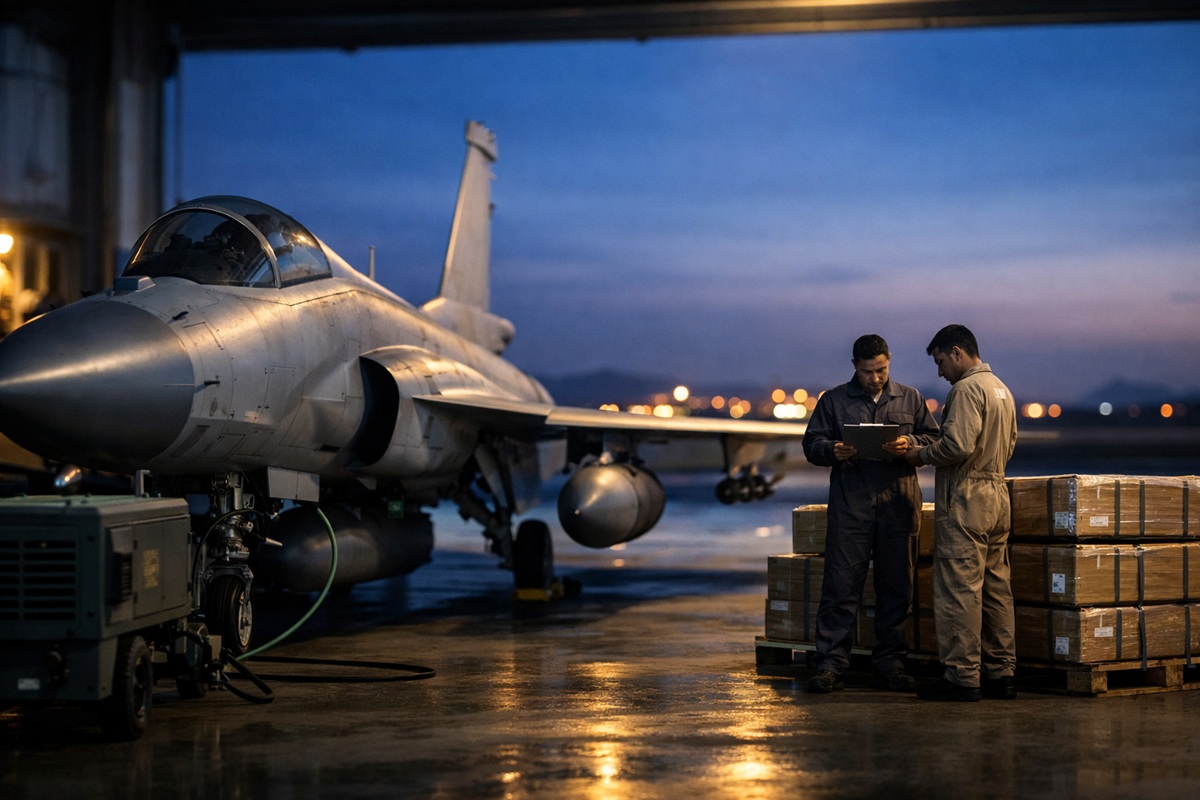
From Pakistan’s perspective, the JF-17 offers a locally produced export product that can absorb financing creativity without creating a new industrial dependency. Pakistan Aeronautical Complex PAC describes the JF-17 Thunder as a joint venture with China’s Chengdu Aircraft Industry Corporation, positioning it as a lightweight, all-weather, day/night multi-role fighter with air-to-air and air-to-surface capability.
That matters because a Pakistan-Saudi JF-17 jets-for-loans deal would not just move money around. It would also convert financial support into an industrial workload for Pakistan—production slots, training pipelines, spares planning, and long-term sustainment contracts.
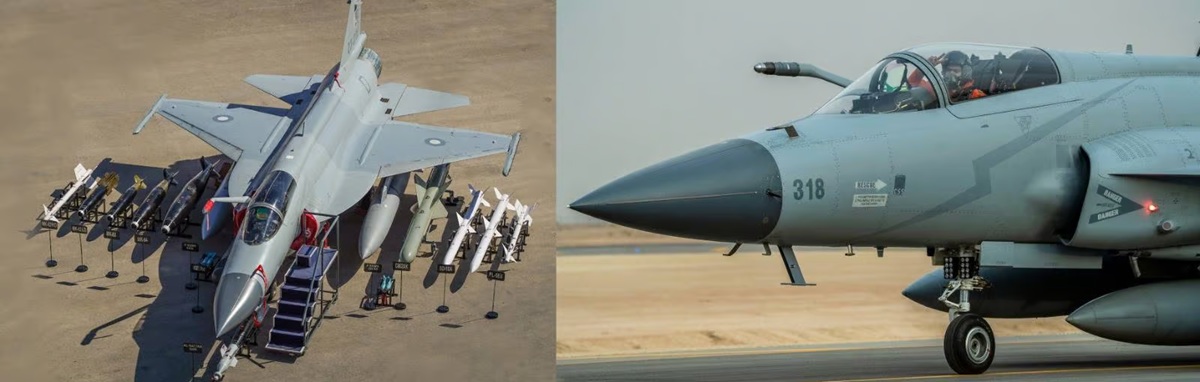
How JF-17 Block III Complements Saudi Heavy Fighters
The JF-17 Block III would strengthen Saudi Arabia’s high–low force mix. F-15s and Typhoons can keep the long-range air-superiority burden. Meanwhile, the JF-17 can handle routine alerts at a lower operating cost. It suits quick-reaction intercepts and point defenses around key sites.
It can also support close air missions when required. Moreover, extra airframes help surge capacity during crises. That approach reduces fatigue on the heavier fleets. If Saudi aligns datalinks and weapons, the Block III can share sensor tracks. Therefore, Tornado aircraft can focus on specialized strike tasks.
For more defense related scholarly articles, visit Defense News Today.
Combat record and export appeal
Pakistan-linked commentary in the Reuters report argues the aircraft sells better because it is “tested” and “used in combat.” The same reporting notes Pakistan says it deployed the aircraft during its May 2025 conflict with India, described as the heaviest fighting between the neighbors in decades.
Even when outsiders debate details, the marketing value is clear: operators prefer platforms with at least some operational pedigree. Moreover, Block upgrades also shape interest. Jane’s has reported on the JF-17 Block III ecosystem and integrations shown in official imagery, including the long-range air-to-air missile fit on the Block III. That doesn’t confirm any Saudi shopping list, but it does explain why the platform’s “ceiling” looks higher than early export customers assumed.
Saudi incentive: capability and flexibility
Riyadh often uses deposits, deferred oil deals, and rollovers to steady partners and gain strategic space. In 2018, it offered Pakistan a $6 billion support package. That package included a $3 billion central bank deposit. It also included $3 billion in oil in deferred payments. Since then, Saudi Arabia has extended those deposits several times.
Last year, it reportedly rolled over $1.2 billion again.
Converting part of that support into aircraft changes the story. It shifts aid from cash relief to visible capability-building. It also lets Riyadh frame the move as a shared security burden. Moreover, it matches a wider Gulf pattern. Security ties now work more like a marketplace than a pact. Your analysis on “Gulf sorting” provides readers with a more insightful perspective. It helps explain why these transactions may speed up.
JF-17 export Status: 2025
| Category | Country | Status (as of 2025–Jan 2026 reporting) | Qty/value reported | What changed/got reconfirmed since 2025 |
|---|---|---|---|---|
| Deal signed/expanded (2025) | Azerbaijan | Order expanded and later accepted into service | Expansion reported to 40 jets; value reported up to $4.6bn | Multiple outlets reported Pakistan announced/confirmed a major expansion in June 2025. (Forbes) |
| Successful sale (in service, reconfirmed 2025) | Azerbaijan | At least five JF-17s accepted/seen in service | ≥5 aircraft | Aviation trade reporting in Nov 2025 assessed acceptance/in-service evidence from public flypast/parade footage. (Flight Global) |
| Deal signed/finalized (late 2025) | Libya (east-based LNA) | Deal finalised (reported) | $4.6bn package; includes 16 JF-17 + 12 Super Mushshak; 2.5 years | Reuters reported the deal as finalised in Dec 2025, with these quantities listed in documents seen by Reuters. (Reuters) |
| In talks / evaluating (Jan 2026) | Saudi Arabia | In talks (reported) | Convert ~$2bn loans; the package is reported to be ~$4bn total | Reuters reported talks on a jets-for-loans structure, described as sensitive and under negotiation. (Reuters) |
| In talks / evaluating (Jan 2026) | Bangladesh | In talks (reported) | Qty/value not disclosed | Reuters reported discussions tied to a potential defence agreement, with JF-17 sales central. (Reuters) |
| Legacy export operators (pre-2025; no major 2025 contract update found) | Nigeria; Myanmar | Previously delivered / in service. | Nigeria: 3 delivered (2021); Myanmar: deliveries reported earlier | These remain commonly listed as export operators, but the notable new, well-sourced export movement in 2025 was Azerbaijan’s induction and contract expansion. (Dawn) |
- Azerbaijan represents the clearest example of “confirmed momentum”: it had an expanded order reported in June 2025 and at least five units accepted and in service by November 2025. Armenpress+2Flight Global+2
- Libya (LNA) is the biggest “deal reported finalized” story (Dec. 2025). Reuters
- Saudi Arabia and Bangladesh are the main countries involved in “active talks” (Jan 2026). Reuters+1
The defense pact: higher stakes
OSINT reports say Pakistan and Saudi Arabia will sign a mutual defense pact in 2025. The report claims they signed it in September. It also says both states would treat aggression against one as an attack on both. If true, that pledge is not symbolic. It could reshape how rivals read future procurement decisions. It may also affect basing access and joint training. Moreover, it could deepen interoperability planning across both forces.
Against that backdrop, a Pakistan-Saudi JF-17 jets-for-loans deal would signal an effort to operationalize the pact through tangible force structure. It would also raise questions about the package’s “hidden mass,” which includes weapons, electronic warfare systems, training detachments, and sustainment.
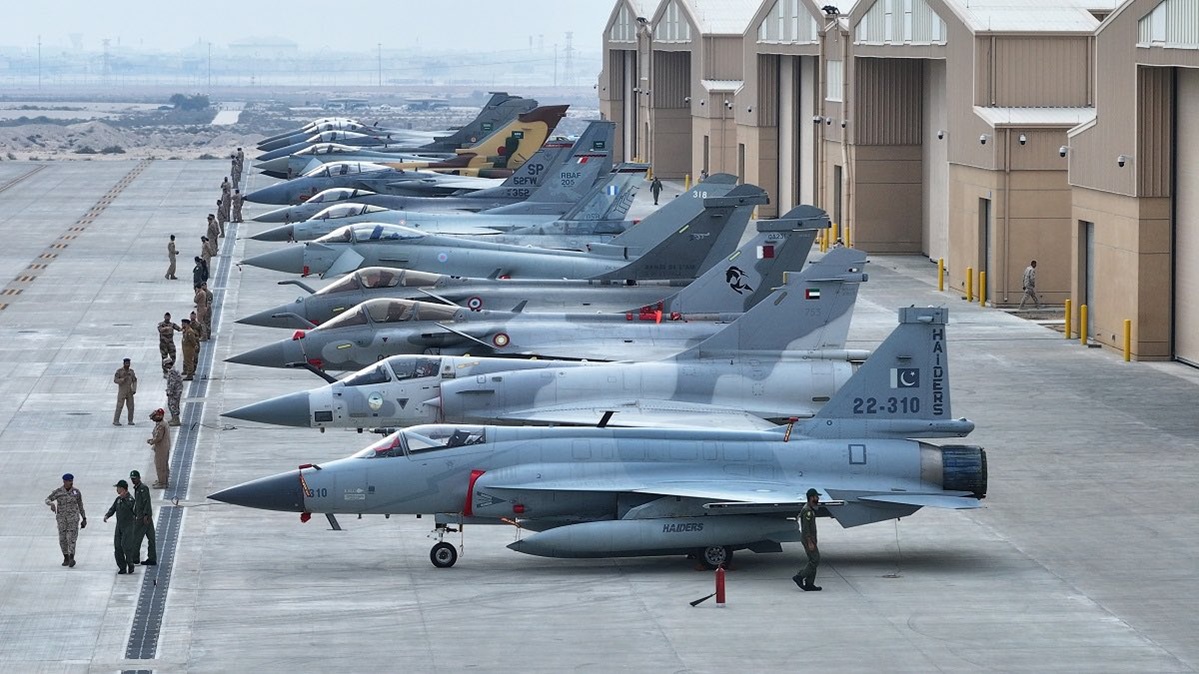
Export push: Libya and Bangladesh
Reuters frames the Saudi talks as part of a wider export drive. It reports Pakistan struck a $4+ billion weapons deal with Libya’s eastern-based Libyan National Army that includes JF-17s and trainer aircraft, and that Pakistan has also discussed JF-17 sales with Bangladesh.
Those Bangladesh discussions look especially active this week. Defense News Today and other aviation outlets report that Dhaka is exploring JF-17 acquisitions as Pakistan expands its defense outreach.
For readers, the news matters because export momentum changes negotiation leverage. If Pakistan can credibly claim a fuller order book, it can push harder on unit price, spares, and training margins—and it can justify expanding production capacity.
What to watch next?
If officials move beyond exploratory discussions, four technical questions will define the real value of the package:
- Variant and configuration: Block level, radar/mission computer standard, and EW suite.
- Weapon and sensor bundles—missiles, targeting pods, and datalink fits—often cost more than the airframes.
- Sustainment terms: spares depth, depot-level maintenance, and engine support determine readiness rates.
- Training and basing footprint: instructor pipelines and detachments can quietly deepen military alignment.
Conclusion
Saudi interest in the JF-17 would shift support from cash to capability. It would also deepen training, sustainment, and interoperability links. Meanwhile, Pakistan would gain export momentum and steadier production. If confirmed, the purchase would signal Riyadh’s push to diversify suppliers.
References
- https://www.reuters.com/world/asia-pacific/pakistan-saudi-talks-jf-17-jets-for-loans-deal-sources-say-2026-01-07/
- https://defensenewstoday.info/breaking-pakistan-saudi-jf-17-loan-swap-talks/
- https://www.reuters.com/world/asia-pacific/pakistan-eyes-defence-pact-with-bangladesh-sale-jf-17-jets-2026-01-07/
- https://www.pac.org.pk/jf-17
- https://www.janes.com/osint-insights/defence-news/air/update-pakistan-shows-jf-17-block-iii-fitted-with-pl-15-missiles-for-first-time
About the Author