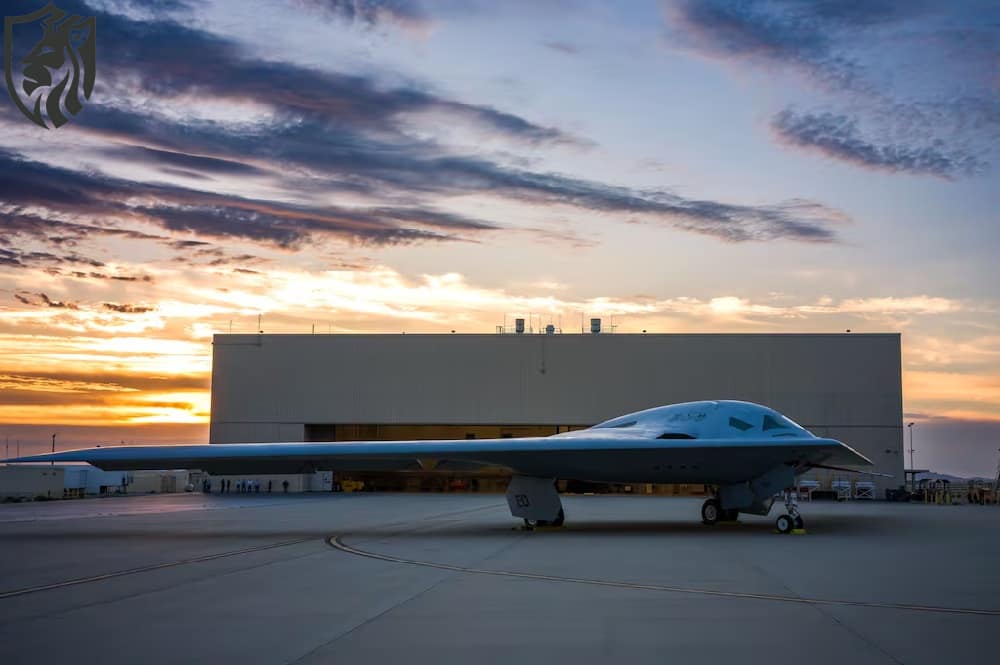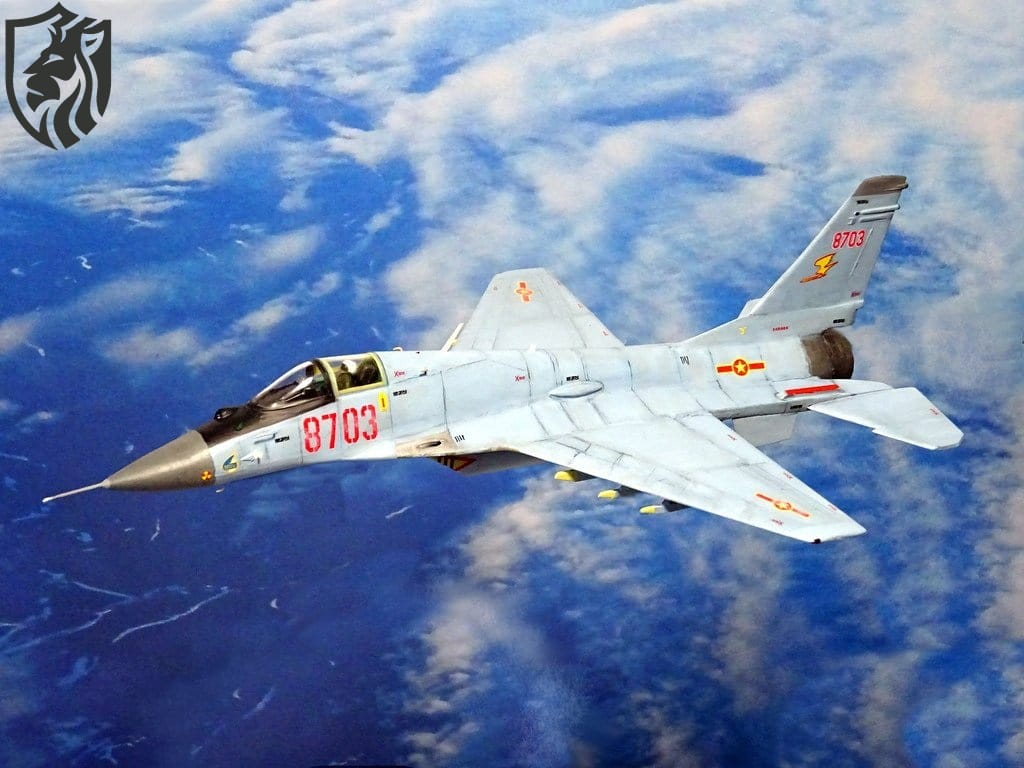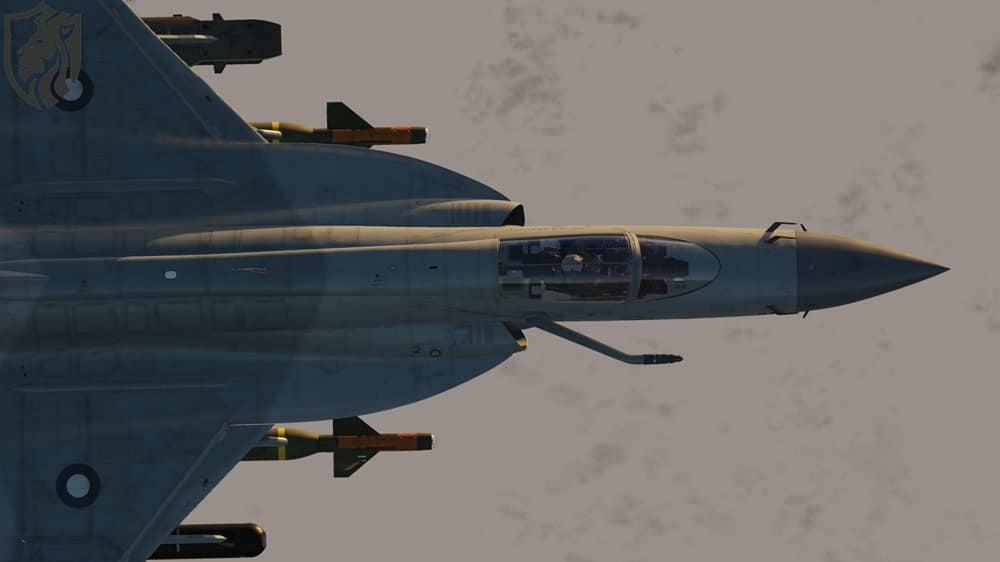


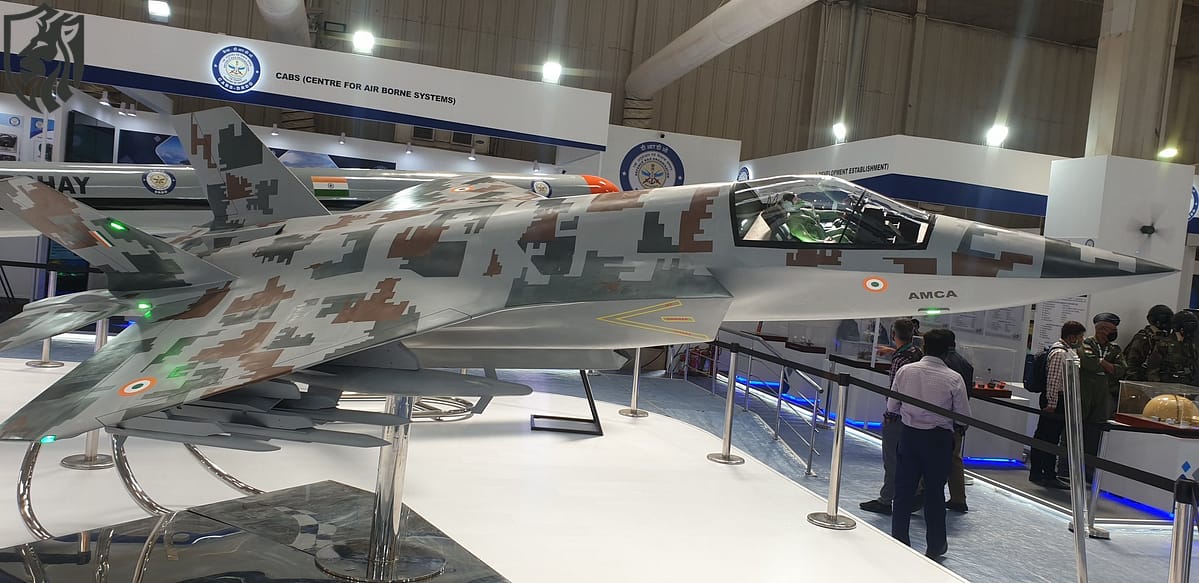
IAF AMCA
On May 26, 2025, the Indian Defence Ministry, headed by Defence Minister Rajnath Singh, officially cleared the roadmap for the development of the Advanced Medium Combat Aircraft (AMCA), a next-generation stealth fighter with the aim of enhancing the combat efficiency of the Indian Air Force.
The notification released in New Delhi names the Aeronautical Development Agency (ADA) to be the project coordinator, along with private sector players, in developing India’s first indigenously designed and produced fifth-generation fighter aircraft.
The programme seeks to address the strategic requirement of countering regional threats, primarily those from China and Pakistan, while maintaining India’s goal of achieving defence self-sufficiency through indigenous innovation.
The plan aims to enhance developmental efficiency, reduce costs, and use cutting-edge technology in a collaborative manner, thereby contributing to India’s defence modernisation strategy.
Initiated in the early 2000s, India acknowledged the need for stealthy fighters to sustain air dominance in a more hostile regional environment. India’s Air Force, plagued with an ageing MiG-21 and Mirage 2000 fleet, sought a platform that would be able to match the capabilities of rising global powers.
Fifth-Generation Fighter Project
In 2008, the fifth-generation fighter project was at the forefront, and the ADA was tasked with examining its viability. The government committed initial development funds in 2010, marking the official launch of the AMCA programme. The first phase of the project was to establish specifications: a stealth, supercruise-capable fighter with advanced avionics and multi-role capability for air superiority, ground attack, and electronic warfare.
A 2011 article in The Hindu reported that the Indian Air Force had made the AMCA part of its future force plans, alongside the Sukhoi Su-30 MKI and the new Rafale jets. The project was, however, faced with challenges from the very beginning.

The development of stealth technology, encompassing radar-absorbing materials and low-observable airframe designs, called for a degree of expertise that India did not possess at that time. Lack of a homegrown high-thrust engine further compounded the problem, leading to dependence on foreign suppliers.
India ventured a short-term collaboration with Russia in 2012 with a view to co-development of a fifth-generation fighter plane on the Su-57 platform. The partnership sought to leverage Russia’s stealth capabilities and share the economic burden.
India withdrew from the partnership by 2018 owing to technology-transfer differences and escalating costs, The Times of India reported. This action pushed the AMCA to deliver a purely indigenous program, once again putting pressure on the ADA and DRDO.
ADA had produced subscale models.
The program’s design phase began in 2015. It was followed by wind-tunnel trials and stealth verification tests in later years. By 2020, the ADA had built subscale models to measure aerodynamic and radar cross-section attributes.
However, budget cuts and bureaucratic delays slowed progress. A report from The Print in 2021 revealed that the timeline for the AMCA had slipped. The prototype expected in 2025 was pushed to 2028. The LCA Tejas project faced similar delays. Conceptualised in the 1980s, it only reached full operational status in the late 2010s.
T This history highlights the challenges India faces when executing large defence projects. Critics stated that the AMCA project was overly ambitious. The project aimed to develop an indigenous AESA radar, advanced electronic warfare systems, and supercruise-capable engines. Developing this advanced system required extensive funding and specialised expertise.
The AMCA’s Kaveri engine faced technical difficulties. In 2023, Defence News Today reported that India chose the General Electric F414 for early prototypes. Using foreign parts has raised concerns about India’s strategic interests. The project is a core goal of India’s “Made in India” initiative. Despite challenges, the ADA moved forward steadily.
It completed conceptual designs and partnered with firms like HAL and Tata Advanced Systems. Approval of the Special Purpose Vehicle (SPV) model in 2025 marked a major milestone. The project was confirmed in X posts on May 27, 2025.
Private Sector Involvement
This design allows for private sector involvement to enhance efficiency, reduce costs, and speed up production. According to India’s strategic defence plan, they plan to launch the first AMCA prototype in 2028 and deploy it operationally in mid-2030.
China’s swift development of stealth fighter technology has significantly impacted India’s AMCA programme, altering security dynamics in the region and favouring Pakistan, India’s archrival. China’s Chengdu J-20, which has been in service since 2017, is a fifth-generation stealth fighter designed for air superiority and penetration deep into hostile territory.
The J-20, with its advanced radar, stealth, and PL-15 air-to-air missiles, has further increased China’s control over the Indo-Pacific region. According to Reuters news in 2024, China has deployed the J-20 on India’s northern frontiers, leading to increased tensions in disputed areas like Ladakh.
The Shenyang J-35, a lightweight stealth fighter intended for carrier operations, has significantly progressed, with prototypes currently undergoing testing in 2024, as indicated by reports on platform X. This expeditious pace of development has bolstered Pakistan, which benefits from China’s willingness to share sophisticated defence technologies.
The purchase of J-10C fighter planes by Pakistan and the possible purchase of stealth technology through joint projects, as suggested in a 2025 report by News.bg, indicate that the increasing gap between India and its rivals is widening.
Rafale Contract
The extended period of India’s decision-making process has intensified this imbalance, which remains an ever-persistent bottleneck in defence procurement. One classic example of this trend is the finalisation of the Rafale contract in 2016, which allowed China and Pakistan to gain a technological advantage.
India’s historical slip-ups are a result of a complicated combination of bureaucratic lethargy, political indecisiveness, and restricted industrial capability. The AMCA’s protracted timeline is a classic example of system-level issues, with India struggling to keep pace with China’s state-controlled defence industry.
China inducted the J-20 into service within a decade of its planning, whereas India’s AMCA remains a few years away from induction. This lag has strategic implications, as Pakistan is using Chinese assistance to modernise its air force, which might equal India’s numbers.
The Indian Air Force currently has a squadron strength of 30, which is significantly lower than the sanctioned strength of 42, pointing to the urgent need for the development of the AMCA to achieve parity.
A comparison to the world’s fifth-generation fighters puts its capabilities and difficulties into perspective. China’s J-20 prioritises air dominance, featuring a delta wing and extended range capabilities to penetrate adversaries’ skies.
Aero India 2025
The Chinese J-35, which is still in the process of being developed, focuses on multi-role use for carrier-based deployment, possibly rivalling the United States’ F-35 Lightning II. Russia’s Su-57, which was recently unveiled at Aero India 2025, incorporates stealth and excellent agility; mass production has been affected by Western sanctions, though, reports agogs.sk in 2024.
Lockheed Martin’s F-35 sets the benchmark for sensor fusion, stealth, and global interoperability with 20 nations. The AMCA will seek to match the multi-role capability of the F-35 with stealth, supercruise, and advanced avionics.
India’s dependence on foreign engines and modest expertise in stealth technology might keep it from falling in line with the J-20 family or the F-35 sensor fusion. The Aeronautical Development Agency focuses on indigenous systems, like locally produced radar-absorbing materials and an Active Electronically Scanned Array radar, which will create a niche; however, these technologies are not yet fully tested.

The AMCA corresponds to the Global Combat Air Program (GCAP), which is a collaboration between the UK, Japan, and Italy to achieve a sixth-generation fighter by 2035. As of 2020, GCAP enjoys the technological superiority of its allies, especially Japan’s stealth technologies acquired through the F-2 and X-2 Shinshin programs.
Organisations like BAE Systems and Mitsubishi Heavy Industries drive GCAP’s innovations, such as AI-based systems, directed-energy weapons, and advanced propulsion technologies. India’s developing defence ecosystem, while growing, lacks the depth of GCAP’s industrial base necessary to create the AMCA.
GCAP
GCAP’s organisational partnership ensures the rapid adoption of new technologies. This places it ahead of AMCA, which faces budget and technology challenges. The AMCA’s public-private partnership, authorised for 2025, seeks to close this gap. It aims to foster innovation and improve scalability.
AMCA’s expected operational date in the late 2030s is later than GCAP’s 2035 target. The main difference lies in resources. GCAP benefits from shared funding and expertise, while India bears costs alone due to political and economic limits.
The AMCA will significantly boost India’s air combat capability. The Indian Air Force urgently needs modern fighters as older jets like the MiG-21 age out. Designed for air superiority, precision strikes, and electronic warfare, AMCA will help bridge this capability gap.
Its stealth features, including a low radar cross-section and internal weapons bays, enable deep penetration into enemy territory. Such capabilities are vital for missions along India’s borders with China and Pakistan. Advanced sensors, like indigenous AESA radar and infrared search-and-track, will improve situational awareness.
These will integrate with fighters like the Tejas and Rafale. AMCA’s network-centric warfare systems will allow real-time data sharing, boosting coordination in coalition missions.
AMCA
By cutting reliance on foreign vendors, the AMCA strengthens India’s “Make in India” initiative. This approach can lower lifecycle costs and boost strategic independence. In the Indo-Pacific, China’s growing aggression threatens regional stability. The AMCA will extend India’s reach, deter rivals, and safeguard national interests.
The Indian technical specifications of the AMCA are an ambitious but speculative presentation. The plane is a 25-tonne, twin-engine, tailless, diamond-shaped stealth fighter to reduce radar cross-section. It will feature radar-absorbing materials, internal weapon bays, and diverterless supersonic inlets to maximise stealth and performance.
The ADA plans to equip the AMCA with a locally developed AESA radar system that has the capability to detect multiple targets, as well as state-of-the-art electronic warfare systems to counter enemy defences. India will probably fit the aircraft with long-range Astra Mk-2 air-to-air missiles.
It will also equip it with BrahMos-NG air-to-ground missiles, a smaller version of its supersonic cruise missile.
The requirement for supercruise capability, which allows sustained supersonic flight without afterburners, poses the greatest challenge in selecting the engine. Despite the failures that have accompanied the development of the Kaveri engine, India has chosen to use the GE F414 engine in its initial prototypes, as reported by X posts in 2023.
Conclusion
Future generations of fighter jets may feature guided-energy weapons and AI systems. These reflect trends seen in global sixth-generation technology development. The specifications are based on ADA estimates and could change. India has yet to demonstrate large-scale use of these technologies.
AMCA approval marks a major step in India’s air force modernisation. However, achieving this goal depends on overcoming current challenges. Past delays in the Tejas Program indicate that it requires strong decisions and sufficient funding.
The public-private partnership model promises improved efficiency. However, India must fix technology gaps, especially in engine R&D and stealth integration. China’s rapid progress and Pakistan’s advanced systems increase the risks for India.
Falling further behind in the South Asian arms race is a real danger. The AMCA could shift India’s strategic position. It offers a platform to counter threats and project power effectively.
References
- Ministry of Defence India – pib.gov.in
- The Hindu – thehindu.com
- Times of India – timesofindia.indiatimes.com
- Defence News – defensenews.com
- The Print – theprint.in
- Reuters – reuters.com
- News.bg – news.bg
- Aero India – aeroindia.gov.in
- Agogs – agogs.sk
- BAE Systems (GCAP)—baesystems.com
- X (formerly Twitter) – twitter.com
About the Author