
Brazil Nuclear Submarine Program — Karam S43 Milestone
Brazil enters the final conventional phase
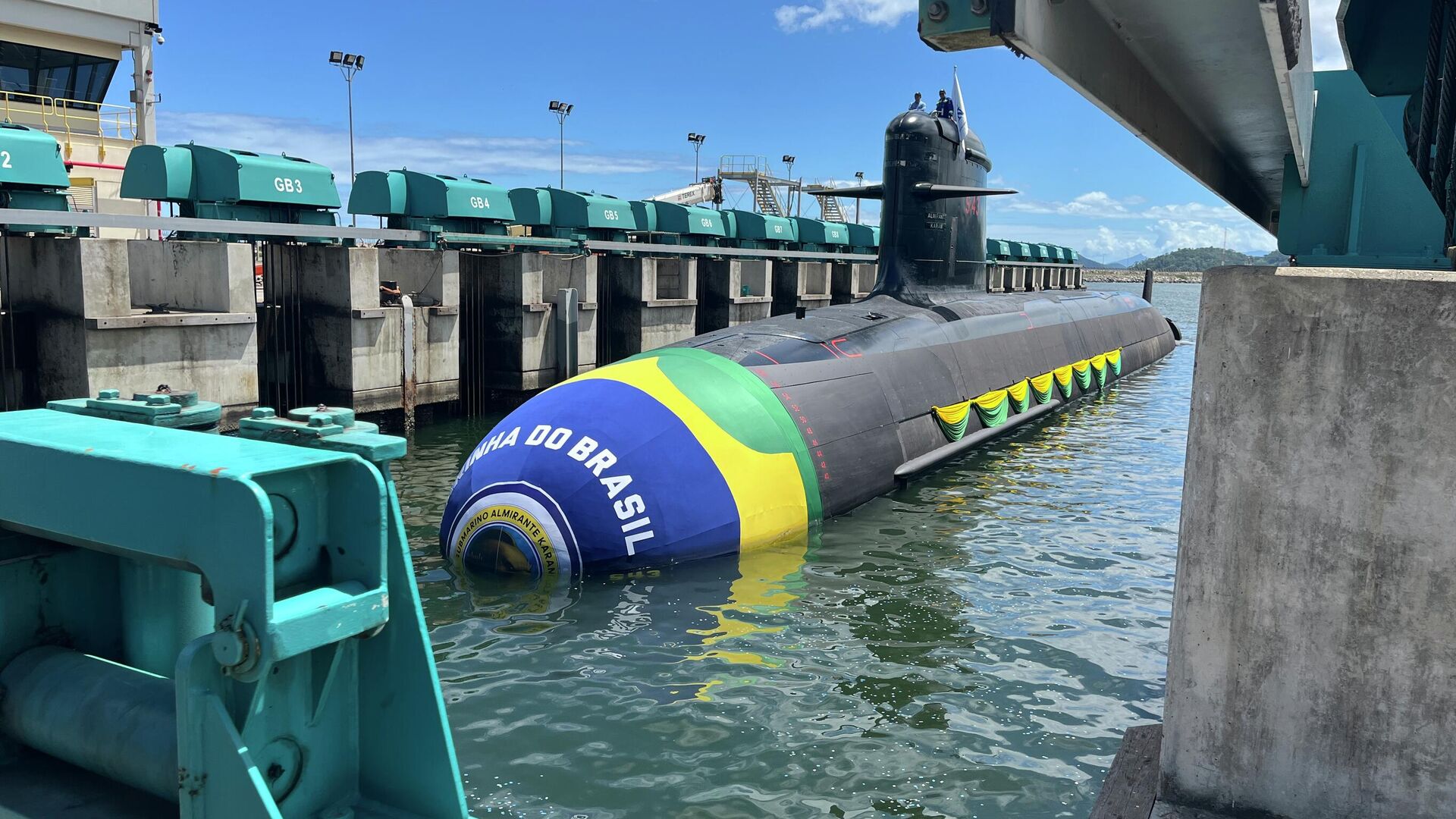
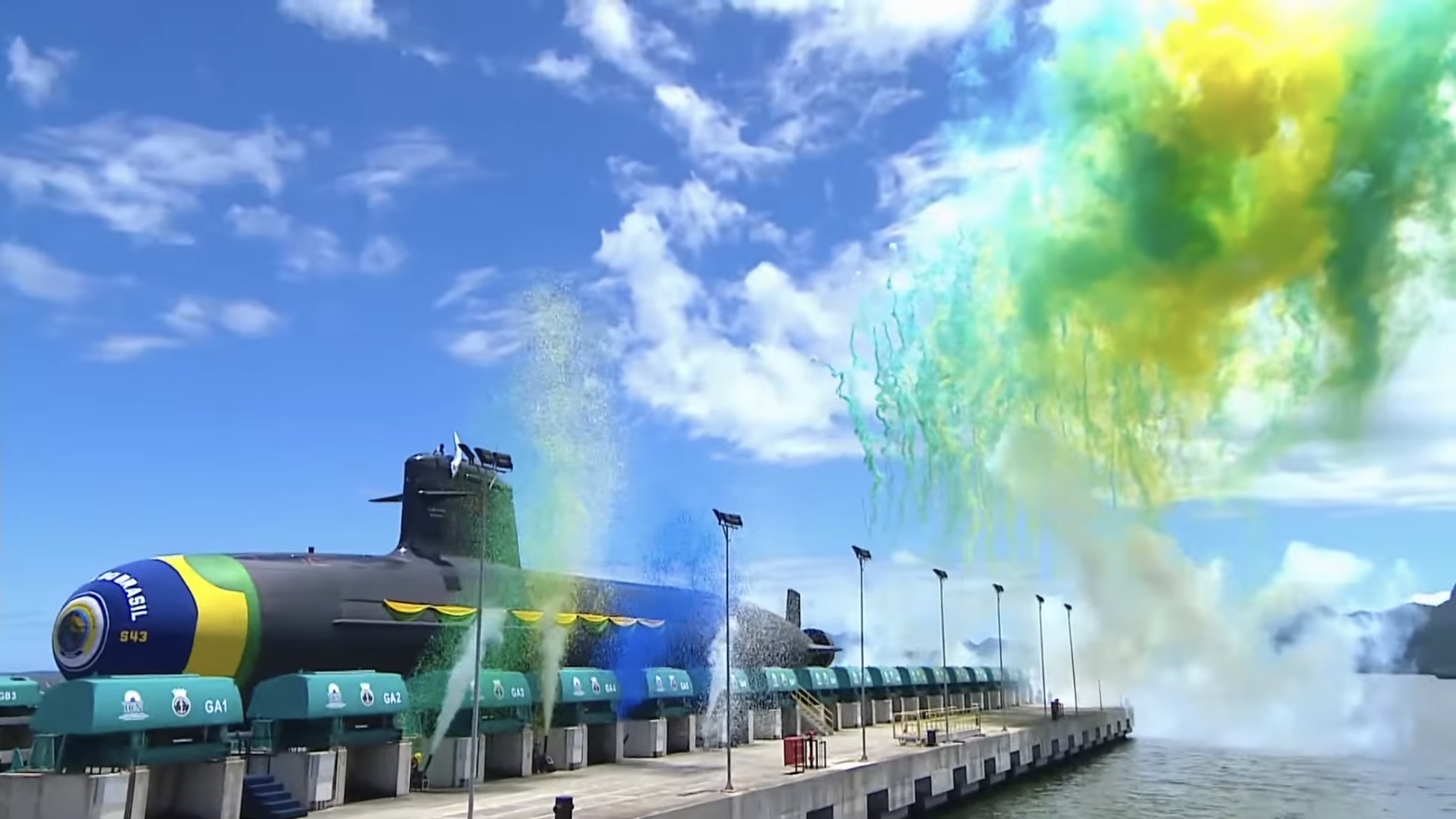
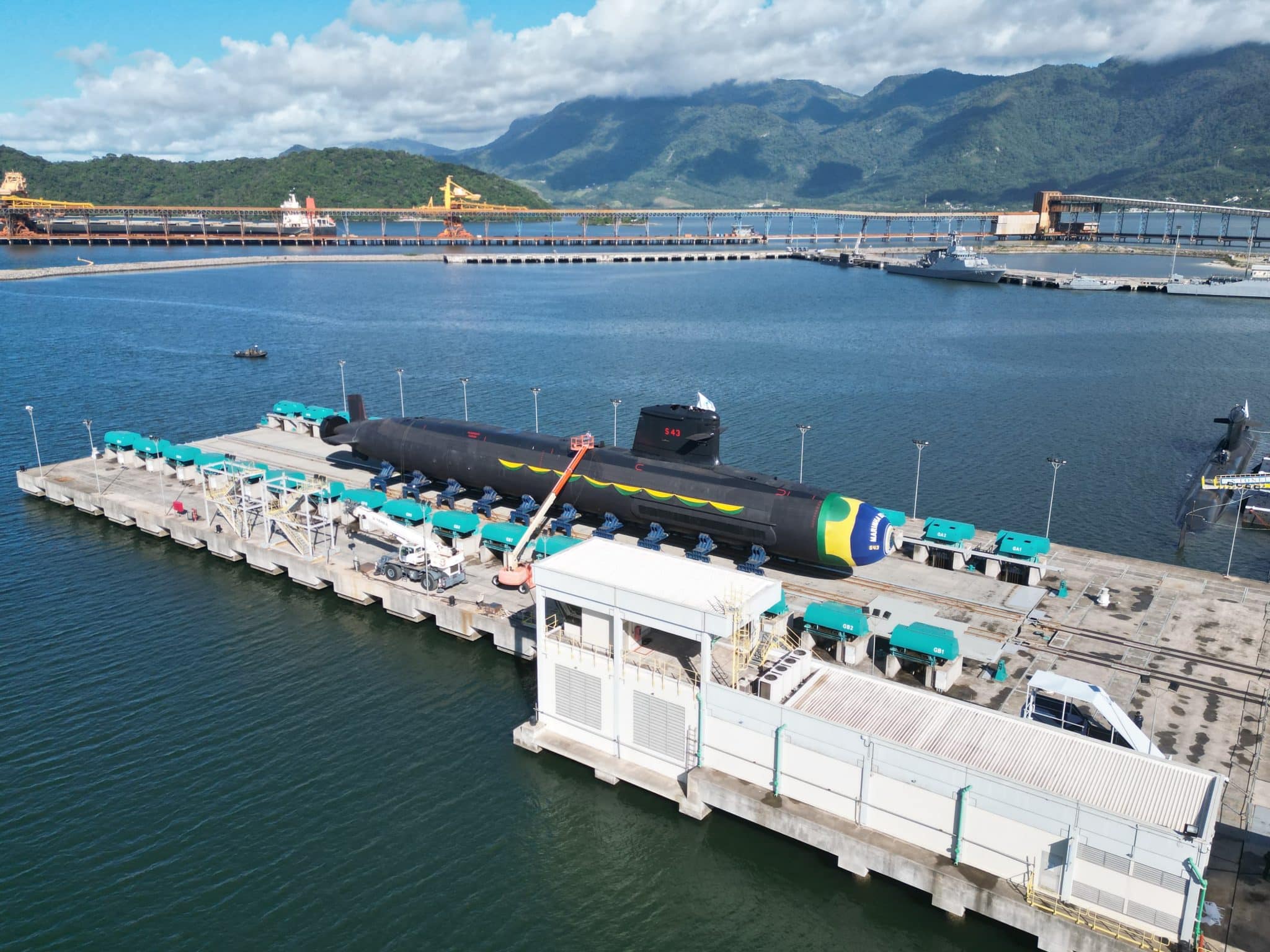
The PROSUB25 ceremony in Itaguaí was a major turning point in Brazil’s nuclear submarine program. The Navy advanced Tonelero S42 into the armament phase and launched Almirante Karam S43, the last conventional Riachuelo-class boat. These submarines close the diesel-electric construction chapter and shift attention toward the nuclear-powered Álvaro Alberto.
For defense planners, the Brazil nuclear submarine program now links near-term combat readiness with a path to strategic deterrence. Tonelero and Almirante Karam complete a quartet of modern S-BR boats able to protect sea lines, offshore platforms, and joint task groups. Their crews and engineers are also building the skills base that nuclear operations will need.
PROSUB and the S-BR backbone
PROSUB, launched in 2008 with France’s Naval Group, sits at the heart of the Brazil nuclear submarine program. The partnership combines design support, technology transfer, local shipyard construction, and training for Brazilian crews. The Itaguaí Naval Complex and Itaguaí Construções Navais now give Brazil the ability to design and build submarines on its territory, rather than rely on imported hulls. Independent coverage on platforms such as Naval News has highlighted how rare this level of transfer is outside NATO.
The four S-BR submarines—Riachuelo S40, Humaitá S41, Tonelero S42, and Almirante Karam S43—are enlarged, Brazilian-optimized evolutions of the French Scorpène design. Each boat measures about 71.6 meters, displaces roughly 1,870 tonnes submerged, and carries six 533 mm tubes for F21 heavyweight torpedoes and SM39 Exocet anti-ship missiles. A modern sonar suite, electronic warfare systems, and a Brazilian-tuned combat management system support quiet operations. Open-source specifications compiled by Jane’s defense intelligence broadly align with these performance indicators.
As the Brazil nuclear submarine program matures, the S-BR class forms its conventional backbone. Riachuelo and Humaitá already serve as frontline units, while Tonelero and Almirante Karam will join the fleet after trials. Older German-built Tupi and Tikuna boats remain useful for patrol and training but will gradually shift to supporting roles.
Álvaro Alberto and the nuclear leap
At the center of the Brazil nuclear submarine program stands the SNCA Álvaro Alberto. This nuclear-powered attack submarine is expected to exceed 100 meters in length and displace more than 6,000 tonnes submerged. It will carry conventional torpedoes and anti-ship missiles, yet its decisive advantage lies in nuclear propulsion. Emerging SSNs of this type increasingly feature in global coverage by outlets such as Defense News.
Brazilian engineers are developing the reactor at home, under the Navy’s Technological Centre in São Paulo. The National Nuclear Energy Commission closely supervises this work.
Their design will give Álvaro Alberto almost unlimited time underwater on operational patrols. The submarine can stay deep, quiet, and fast enough for months without needing to surface. Nuclear propulsion also strengthens survivability because the boat can avoid chokepoints and stay below an adversary’s most active sensors.
That capability reshapes how the Brazil nuclear submarine program supports wider defense strategy. Instead of short diesel-electric patrols near home waters, Brazil will gain the option to conduct persistent, covert surveillance across the South Atlantic and beyond.
Strategic role in the “Blue Amazon”
Brazil’s maritime jurisdiction, often called the “Amazônia Azul,” or Blue Amazon, covers about 3.5 million square kilometres. Offshore oil fields, undersea cables, and major shipping lanes all pass through or near this space. Consequently, the Brazil nuclear submarine program is central to defending offshore platforms, securing sea lines of communication, and monitoring foreign naval movements. Strategic debates on sea control and deterrence in this region frequently appear in forums such as USNI News.
Força de Submarinos (ForSub) will command this mixed fleet from the Submarine Base Admiral Castro e Silva near Rio de Janeiro. Four modern S-BR boats, two remaining German-heritage platforms, and the nuclear-powered Álvaro Alberto together offer a blend of quiet littoral hunters and long-range patrol assets. However, that promise depends on sustained funding, rigorous crew training, and strict nuclear safety governance.
Regionally, the Brazil nuclear submarine program positions the country as one of the most capable undersea actors in Latin America and the wider Southern Hemisphere. A credible nuclear-powered asset, backed by a robust conventional flotilla, complicates planning for any navy operating in the South Atlantic.
Industrial and technological impact
The industrial impact of the Brazil nuclear submarine program stretches far beyond the pier at Itaguaí. PROSUB has mobilized more than 40 Brazilian defense and engineering companies and created thousands of skilled jobs. It has accelerated research in metallurgy, systems integration, acoustic quieting, and nuclear propulsion, while also helping Brazil master the naval nuclear fuel cycle. Mainstream security coverage from outlets like Reuters World News increasingly follows these dynamics.
Moreover, PROSUB changes Brazil’s position in the global defense market. Local firms now contribute high-value structures, combat systems integration, and specialized components rather than only low-end assembly. This experience supports future export bids for submarines, subsystems, or complex surface combatants.
Conclusion
For readers tracking broader undersea trends, Defence News Today offers a global submarine modernization tracker that places the Brazil nuclear submarine program alongside Chinese, Indian, Australian, and European developments.
With Almirante Karam in the water and Álvaro Alberto moving from design to construction, Brazil has crossed a psychological threshold. The country is no longer simply buying submarines; instead, it is fielding an integrated undersea system linking industry, doctrine, and nuclear technology. The next decade of the Brazil nuclear submarine program will therefore shape not only Brazilian sea power but also the wider security architecture of the South Atlantic.
References
- https://www.navalnews.com/
- https://www.defensenews.com/
- https://www.janes.com/
- https://www.reuters.com/world/
- https://defensenewstoday.info/
About the Author