

Battle of Khasham: Russian and US Forces Came Face to Face
The night of 7-8 February 2018 saw one of the most significant engagements between American and Russian forces since the Cold War, at a remote gas-field complex in eastern Syria. The Battle of Khasham, also known as the Battle of the Conoco Fields, was an illustration of what happens when proxy war, private military companies, armoured manoeuvring and overwhelming precision airpower come together on the same battlefield.
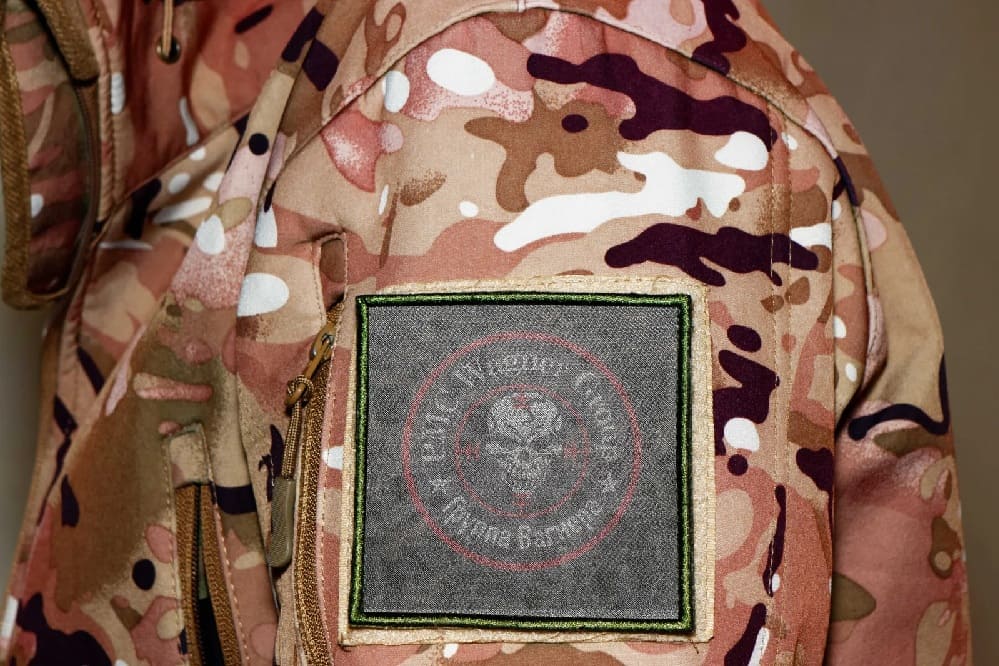
This should not be termed a formal battle between the USA and the Russian Federation. There was no official acknowledgement of the presence of regular Russian troops. The pro-government Syrian formation that attacked U.S.-backed positions was said to have embedded Russian citizens connected to the private military company Wagner. The difference was thus politically convenient in that it allowed both Washington and Moscow to avoid letting the incident become a direct interstate confrontation.
The Strategic Setting
By early 2018, ISIS had lost much of its territory in Syria. More attention was being paid to control of infrastructure, transport corridors, oil fields and natural-gas facilities in the Euphrates valley. U.S. forces assisted the Syrian Democratic Forces, or SDF, on the east bank of the Euphrates River. Russian forces, Syrian government formations, and allied militias were mostly on the other side. A U.S.-Russian deconfliction mechanism worked well, dividing operating areas to reduce the chance that aircraft or ground formations would accidentally engage one another.
The SDF said the position attacked on 7 February was located approximately eight kilometres east of the agreed Euphrates River deconfliction line, Combined Joint Task Force – Operation Inherent Resolve said. American military advisers were embedded at the SDF headquarters. The nearby Conoco gas facility also had economic and operational significance to the area. Further investigation of Wagner’s activities in Syria revealed that energy infrastructure was a significant part of the group’s operations and financial ties in the country.
A Battalion-Sized Force Advances
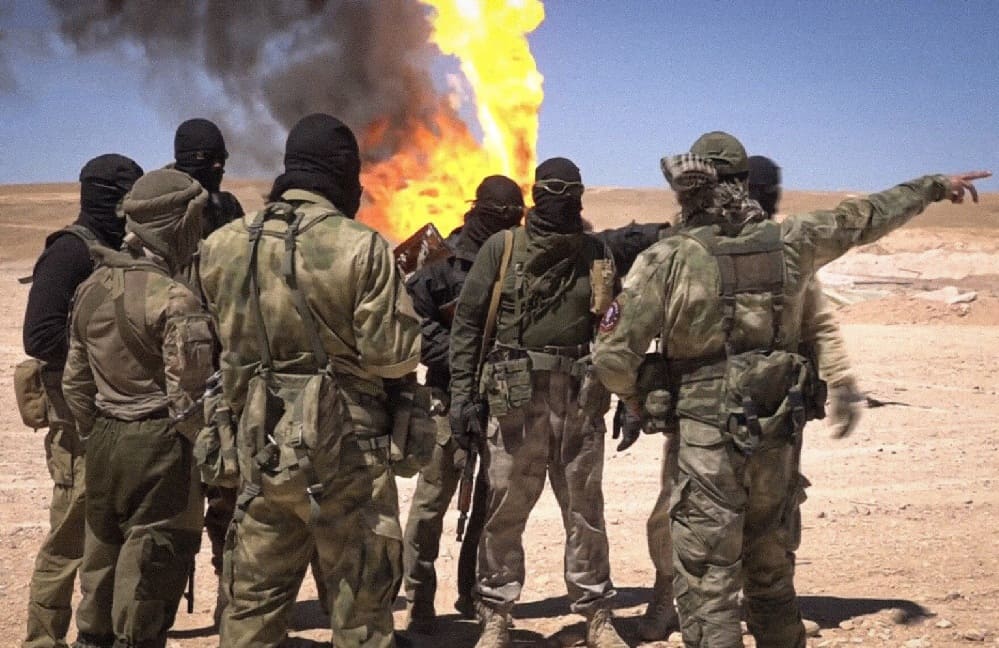
U.S. Air Forces Central Command later referred to the attacking formation as “roughly a battalion-sized”. The attack featured armoured vehicles, artillery, multiple rocket launcher systems, mortars and infantry on foot. American commanders had observed during the past week the build-up of men and material in the area. The SDF position was shelled and tanked at the beginning of the attack. A large dismounted formation advanced with supporting The operations. The operation was thus more than a raid by a rogue militia.
It showed the main components of a combined arms attack conducted together: indirect fire preparation, armoured support, and infantry moving toward a defended objective. Later, American participants said the pro-government fighters—including Russians from the Wagner group—numbered some 500 and were attacking a position with some 40 U.S. Special Operations forces and SDF fighters. Thus, in sheer numbers, the attackers may have enjoyed better than a ten to one advantage over the American contingent. The advent of the U.S. joint fire architecture largely negated that advantage.
The American Kill Chain
Khasham was militarily significant not just because of the amount of firepower it had. It was the rapid integration of sensors, controllers, command networks and multiple weapons systems. At the time of the attack, F-22 Raptors and MQ-9 Reapers were already flying overhead, providing defensive counter-air, intelligence, surveillance and reconnaissance. American personnel quickly contacted their Russian counterparts through the military deconfliction telephone line. Strikes were approved, but Joint Terminal Attack Controllers from the Air Force, working with forces on the ground, coordinated over three hours of precision fires. The aircraft involved in the incident were F-15E Strike Eagles, B-52 Bombers, AC-130 Gunships, MQ-9 Reapers and AH-64 Apache Attack Helicopters.
The air attack was backed by ground-based artillery. Lt Gen. Jeffrey Harrigian later described the engagement as a mix of surface-to-air and air-to-surface fires synchronised by personnel on the ground. It was a very mature joint sensor-shooter grid. ISR platforms detected formations and tracked them. Ground controllers spotted the threats and coordinated the engagements. Aircraft dropped precision-guided munitions on armoured vehicles and artillery. Attack helicopters could then be called upon to engage moving vehicles or exposed forces at relatively close range. It wasn’t just 40 Americans the attackers were up against. Against them was the firepower of a full theatre-level command and control system.
Armour Without Air Defense
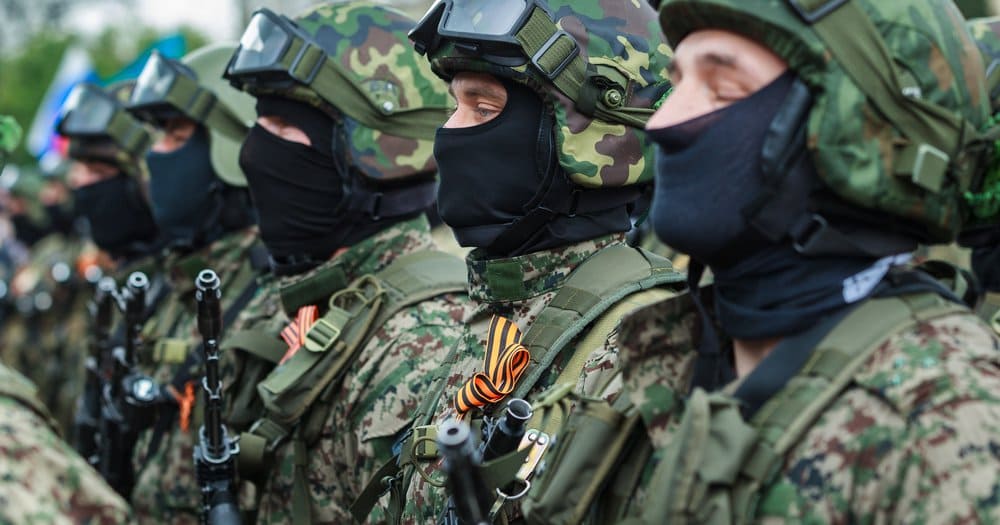
Khasham also showed how exposed concentrated mechanised forces were without adequate air cover. Armed only with small arms and light anti-tank weapons, forces can easily be overrun by tanks and artillery. Such formations can make very visible targets in a world of constant surveillance and precision air power. The heavy losses were partly due to poor air support cover for the attacking formation, sources told Reuters.
“Bombers go in first, then Apaches clean up whatever forces are left,” one source said. This is a tactical lesson. Having armour alone does not guarantee combined arms superiority. Armoured formations need reconnaissance, EW, air defence, counter-battery capability and some form of friendly air superiority or at least a way to deny the enemy air-free access to the battlespace. The U.S. coalition maintained persistent ISR and uncontested access to multiple layers of strike capability at Khasham. Apparently the attacking force did not do so.
The Deconfliction Call
Perhaps the most strategically important weapon used that night was not a missile or a bomb. That was the phone. When the attack began, American commanders contacted Russian officials through the established deconfliction line, Harrigian said. Then coalition officials approved the strikes. The hostile buildup played out, and U.S. commanders had previously warned the Russians of the coalition and SDF positions. Russian regulars had been warned that coalition strikes were in preparation, Reuters reported later.
An official close to Wagner said the attacking column was perhaps warned only slightly before the strikes started. It created a special political situation. Russian nationals were fighting American troops. Official Russian military representatives might tell American commanders that regular Russian forces were not involved. The distinction provided both governments with an escalation firewall. Washington might say it was doing this for force protection. Moscow could at least somewhat distance itself from the Wagner losses. Neither side was required to view the fight as an official U.S. attack on Russian armed forces.
The Casualty Controversy
Casualty figures are one of the most contentious issues surrounding Khasham. Initial American estimates put the number of pro-regime fighters killed at around 100. Sources told Reuters the numbers were significantly different. One Russian military doctor said the death toll was around 100, another said it exceeded 80, and a third broadly confirmed the total of killed and wounded was about 300. Later accounts continued to be widely divergent.
So one should treat reports on the death toll among Russians with caution. Some of the dead were Syrian government or allied militia fighters, but it was difficult to distinguish which Russian casualties were Wagner. The asymmetry of the engagement is much more evident. The attacking force lost heavily in both men and materiel, while there were no reported casualties among American forces in the battle.
Operational Lessons
No open source, credible or otherwise, provides the complete classified American after-action report. Claims of access to ‘secret’ targeting data or intelligence should therefore be treated with scepticism. But there are a number of key operational details that are available publicly. First, the U.S. forces knew in advance of the hostile buildup prior to the battle. So Khasham was not an unalloyed tactical surprise. Second, the aircraft were already doing ISR and defensive overwatch at the start of the assault.
Thirdly, JTACs would have at their disposal an extraordinary array of weapons from artillery and remotely piloted aircraft to heavy bombers and attack helicopters. Fourth, the American response stopped when the attacking force withdrew. This implies that the goal was battlefield defeat and force protection, rather than the destruction of the entire organisation. These factors, taken together, demonstrate disciplined control of escalation, coupled with overwhelming tactical violence.
Modern Proxy Warfare
The battle of Khasham is an important case study for contemporary militaries because it brought together three increasingly common features of modern conflict: proxy formations, private military organisations and highly networked precision warfare. Wagner offered a way for Russia to push its interests with a certain amount of political plausible deniability. Meanwhile, that ambiguity also led to difficult command relationships and deconfliction. The USA showed the opposite model, when a relatively small ground element was connected to a large network of sensors, aircraft, artillery, communications and command authorities. Manpower was not the overriding variable. It was integration of combat systems.
Khasham demonstrated how a few dozen personnel with communications and joint fire access could produce effects that far exceeded their physical presence. It also demonstrated how traditional deterrence works differently in proxy warfare. American and Russian-linked personnel may have exchanged deadly fire, but Washington and Moscow maintained communication to prevent the confrontation from escalating further. The Battle of Khasham was, therefore, more than a defeat for a Wagner PMC-backed assault. It was a caution about the modern battlespace: when great powers fight through proxies in overlapping military zones, tactical decisions made in minutes can have strategic consequences that extend far beyond the battlefield.
References
- Combined Joint Task Force–Operation Inherent Resolve, “Unprovoked attack by Syrian pro-regime forces prompts Coalition defensive strikes,” February 2018. (Central Command)
- U.S. Central Command, Lt. Gen. Jeffrey Harrigian press briefing on coalition air operations and the February 7 engagement, February 13, 2018. (Central Command)
- Reuters, “Russian toll in Syria battle was 300 killed and wounded: sources,” February 15, 2018. (Reuters)
- The War Horse, “American Special Forces Versus Russian Mercenaries in Syria”, is based on interviews with U.S. Special Forces participants. (The War Horse)
About the Author

1 thought on “Battle of Khasham: Russian and US Forces Came Face to Face”