Bangladesh Eurofighter Typhoon LOI — First Western Fighter
Bangladesh in Eurofighter Talks
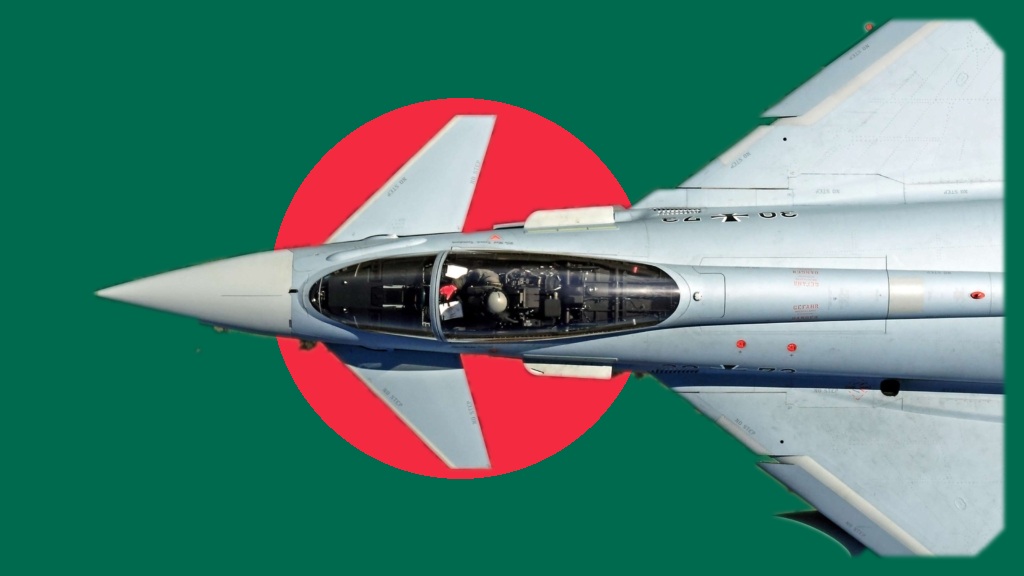
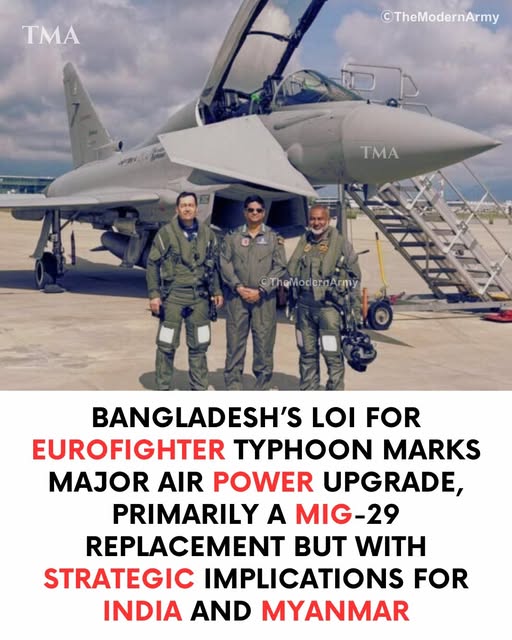
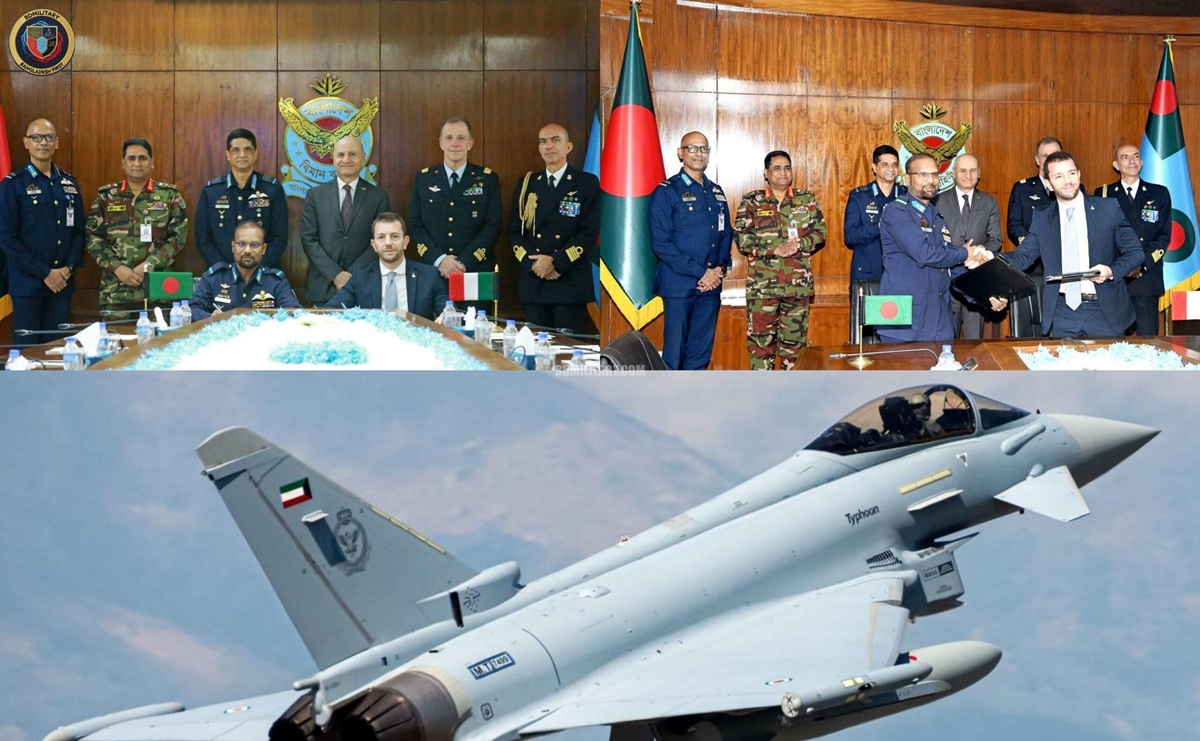
Bangladesh has taken a decisive first step towards a Western fast-jet fleet. On 9 December 2025, the Bangladesh Air Force signed a Letter of Intent (LOI) with Italy’s Leonardo to begin negotiations for the Eurofighter Typhoon. An LOI is not a purchase contract. However, it signals intent, sets a formal channel, and triggers serious work on price, configuration, and support.
Who Signed, Why Leonardo Leads
The LOI ceremony took place at Bangladesh Air Force Headquarters. It was signed in the presence of Air Chief Marshal Hasan Mahmood Khan and Italy’s ambassador, Antonio Alessandro. Leonardo is leading the campaign because it handles Typhoon marketing in this bid, even though a four-nation consortium (Italy, the UK, Germany, and Spain) builds the aircraft.
What 16 Typhoons Mean
Neither side has disclosed numbers. Still, local reporting has suggested up to 16 aircraft. That scale usually supports a single frontline squadron, plus training and attrition margin. Therefore, the buy would likely deliver a “high-end spearhead” rather than a full fleet replacement.
Why This Deal Is Strategic
If Dhaka proceeds, the Bangladesh Eurofighter Typhoon deal would be its first major acquisition of a Western-built fighter. That shift matters because it pulls Bangladesh toward Western sustainability norms: software baselines, mission planning, simulator ecosystems, and long-term spares contracts. Moreover, it diversifies Dhaka’s geopolitical options in future crises.
Typhoon by the Numbers
Eurofighter says the program has 769 aircraft ordered, and the jet is in service with five European nations and four Gulf nations. The existing user community holds significant importance. It supports common training, shared tactics, and steady upgrade roadmaps, especially when operators pool modernization work.
Eurofighter Typhoon vs Chengdu J-10C/J-10CE (Approximate)
| Category | Eurofighter Typhoon | Chengdu J-10C / J-10CE |
|---|---|---|
| Role | Multirole air superiority/strike | Multirole fighter |
| Crew | 1 (single-seat) / 2 (twin-seat variants) | 1, Twin Seat variant J-10S |
| Length | 15.96 m | ~16.9 m |
| Wingspan | 10.95 m | ~9.8 m |
| Height | ~5.28 m | ~5.7 m |
| Engines | 2× Eurojet EJ200 | 1× WS-10-series (often reported); some export/earlier variants may differ |
| Max thrust (afterburner) | ~2× 90 kN | ~130–145 kN (commonly reported; varies by engine batch) |
| Max speed (high altitude) | ~Mach 2.0+ (often quoted up to ~2.35) | ~Mach 1.8 |
| Supercruise | Commonly cited around ~Mach 1.3 (clean, conditions dependent) | Not consistently published |
| Service ceiling | ~55,000 ft (commonly cited) | Not consistently published |
| Rate of climb | Very high (often quoted ~315 m/s) | Often quoted ~300 m/s |
| Ferry range | ~3,790 km (with drop tanks; profile dependent) | ~4,600 km (often quoted; profile dependent) |
| Combat radius / “combat range” | ~1,389 km (profile dependent; varies by loadout) | ~1,240 km (often quoted; varies by loadout) |
| Hardpoints | 13 | 11 |
| External payload | Commonly cited 9,000+ kg class | Not consistently published as a single figure (varies widely by source) |
| Internal gun | 27 mm Mauser BK-27 | 23 mm GSh-23 (commonly cited) |
| Radar | CAPTOR family: mechanically scanned on many jets; AESA on newer/upgrade standards | AESA radar (Chinese-developed; exact designation varies across sources) |
| IRST/EO sensors | PIRATE IRST commonly fitted | EO/IRST fit is reported, but not consistently published in one standard spec block |
| Typical BVR AAM options | Meteor, AIM-120 AMRAAM (operator dependent) | PL-15, PL-17 (commonly cited) |
| Typical WVR AAM options | IRIS-T / ASRAAM (operator dependent) | PL-10 (commonly cited) |
Leonardo Footprint in Bangladesh
Bangladesh already operates Leonardo-made AW109 and AW139 helicopters. That does not guarantee a fighter deal. However, it reduces some friction in contracting, logistics culture, and industrial familiarity.
J-10C as an alternative
Reports have also flagged China’s Chengdu J-10C as a rival option. As a result, Bangladesh can use parallel tracks to improve terms on price, deliveries, weapons packages, and technology access. For a broader look at how Chinese fighter/missile combinations are evolving, see China Tests J-10C with PL-17 Missile
Conclusion
The next steps will determine whether the result becomes operational capability or stays diplomatic signaling. First, Bangladesh must lock requirements: radar and electronic-warfare fit, weapons integration, and training throughput. Next, it must secure financing and delivery slots across the consortium. Finally, it must prove it can sustain sortie rates without creating a “hangar queen” problem. In short, the LOI puts a Western fighter on Bangladesh’s path. If Dhaka closes the Bangladesh Eurofighter Typhoon deal, it will reshape its airpower ecosystem for decades.
References
- https://www.reuters.com/world/asia-pacific/bangladesh-signs-letter-intent-buy-eurofighter-typhoon-jets-2025-12-10/
- https://www.defensenews.com/global/europe/2025/12/10/bangladesh-signs-up-for-eurofighters-in-first-pick-of-western-warplane/
- https://www.flightglobal.com/defence/bangladesh-signs-loi-with-leonardo-for-eurofighter-typhoon-purchase/165644.article
- https://www.eurofighter.com/the-programme
About the Author