

B-21 Raider Design Flaws? PADJ-X Claims Checked
B-21’s Strategic Value
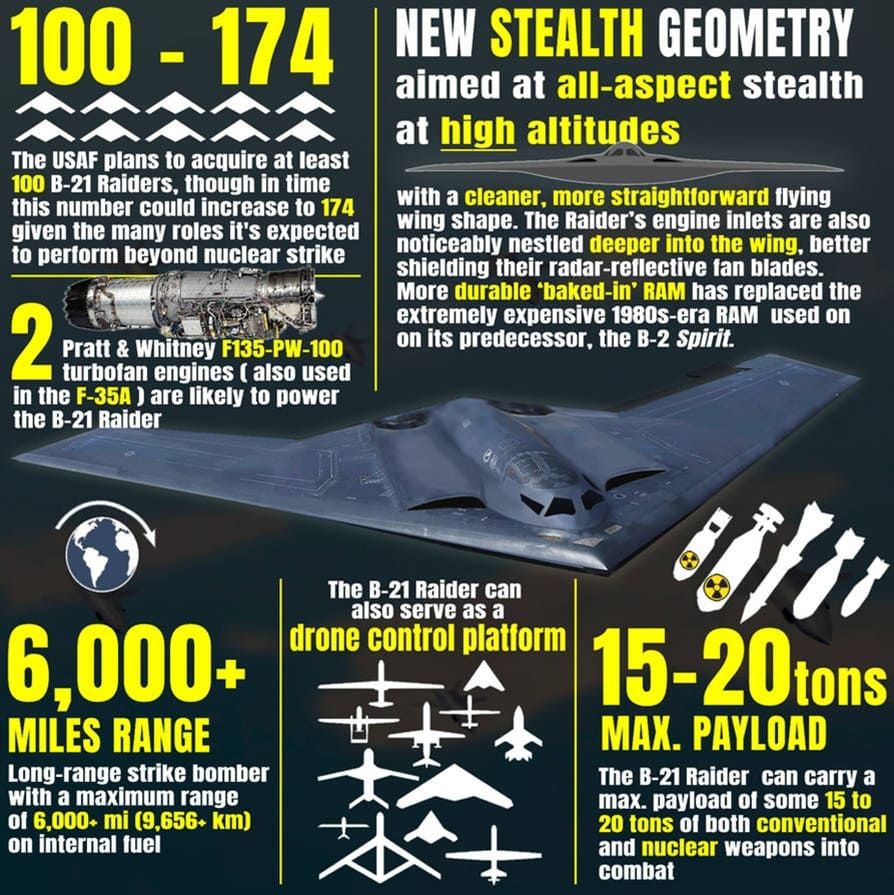
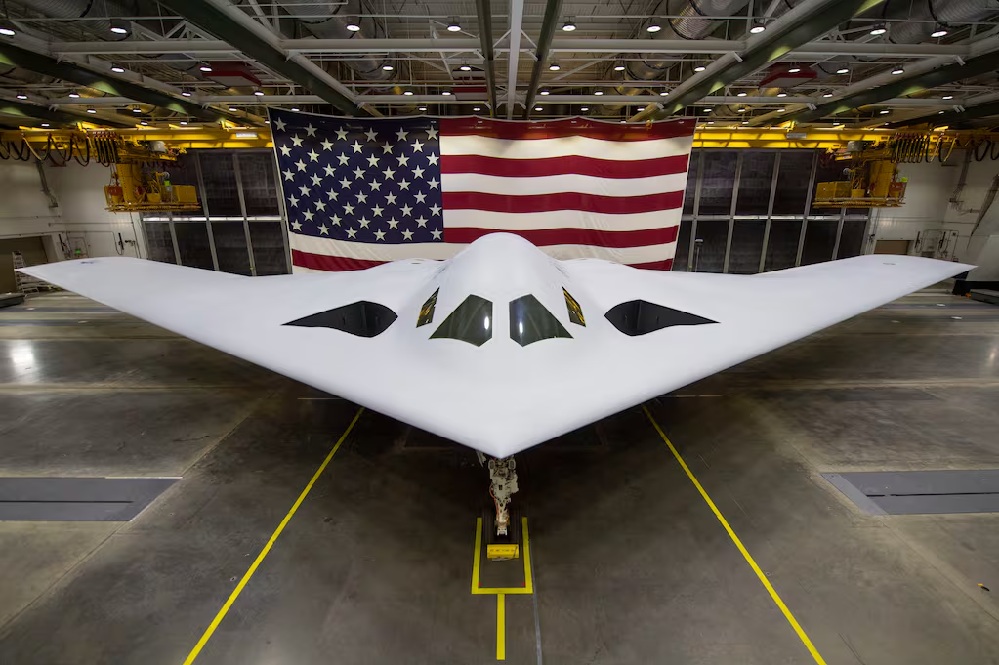
The US Air Force has tied a major slice of its future strike plan to the B-21 Raider. It expects the aircraft to replace aging B-1 Lancers and B-2 Spirits over time while keeping a credible mix of conventional and nuclear options. The service describes the B-21 as a dual-capable penetrating stealth bomber.
That ambition comes with scale. The USAF has committed to buying at least 100 aircraft, and various public discussions argue the force could need 145 to 200 bombers for modern deterrence math.
Money sits at the center of the story. Public estimates often cite an overall program cost of US$203 billion (in FY2019 dollars) across development, procurement, and operations over decades. The same reporting also points to development costs reaching US$25.1 billion.
PADJ-X Paper: Key Claims
A peer-reviewed Chinese paper in Acta Aeronautica et Astronautica Sinica introduces PADJ-X, an “all-in-one” platform built around adjoint optimization. In simple terms, the approach tries to adjust many design variables at once, rather than running slower trial-and-error loops. The authors frame PADJ-X as a multidisciplinary tool that can couple aerodynamics with other fields inside one optimization workflow.
In the B-21 section, the team says it applied 288 parameters to a B-21-like configuration and found potential shortfalls in aerodynamic and stability performance. It also claims an optimized configuration delivered about a 15% lift-to-drag improvement, reduced shock-wave effects, and shifted pitching moment from 0.07 to -0.001 (closer to trim).
They ran a similar exercise on the US Navy’s X-47B. The paper claims the PADJ-X output cut the drag coefficient by about 10% and reduced the average forward RCS from 13.55 m² to 1.33 m², with a small intake gain. So the headline claim is clear: their software found “issues” in the B-21’s configuration and can propose improvements quickly.
Reality Check: What PADJ-X Proves
Here is the first hard limit. The paper does not use the classified B-21 Raider’s geometry, materials, coatings, inlet design, control laws, or mission systems. Instead, it relies on publicly inferred shapes and assumptions, because the real aircraft remains heavily classified.
That matters because stealth bombers do not behave like clean academic models. The “shape” the public sees is only the outer layer of a much deeper stack:
- The internal volume and structural members contribute to stiffness and aeroelastic effects.
- The choices of inlets and ducts can alter pressure recovery, infrared (IR) signature, and radar returns.
- Flight control software is designed to mask “natural” stability weaknesses.
- Coatings and edge treatments that dominate practical radar behaviour
Therefore, PADJ-X can only optimize a public approximation. It can highlight where a generic flying wing might struggle, but it cannot confirm B-21 Raider design flaws in the real, fielded configuration.
B-21 Testing: The Real Proof
The second limit is operational reality. The B-21 is flying, and the USAF and Northrop are expanding test objectives across a dedicated test fleet. Reporting in September 2025 noted that the second B-21 test aircraft will focus on weapons and mission systems, while early aircraft validate flight sciences and handling qualities.
This sequencing matters. Should the aircraft encounter a fundamental stability issue, the program would face delays during the initial envelope work. Instead, it is progressing into mission-system-focused testing, which usually comes after the flight sciences begin to look acceptable. None of this proves perfection. However, it does weaken the idea that a public-data model has suddenly uncovered fatal structural weaknesses the USAF missed.
Adjoint Optimisation: Not New
China’s paper also acknowledges that organizations such as NASA, Germany’s DLR, and France’s ONERA have long used adjoint optimization and advanced CFD frameworks. That is an important point. It means the core method is mature, widely studied, and already integrated into Western engineering cultures.
The Western difference is often less about having one magic solver and more about the full chain:
- High-fidelity models validated by wind tunnels and flight tests
- Digital engineering pipelines that tie design to manufacturing constraints
- The system includes classified signature ranges and measurement feedback loops.
- Decades of stealth trade-off experience from F-117 Nighthawk through B-2
In short, PADJ-X may be impressive, but the B-21 team does not operate in a “pre-adjoint” era.
Why the Paper Still Matters
Even if it cannot “expose” the real B-21, the PADJ-X work can still matter in three practical ways.
1) China’s Faster Design Push
China wants to cut time and cost from concept to prototype. If PADJ-X genuinely reduces iteration overhead across disciplines, it could shorten development timelines for future Chinese UCAVs or bombers.
2) Information Warfare Angle
Claims of B-21 Raider design flaws can create doubt, distract audiences, and feed procurement debate. This is a feature of strategic competition, not a bug.
3) Hard Flying-Wing Trade-offs
Flying wings demand careful balancing of drag, stability, and signature. The paper’s “sharper shape vs. smoother curves” discussion reflects a real design tension, even if the numbers remain model-dependent.
Bottom Line: Messaging, Not Measurement
China’s PADJ-X paper does not provide evidence that the B-21 has confirmed aerodynamic or structural defects. It provides optimization outcomes for a publicly inferred configuration and then extrapolates. That may produce intriguing engineering discussion, but it does not equal access to the B-21’s real design data.
For readers tracking the program, focus on what you can verify: USAF mission statements, test fleet progress, cost signals, and production ramp behavior. That evidence will tell you far more than claims built on silhouettes and assumptions.
References
- https://www.scmp.com/news/china/science/article/3338902/chinas-stealth-design-software-padj-x-finds-potential-flaws-b-21-bomber-configuration
- https://hkxb.buaa.edu.cn/EN/10.7527/S1000-6893.2025.32816
- https://www.af.mil/About-Us/Fact-Sheets/Display/Article/2682973/b-21-raider/
- https://www.airandspaceforces.com/second-b-21-weapons-mission-systems-test/
About the Author