
Azerbaijan’s HQ-9BE at Baku Parade
Why the sighting matters
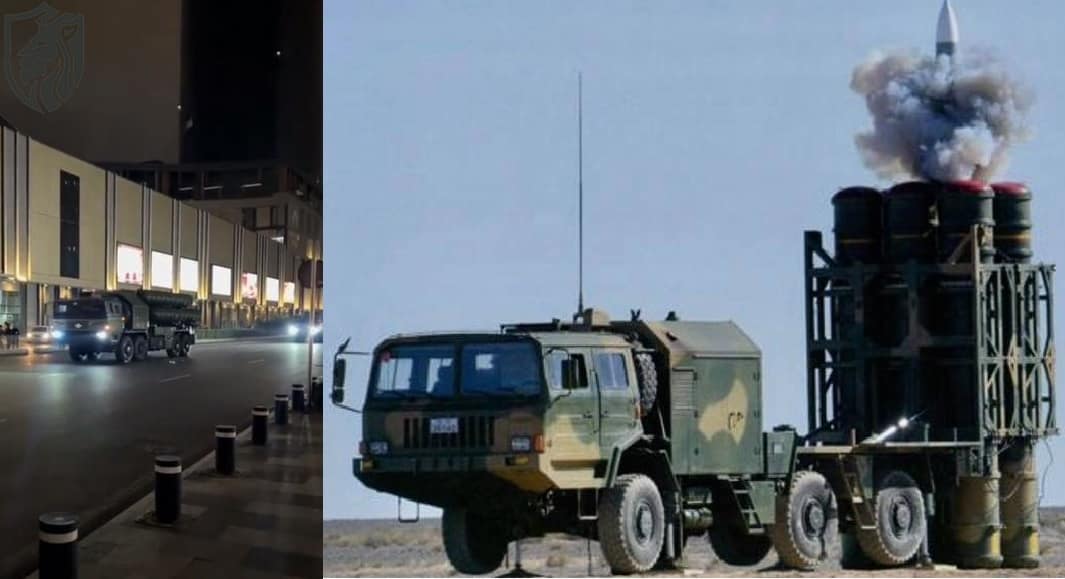
Azerbaijan displayed the HQ-9BE long-range air-defence system during its 5th-anniversary Victory Parade in Baku’s Azadlig Square on 8 November. Footage from local broadcasters and parade coverage confirms the appearance, marking a visible step toward a denser, multi-layered national air shield.
This public debut also introduces the Azerbaijan HQ-9 air defence missile to discussions about regional military balance—alongside the existing S-300 systems and short-to-medium-range systems by presenting a modern, long-range option. Early open-source clips and local posts highlighted transporter-erector launchers consistent with the export HQ-9BE.
What the HQ-9BE brings
The export materials say that HQ-9 variants can target aircraft, cruise missiles, and some short-range ballistic threats, focusing on protecting larger areas instead of just single points. Recent updates for the BE model highlight its ability to handle multiple targets at once, resist overwhelming attacks, and work together with medium- and short-range systems to provide a comprehensive Independent trade reporting around the Azerbaijan case reiterates the BE’s long-range profile and anti-TBM ambition. (Specifications vary by client package and radar fit.)
In operational terms, the Azerbaijan HQ-9 air defense missile adds standoff reach and complicates adversary planning. Moreover, it offers interoperability options with legacy sensors and newer command posts, which is crucial for a country that blends ex-Soviet and modern inventories.
The China–Pakistan–Azerbaijan triangle
The parade also featured the JF-17—jointly developed by Pakistan and China—flying in formation, dovetailing with Pakistan’s September 2024 announcement of a JF-17 Block III sale to Azerbaijan. That deal, as reported by Reuters and others, aligns with Baku’s push to refresh combat aviation and harmonizes it with ground-based air defence upgrades.
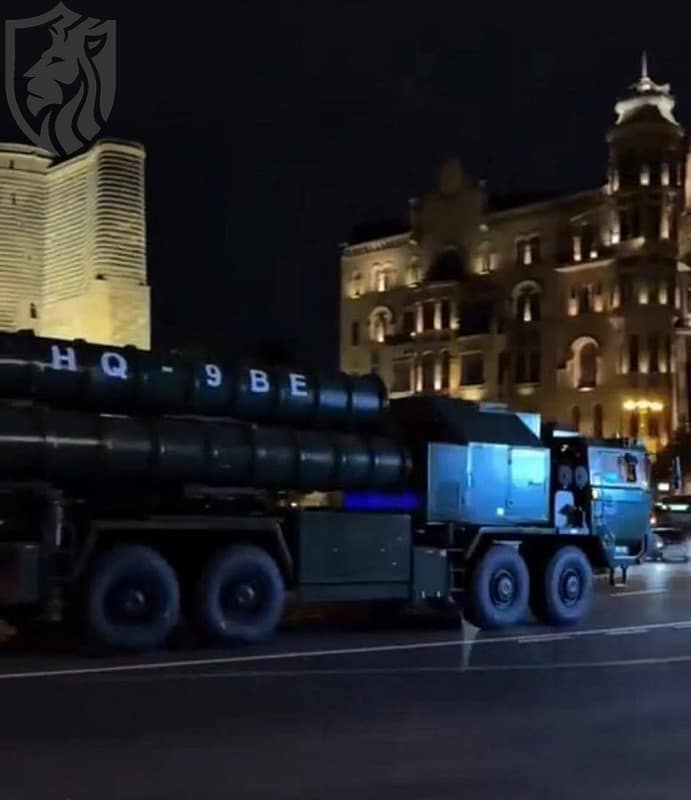
Taken together, the Azerbaijani HQ-9 air defense missile and the JF-17 point to a coherent supply chain: Chinese sensors and interceptors on the ground and a Sino-Pakistani multirole fighter in the air. For planners, that means shared training pipelines, compatible data links (where contracted), and streamlined sustainment.
Sindoor’s Lesson: Why Baku Chose the HQ-9BE
Pakistan’s exceptional experience with the HQ-9/P during Operation Sindoor gave Baku something tangible to study. The visiting officers watched the crew disperse batteries, practice radar austerity, and rebuild networks after simulated strikes. They saw rapid cueing from mobile command posts, clean hand-offs to JF-17 patrols, and steady tracks held through heavy interference.
Those vignettes felt practical rather than theatrical, and that mattered. The system looked adaptable, the training pipeline looked real, and the supplier looked willing to tailor export baselines. For Azerbaijan, that combination—performance, process, and partnership—turned interest into intent. In summary, Sindoor did impress the top brass; therefore, it expedited the path to an HQ-9BE decision.
Signals beyond the Caucasus
Azerbaijan’s reveal joins a broader pattern: Chinese air defence systems appear in European parades. Serbia recently showcased Chinese-origin medium/short-range SAMs (HQ-22/FK-3 and HQ-17AE) at its record-scale military parade in Belgrade, underscoring Beijing’s growing European footprint in the GBAD market.
For export watchers, the move is relevant for three reasons. First, demonstrations during high-visibility parades normalise Chinese systems before a new audience. Second, they hint at maturing training and acceptance timelines. Third, they advertise layered concepts—long-range guardians, like the HQ-9BE, backed by mid-tier and point-defence shooters.
Capability notes and caveats
Azerbaijan hasn’t revealed its exact HQ-9BE setup. Export kits usually pair a phased-array engagement radar with sector or panoramic search radars. Mobile command posts integrate the operational picture and assign tasks to shooters. Tactics favour scattered batteries and deliberate deception. Crews practice radar austerity to cut signatures and stay alive.
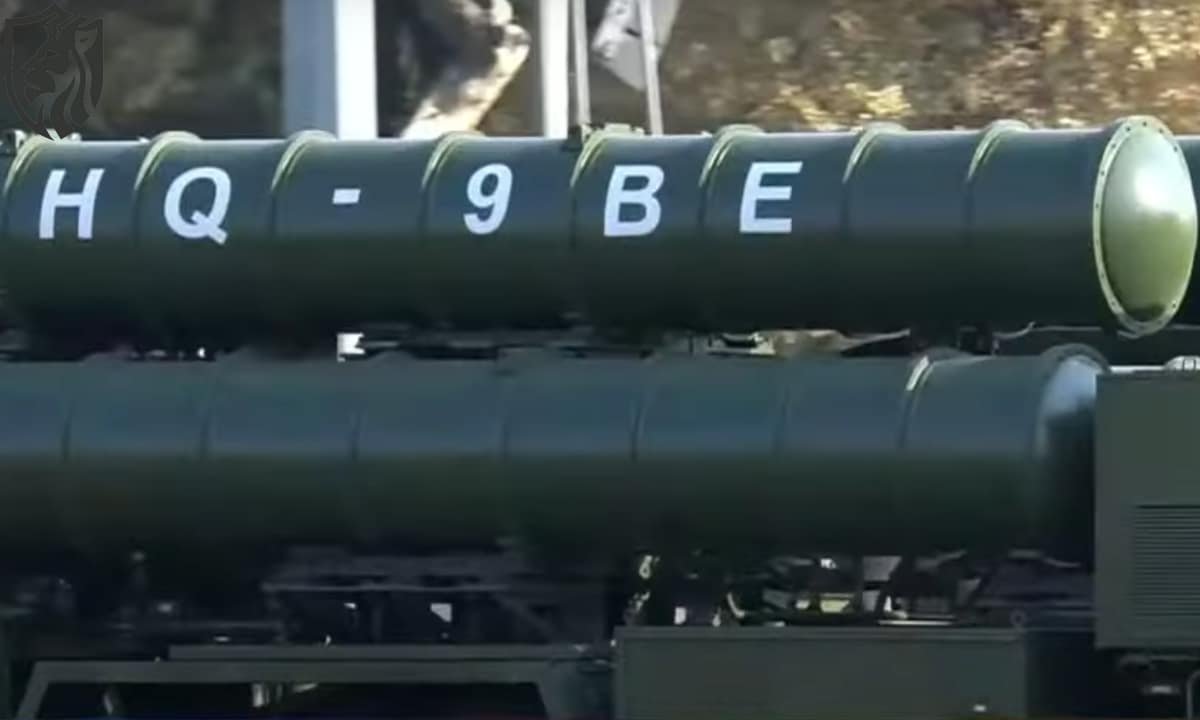
Open sources suggest anti-TBM interceptors for some configurations. Software baselines vary by customer and mission. Real outcomes depend on training rhythms and network discipline. EMCON matters as much as raw range. In truth, Azerbaijan’s HQ-9 will be judged in integration. Its value rises when tied into IAMD. Legacy sensors, new shooters, and fast-jet patrols must work as one.
Procurement optics
Publicly, Beijing frames exports as “prudent and responsible” and shares modernised equipment with “peace-loving” partners. Baku’s move fits a wider diversification trend—complementing ties with Türkiye, Israel, and others—while keeping options open across multiple vendor ecosystems. (Official parade coverage confirms the event; platform-specific disclosure remains limited, which is typical for strategic SAM buys.)
References
- Reuters — Pakistan signs JF-17 Block III deal with Azerbaijan. Reuters
- Caspian Post (citing AZERTAC) — Victory Parade at Azadlig Square, Baku. Caspian Post
- AP News — Serbia’s large parade featuring Chinese anti-air systems. AP News
- Army Recognition — Azerbaijan receives HQ-9BE ahead of parade (specs overview). Army Recognition
About the Author