
Australia Fiji Defense Pact — Pacific Security Shift
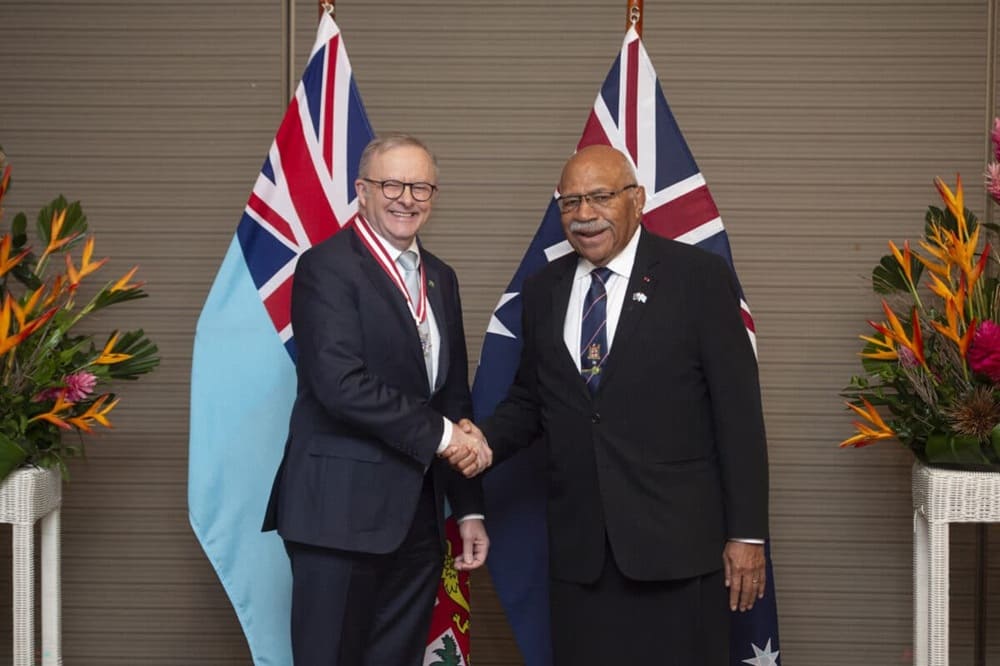
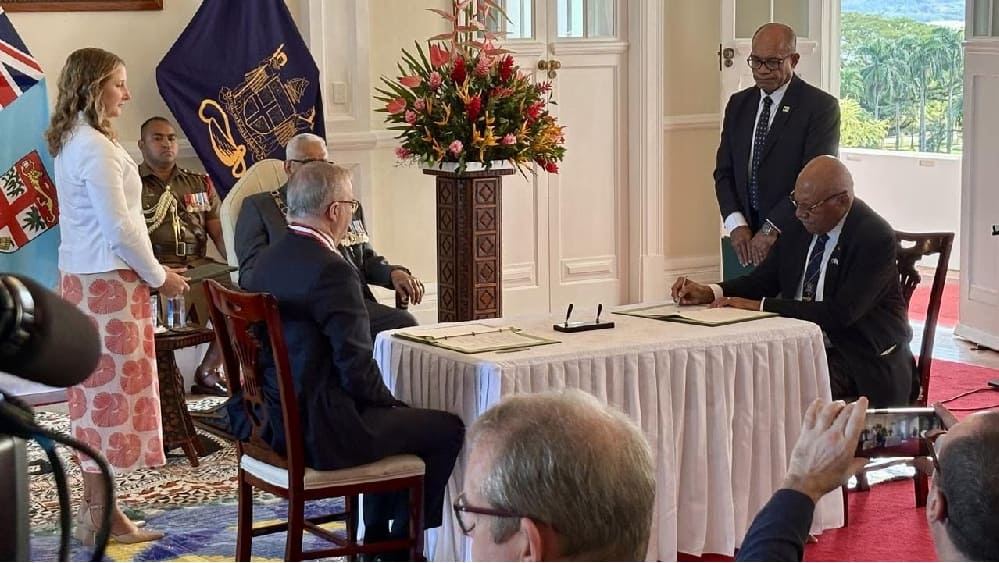
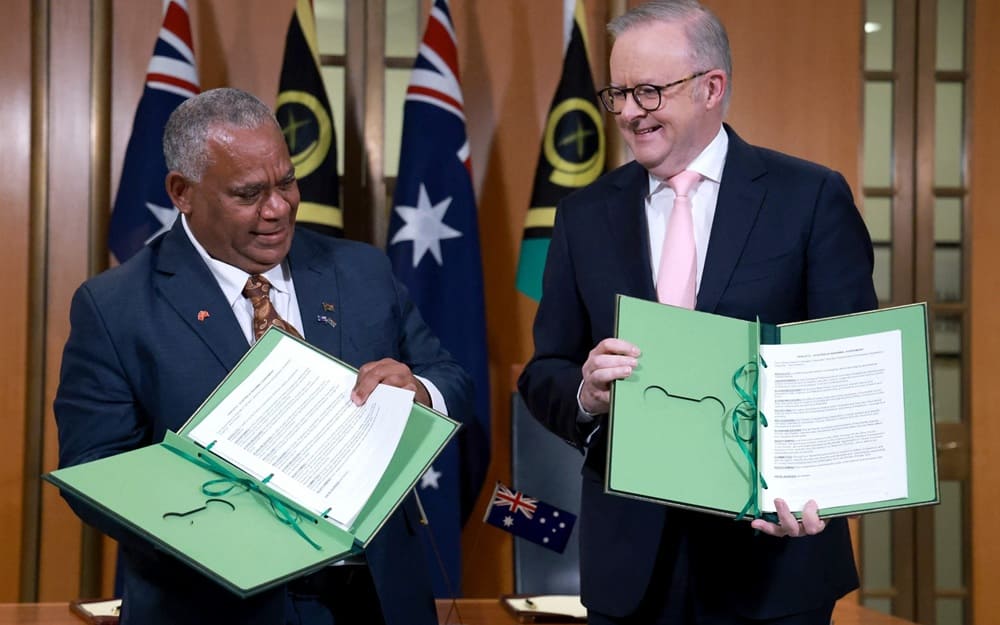
Canberra’s biggest Pacific security move in years was the signing of a defense pact with Fiji in Suva on July 6, 2026. Under the Australia-Fiji defense pact, also known as the Ocean of Peace Alliance or Veitacini Treaty, the two countries are required to come to each other’s aid if either is attacked with weapons in the Pacific. Anthony Albanese and Sitiveni Rabuka signed the treaty under the Vuvale Union, an expanded political, economic and security framework supported by more than A$1 billion over the next decade. To defense planners, the pact is more than diplomatic theatre. It is Fiji’s first formal alliance and makes it Australia’s fourth treaty ally, after the United States, New Zealand and Papua New Guinea.
Australia-Fiji Defense Pact: What Was Signed?
Australia’s defense agreement with Fiji is for collective defense, consultation and military co-operation. Article 6 would jeopardise the peace and security of both parties in the Pacific if one party were to attack the other with armed forces. Each side would therefore use its domestic processes for meeting the common danger. This is important verbiage. It does not open a free security dialogue. It does, however, constitute a treaty-based defense structure for the relationship. The treaty also provides for consultation in the event of security developments threatening sovereignty, peace or stability. It also facilitates the arrangement of visiting forces, which enable the two militaries to work together when necessary.
Why Fiji Matters in the Pacific Balance
Fiji is in the middle of the South Pacific. It doesn’t have the military muscle of larger regional powers, but it does have diplomatic muscle, geographic reach and access across a wide maritime expanse. The Australia-Fiji defense pact, therefore, strengthens Canberra’s island-chain network. It also limits the space in which external powers can seek security toeholds without Pacific approval. This is important because China signed a security pact with Solomon Islands in 2022 that has concerned Australia about potential future Chinese military access. But Fiji is trying to balance its diplomatic relationships. “The deal does not put at risk Fiji’s relationship with China or Australia’s relationship with China,” Rabuka said. That line allows Suva the space to explore further Australian security engagement without making a public enemy of Beijing.
Vuvale Union Adds A$1bn Strategic Weight
The Vuvale Union adds more economic and political depth to the defense pact. Australia says the package is worth more than A$1 billion over 10 years. Fiji will use the funding for security, infrastructure, health, skills and resilience. That’s important because Pacific competition doesn’t normally begin with warships. It often starts with policing, ports, telecommunications, labour mobility and climate resilience. So Canberra is moving to a broader model of statecraft, not defense symbolism. The Vuvale Union text also identifies climate change as the single most serious threat to Pacific livelihoods, security and wellbeing. It also flags transnational crime, illegal fishing, border management, digital infrastructure, cyberspace and critical technology as security challenges.
China, Solomon Islands and Regional Contest
Australia and Fiji’s defense pact is a major strategic development. Australia has been working to restore its reputation as the Pacific’s security partner of choice since the Solomon Islands signed a security pact with China in 2022. Canberra has also strengthened security ties with Papua New Guinea and Vanuatu. Meanwhile, China has increased economic and diplomatic engagement across the Pacific. Beijing said its engagement with the island states was in line with their sovereignty and development needs. However, Australia warned that opaque military access or basing arrangements for security could destabilise the region. China tested a missile in the Pacific Ocean on the day Fiji was signed, according to international reports. Beijing said the drills were routine training and not aimed at any country. “China’s rapid military build-up has not been accompanied by the transparency and reassurance that the region has a right to expect,” Australian Foreign Minister Penny Wong said.
Operational Impact for Australia and Fiji
In effect the treaty means Australia is in a better position to plan with Fiji ahead of a crisis. It supports collective defense planning, consultation mechanisms and arrangements for visiting forces. This will allow the two countries to reduce their response time to contingencies ranging from an armed attack to grey-zone coercion. The agreement allows Fiji to have training, planning and defense co-operation with a larger regional military. It builds Australia’s political trust and pragmatic military reach across the South Pacific. But implementation will be more important than ceremony. The treaty will require exercises, legal structures, communications planning and logistics coordination. Those steps were necessary for the alliance language to remain symbolic.
Wider Implications for Pacific Security
The pact also gives other Pacific nations a potential foothold in the Ocean of Peace Alliance. The treaty provides for the accession of another Pacific state if all parties agree and that state can support the treaty’s purposes. New Zealand has already expressed its interest in the framework. The alliance could turn into a regional security architecture with more Pacific states joining the bilateral arrangement. However, the Government has to be careful how it handles this. The Pacific states love their sovereignty and don’t want to become pawns in a great power contest.
Strategic Assessment
The Australia-Fiji defense pact is a major shift in the security architecture of the Pacific. It cements mutual defense, deepens cooperation under the Vuvale Union and puts A$1 billion behind the relationship over 10 years, tying Australia and Fiji. The strategic message is clear. Canberra wants Pacific partners to take charge of Pacific security, with Australia as the security anchor of choice. More robust defense guarantees for Fiji in return, while not formally cutting ties with China. The Australia-Fiji defense pact is more than a bilateral treaty. It’s a test of whether Australia can build a resilient, Pacific-led security network that can challenge Chinese influence but not undermine island sovereignty.
References
- https://defensenewstoday.info/australia-new-zealand/
- https://defensenewstoday.info/pukpuk-treaty-australia-png-defence-deal/
- https://www.minister.defence.gov.au/media-releases/2026-07-06/australia-fiji-sign-historic-vuvale-union-ocean-peace-alliance
- https://www.reuters.com/world/asia-pacific/australia-fiji-strike-new-defence-alliance-2026-07-06/
About the Author