

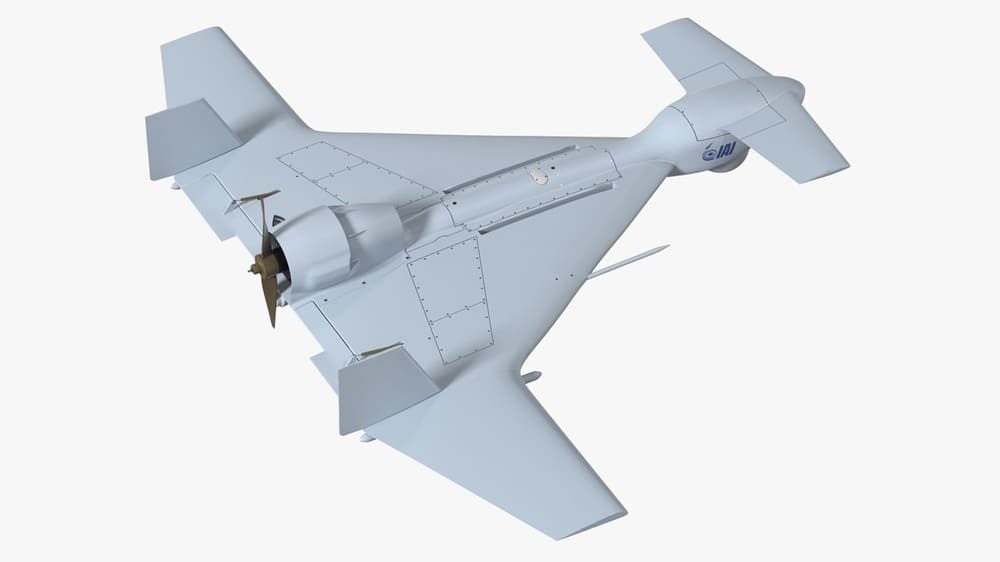
AR741 Wankel Engine: Harop Drone Power Explained
The AR741 Wankel rotary engine came under scrutiny after the India-Pakistan conflict in May 2025, when Pakistan claimed to have found debris from an Israeli-made Harop drone. Reuters later reported that India had used Israeli HAROP loitering munitions in the fighting, while Pakistan said it had used decoy radars and air-defense tactics to shoot some down.
The Harop Israeli drone is no ordinary surveillance drone. It is a loitering munition, sometimes called a kamikaze drone, that is designed to locate a target and then strike it. IAI says the Harop is a fusion of UAV and missile capabilities and that propulsion, endurance, and guidance stability are critical to its combat role.
The AR741 Engine Explained
The AR741 is a 38 BHP single-rotor spark-ignition Wankel rotary engine for surveillance UAVs. UAV Engines describes the AR741 as a lightweight engine with a high power-to-weight ratio, low vibration, and economical fuel consumption. It also claims the engine completed a 150-hour FAR-33 endurance test.
It’s not just about speed with loitering munitions. They need to stay up in the air, find a target area, and then have enough power left for the terminal dive. So a smaller engine allows designers to fit more fuel, sensors, electronics, or payload.
How Do Wankel Engines Work
In a normal piston engine, you have pistons moving up and down in cylinders. The pistons draw in the air/fuel mixture, squeeze it, burn it, and eject exhaust gases. Then the crankshaft turns that motion into rotary power.
However, a Wankel engine is not the same. It has special housing with a triangular blade. The rotor spins, creating separate chambers for intake, compression, combustion, and exhaust. So the rotary motion performs the four engine functions.
The rotor has three working faces. The air-fuel mixture is drawn into one chamber. And one more rejects it. Then the spark plug ignites the compressed mixture of fuel and air. The exhaust gases eventually exit the engine, and the rotor keeps spinning.
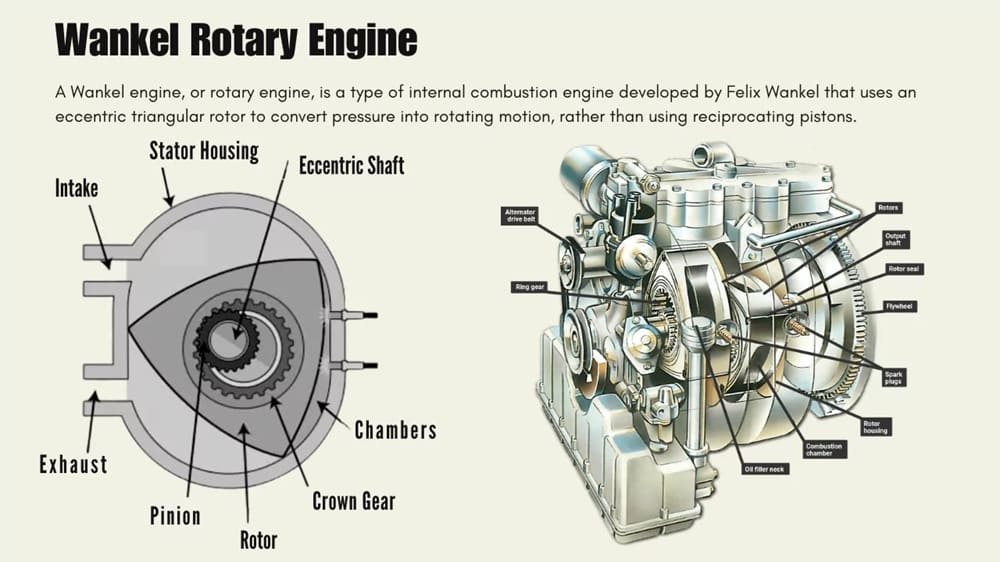
Wankel Engines Benefits
Wankel engines have the advantages of compact size, low weight, smooth rotary motion, and fewer major moving parts than many piston engines. The high power-to-weight ratio allows UAVs to carry more fuel, sensors, or payload. Low vibration also helps keep cameras, guidance systems, and electronics stable, which is useful for drones and loitering munition missions.
Why Rotary Engines in UAVs
The AR741 Wankel rotary engine is small, light, and mechanically simple and is thus suitable for UAVs. There are fewer major moving parts than in many piston engines. The engine offers the chance to have a softer output and less vibration.
That’s important in drones. Excessive vibration can affect sensors, optics, guidance systems, and onboard electronics. The smoother the engine is, the more stable the aircraft flies during long loitering missions.
The AR741 from UAV Engines produces 38 BHP at 7800 rpm and weighs 10.7 kg without a generator. This provides tactical unmanned systems with a good blend of power, endurance, and compact installation.
Why Harop Uses a Rotary Engine
The Israeli Harop must remain airborne long enough to locate a target. It may loiter over a region, waiting for a radar to turn on, or pursue a moving target. So its engine must be able to handle it without adding unnecessary weight.
A piston engine can do this job, but a rotary engine has packaging advantages. In a small airframe, the compact shape makes integration easier. Additionally, its lower vibration helps to achieve cleaner sensor performance.
To get more context on drone warfare, see Defense News Today’s Drones section and its analysis of why fibre-optic drones beat jamming. These topics illustrate how UAV design still revolves around endurance, guidance, and survivability.
Battlefield Evidence and Value
Recovered drone parts have value because they reveal design choices. An engine can tell us about the quality of materials, the layout of the cooling, the design of the intake and exhaust routeing, and the standards of manufacture. Engineers can also look at wear patterns and failure points.
Meanwhile, battlefield claims are a complex issue. Pakistan accused India of firing several Israeli-made Harop drones into Pakistan, and AP reported that 29 were shot down. AP also said that it could not independently confirm all claims made by both sides.
But the technical value is still there. If the recovered engine is an AR741, then it confirms the type of propulsion used in that Harop system. It also helps defense analysts understand how loitering munitions combine engine design, sensors, guidance, and payload into a single strike platform.
Harop Engine Classes for Shahpar
Pakistan has a long tradition of studying recovered foreign technology and adapting useful lessons for its indigenous defense programs. The Babur cruise missile is often associated with lessons learned from Tomahawk debris, and now the retrieved Israeli Harop drone could be another technical learning opportunity. The AR741 Wankel rotary engine is small, lightweight, and appropriate for UAV endurance.
Pakistani engineers could study its layout, materials, cooling, vibration control, and power-to-weight ratio. Such insights could help improve the propulsion options for domestic Shahpar, Blaze, Sarkash, and Yalgar types of reconnaissance and loitering UAV variants and support future loitering munition development without copying the original system design or violating export control limits.

Why Air Defense Must Adapt
The AR741 Wankel rotary engine shows why loitering munitions are such a difficult air-defense problem. A small engine permits a small airframe. A smaller airframe can reduce the detection windows. Meanwhile, endurance allows the drone to come from unexpected angles.
Modern air defense must therefore be a combination of radar, electro-optical sensors, acoustic detection, electronic warfare, and kinetic interceptors. One layer isn’t enough to stop all drone threats. Furthermore, exploitation teams after a strike must expeditiously study recovered debris.
Conclusion: Compact Power for Drones
The AR741 Wankel rotary engine works in the same basic way as a four-stroke piston engine. Instead of pistons, it uses a rotating triangular rotor. This makes it compact, light, and smooth enough for UAV propulsion. This engine represents the pinnacle of Israeli engineering and demonstrates the excellence of the country.
That design in the Israeli Harop supports endurance, stability, and payload efficiency. The recovered engine was not wreckage. It is proof of how modern loitering munitions deploy compact propulsion systems to extend their range, boost reliability, and complicate air defense planning.
References
- https://uavenginesltd.co.uk/products/ar741-38-bhp/
- https://www.iai.co.il/product/harop/
- https://defensenewstoday.info/defense-branches/drones/
- https://en.wikipedia.org/wiki/Loitering_munition
- https://apnews.com/article/india-pakistan-drone-lahore-kashmir-4a33b5884b0860c01f266e2a93688ef7
About the Author