
AMCA Engine Talks Stall Over 3x GE Price
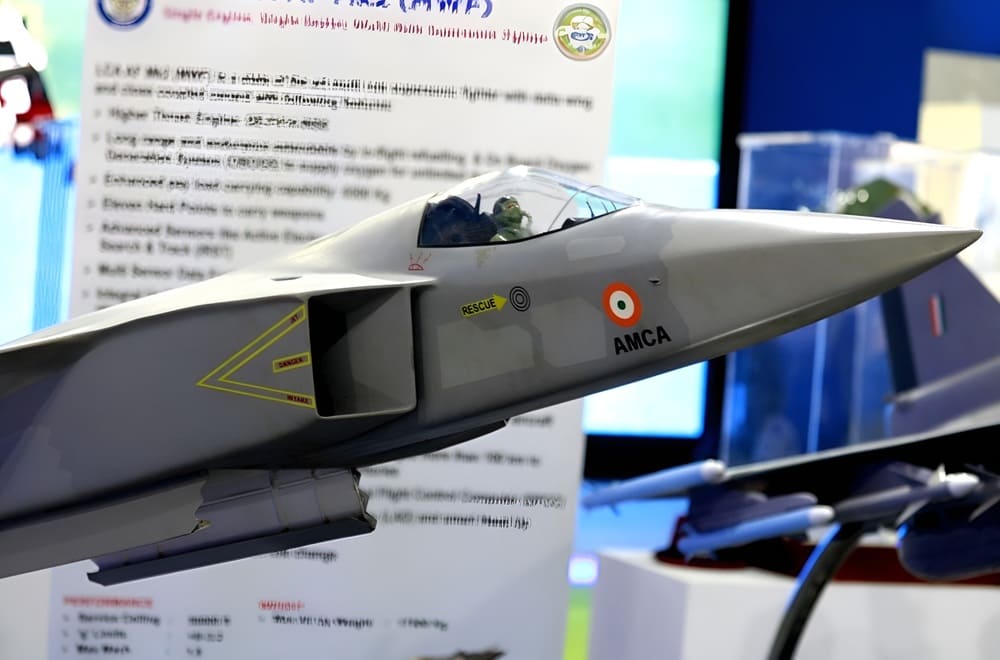
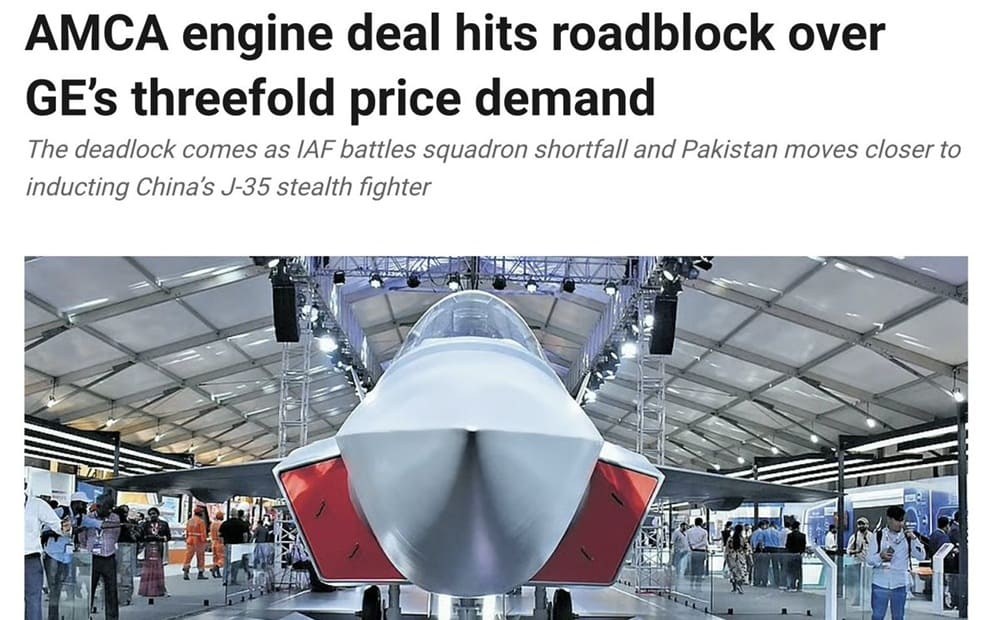
India’s AMCA engine deal swung from technical certainty to commercial fracas. The problem is not the performance of the F414. The dispute is rather over price, technology transfer and the cost of creating an engine ecosystem within India. GE Aerospace’s F414 was viewed as the practical powerplant for the AMCA Mk-1. It also backs the Tejas Mk-2 and the Twin Engine Deck-Based Fighter. But the reported demand, now nearly three times the previous estimate, threatens the economics of the programme. The preliminary estimates were Rs 70-80 crore for each engine unit.
Importance of GE F414
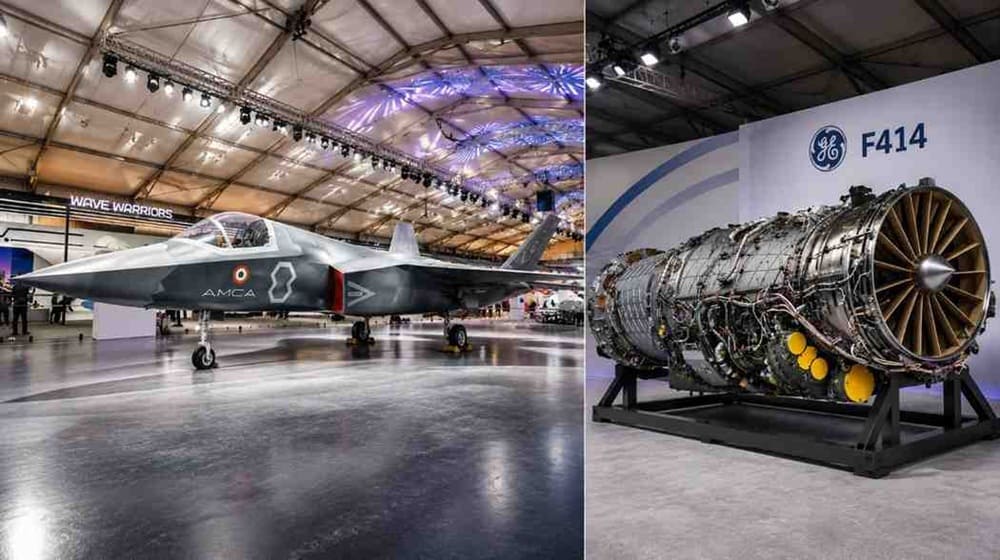
The AMCA engine deal matters because India has already designed several future aircraft around the F414. The engine provides a thrust of about 98 kN and is in the 22,000 lb class. It also has a long history on aircraft like the F/A-18E/F Super Hornet and Gripen E variants. This record provides a less-risky entry to flight testing for AMCA Mk-1. India can focus on stealth shaping, sensors, flight controls & software. The F414 thus reduces the uncertainty in the propulsion during the prototype phase. However, GE’s advantage gives it a lot of bargaining power. And when engineers have locked an airframe around a specific engine, the change is costly. A fighter engine has an impact on airflow, balance, cooling, fuel systems, software and certification.
Beyond Unit Price
The AMCA engine deal is more than just buying engines. Negotiations also include technology transfer, licensed production, spares, warranties, MRO facilities and future escalation clauses. GE has sought around Rs 6,000 crore for a dedicated F414 assembly and manufacturing line in India, sources in the report said. This line would be catering to Tejas Mk-2, early AMCA batches and TEDBF requirements. Moreover, the projected demand in India could exceed 200 engines once all three programmes mature. This volume should reinforce India’s bargaining position. But GE already knows that the programme architecture is based on the F414 engine. Thus, New Delhi will need to balance cost discipline with schedule protection.
Little Room for Delay
India has earmarked over Rs 15,000 crore for the AMCA prototype development phase. The plan involves five flying prototypes and around 1,800 test flights over seven years. The recently adopted industry framework requires the selected partner to target the first flight within 30 months of contract signature. There isn’t much time left on the schedule for a big change in propulsion. If India picks a different engine, engineers will have to do new integration work, new control software, safety clearances and flight-test validation. Consequently, the AMCA engine deal is a scheduling problem, not just a commercial one. Delays now could push back the first flight and squeeze later testing. Stealth validation takes years for a fifth-generation fighter.
Ripple Effect on Tejas and TEDBF
The same dispute could spread to two other planes. The Tejas Mk-2 has to stretch beyond the lighter Mk-1A design with the F414. In addition, TEDBF needs a reliable medium thrust engine for carrier operations. Hence, India seeks to negotiate a common propulsion base over three future platforms. It can make training easier and support less expensive. Meanwhile, commonality also creates a single point of pressure. For regional airpower context, see Defense News Today’s Air Force coverage. For aerospace technology analysis, follow the Aerospace section.
Pressure Is Rising
The Indian Air Force is said to have 29 fighter squadrons against a sanctioned strength of 42.5. Simultaneously, the supposed move of Pakistan to China’s J-35 speeds up India’s timetable. The AMCA is intended to provide India with an indigenous stealth fighter and not another imported front-line aircraft. So, a stalled engine contract could undermine several plans for force modernisation at once.
India’s Options
India still has some roads. First, negotiators can attempt to negotiate a phased contract that preserves the prototype schedule. Second, they can choose higher escalation caps and more robust delivery guarantees. Third, India can decouple the pressing prototype engine requirements from the larger manufacturing-line package. In the meantime, New Delhi should expedite the AMCA Mk-2 engine plan. The partnership for the 110-120 kN class engine remains with Safran and Rolls-Royce. That future engine will ultimately be more important for supercruise, payload, range and sovereignty. F414 is the safest near-term option for AMCA Mk-1. But India must avoid an expensive production structure with limited depth in terms of technology. Licensed assembly on its own will not deliver complete strategic independence.
Final Assessment
The AMCA engine deal is a pointer to the stark reality of indigenous fighter development. You can design airframes in your garage, but propulsion is still the hardest part of combat aviation. Engines are a mix of metallurgy, hot section durability, software, supply chains and export controls. India’s immediate priority is to keep the AMCA Mk-1 on track. On the other hand, the longer-term priority is deeper engine autonomy. The F414 can still anchor the first phase if New Delhi can get fair pricing, credible technology transfer and dependable deliveries. But the dispute will test India’s wider aerospace strategy if the price gap remains unresolved. The AMCA programme needs engines, but it also needs bargaining power.
References
- https://www.newindianexpress.com/india/2026/Jun/24/amca-engine-deal-hits-roadblock-over-ges-threefold-price-demand
- https://www.pib.gov.in/PressReleasePage.aspx?PRID=2261387
- https://www.researchgate.net/publication/353439471_Metal_additive_manufacturing_in_aerospace_A_review
- https://www.pib.gov.in/PressReleasePage.aspx?PRID=1955696
- https://www.geaerospace.com/military-defense/engines/f414
About the Author