
A-235 Nudol Missile Defense
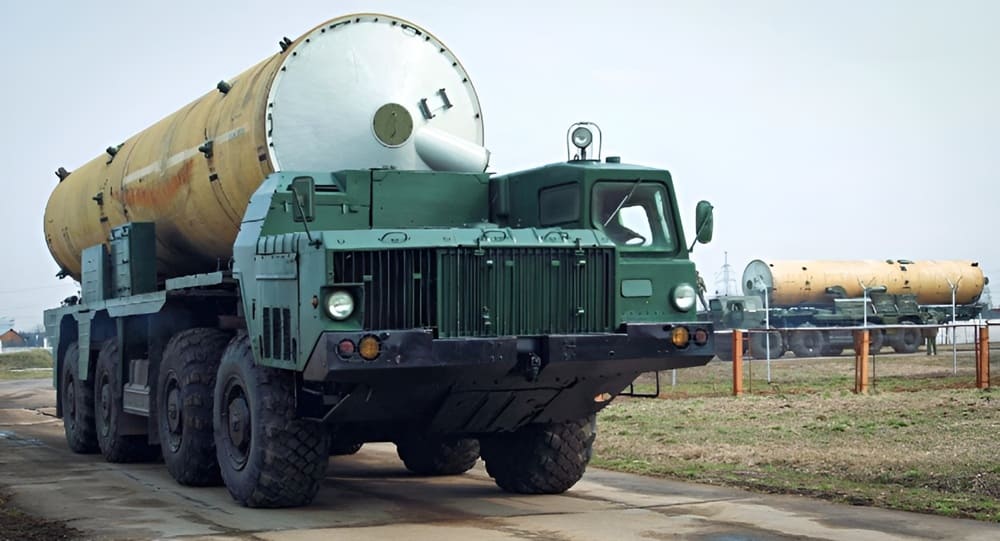
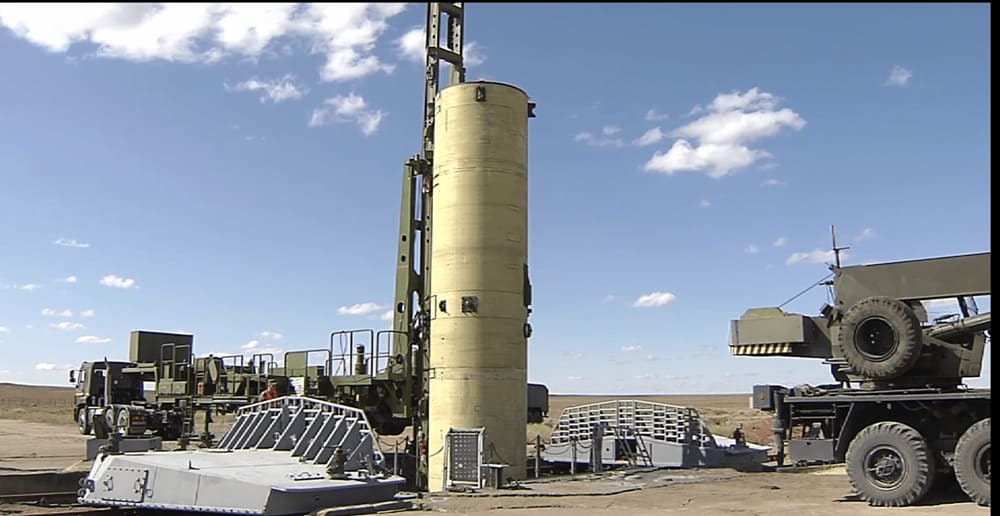
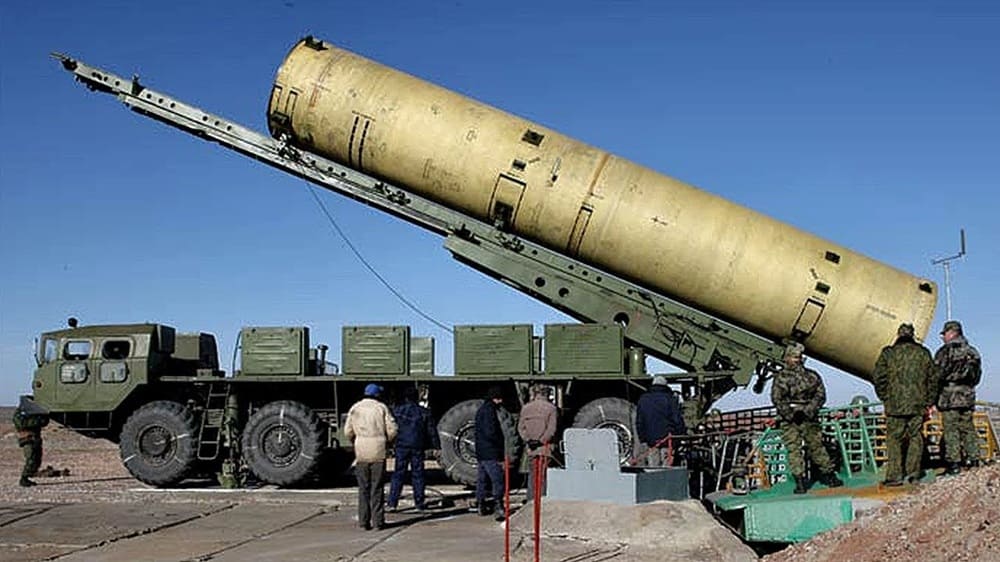
Russia’s A-235 missile-defense system is the top tier of the country’s strategic air and missile-defense network. It protects Moscow, national command centres and nuclear decision-making nodes against the most dangerous incoming threats. A-235 Nudol does not cover the large front lines, unlike the conventional surface-to-air missile systems. It’s instead the political and military heart of the Russian state. So analysts view it as a strategic survival system, not a normal battlefield weapon.
Inside A-235’s Advantage
Often connected to the Nudol programme, the A-235 replaced or upgraded key elements of the older A-135 network around Moscow. Open-source reporting indicates newer interceptor tests in the 2010s and operational use circa 2019. But most exact specifications have not been confirmed by Moscow. The main claim is range. The engagement envelope is in several evaluations more than 1,000 km against selected ballistic trajectories. The figure is not confirmed, but it goes some way to explaining why so many observers talk of A-235 as one of the longest-range operational missile defense systems in the world. The Russian S-500 is one tier below it and is typically associated with a 600-kilometre engagement range. The US THAAD provides high-altitude terminal defense to a range of some 200 kilometres. These comparisons explain why A-235 is in a different strategic category.
ICBMs, Space and Hypersonics
Its purpose is to deal with objects moving at several kilometres a second. It therefore must be able to detect, classify and intercept threats in a very short engagement time. The system is part of Russia’s overall warning architecture, which includes long-range radar sites such as the Voronezh Radar family. Sensors report a launch, and command systems calculate the trajectory, firing an interceptor on a collision course. A real ICBM attack could have warheads, decoys, debris and penetration aids. So the network must discriminate out false targets and fire an expensive interceptor only when there is a real threat.
The Kinetic Intercept Shift
The A-135 from the Soviet era used nuclear-tipped interceptors for part of its mission. That method increased kill probability but increased risk over friendly territory. By contrast, A-235 seems to depend more on hit-to-kill or very high-speed kinetic interception. The change requires greater precision. However, it avoids the political and environmental issues of nuclear defensive bursts. Also, kinetic systems are appropriate for exo-atmospheric missions where interceptors require guidance thrusters and accurate radar updates.
A-235’s ASAT Role
It has a very powerful anti-satellite aspect to the system as well. Western and open-source analyses have associated the Nudol interceptor with Russia’s direct-ascent ASAT capability. In 2021, Russia shot down the defunct Kosmos-1408 satellite, creating a large debris field and drawing international criticism. This test showed Russia’s capability to threaten satellites that provide communications, navigation, missile warning and reconnaissance. But ASAT use causes problems. Debris-generating intercepts can pose a threat to friendly satellites and crewed spacecraft. For this reason, the capability is more likely to be seen by Russia as a deterrent than as a normal operational asset.
Moscow’s Strategic Shield
A-235 does not give nationwide protection. Instead, it shifts defense to Moscow and key command infrastructure. This is a decision that is consistent with long-standing Soviet and Russian doctrine. In the event of a nuclear crisis, the state must retain leadership, communications and retaliatory command authority. For readers following wider defense news and air-defense developments, this distinction matters. A-235 does not make Russia immune to a major nuclear strike. But it could disrupt enemy planning and increase the survival of leadership at the outset of an attack.
Where A-235 Fits
Russia is increasingly portraying missile defense as a layered system. A-235 would be at the top, with S-500 to be a lower strategic tier against ballistic missiles, hypersonic targets and some satellite-class threats. Below that, S-400 and other systems defend the airspace against aircraft, cruise missiles and shorter-range ballistic threats. It is part of a larger global trend. The United States is developing the Golden Dome concept for homeland missile defense, while China showed off the HQ-29 as part of its expanding strategic intercept capability.
Strategic Outlook
The A-235 system gives Russia a rare defensive capability at the edge of air, missile and space warfare. The A-235 system’s actual performance is classified, and its claimed 1,000-kilometre range is best taken as an estimate. But its role is clear. It protects the nerve centre of the Russian state. This improves Moscow’s command resilience, enhances nuclear deterrence, and provides it with a limited anti-satellite capability. Meanwhile, it alone cannot stop a full-scale nuclear exchange. So its real value is in deterrence, survivability and uncertainty. Any attacker who plans to hit the Russian leadership must take into account a level of defense that could go beyond the atmosphere and into space.
What Comes Next
Defense watchers should track three areas. First, watch to see if Russia expands A-235 sites beyond the Moscow region. Secondly, track integration with Russian S-500, S-550 and future early-warning sensors. Third, observe if Russia shifts from debris-generating ASAT tests to cleaner counter-space options such as electronic attack, laser dazzling or cyber operations. The future of the system will be more than interceptor range. It will depend on sensors, decision speed and Russia’s ability to link missile defense with space surveillance. Usually the first to succeed in today’s strategic wars lasts the longest.
References
- https://www.atlanticcouncil.org/in-depth-research-reports/issue-brief/russian-and-chinese-strategic-missile-defense-doctrine-capabilities-and-development/
- https://www.armscontrol.org/act/2021-12/news/russian-asat-test-creates-massive-debris
- https://www.army-technology.com/projects/thaad/
- https://www.csis.org/analysis/americas-golden-dome-explained
- https://www.vietnam.vn/en/he-thong-a-235-toi-mat-dang-gom-hon-ca-rong-lua-s-500-nga
About the Author